
Iran urges UN to condemn US-Israeli assassination plots
 3 Min Read
Iran's UN envoy calls on the Security Council to condemn active US-Israeli plots to assassinate senior officials, warning the threat is real and ongoing.
-
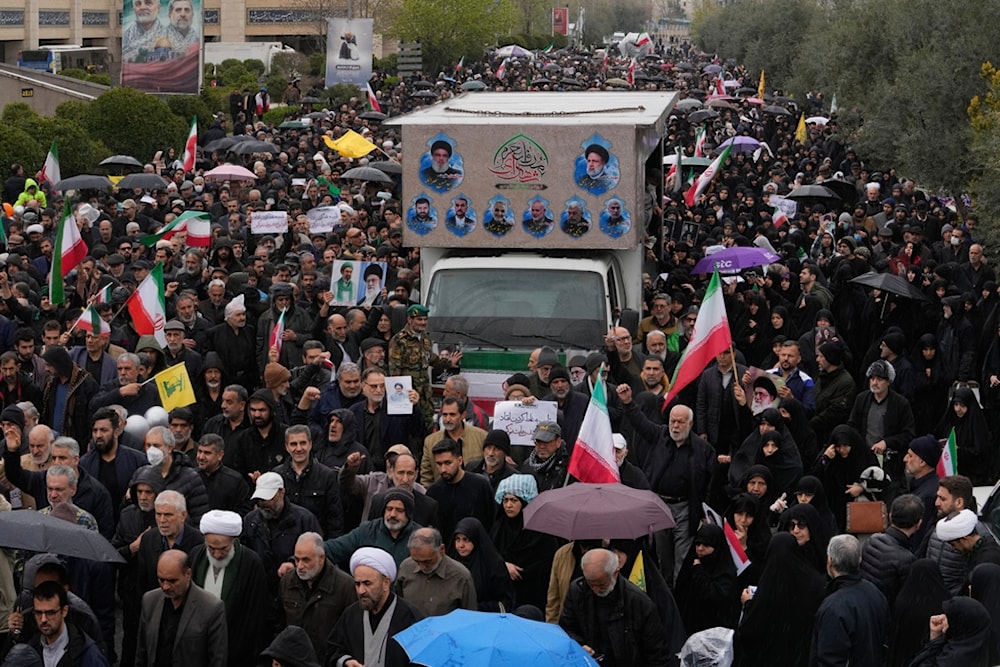
Iranian mourners follow a truck carrying the coffins of Iran's intelligence minister Esmail Khatib and his wife and daughter, during a funeral procession in Tehran, Iran, Friday, March 20, 2026. (AP Photo/Vahid Salemi)
Iran has formally called on the United Nations Security Council to condemn active US-Israeli plans to assassinate senior Iranian officials, including Parliament Speaker Mohammad Bagher Ghalibaf and Foreign Minister Seyed Abbas Araghchi, the latest chapter in an assassination spree that has now claimed the lives of Iran's Leader and dozens of other officials since the start of the US-Israeli aggression on Iran on February 28.
In a letter addressed to UN Secretary-General Antonio Guterres and the President of the Security Council on Thursday, Iran's Ambassador and Permanent Representative Amir Saeid Iravani warned that media reports had exposed an operational framework explicitly targeting Iran's highest political figures. The alleged suspension of those plans, Iravani stressed, offered no reassurance, as its "conditional nature" confirms that "the threat remains real, deliberate, and ongoing."
The ambassador condemned the practice as a product of "criminal mindsets" that have publicly dismissed the rules of engagement as "foolish," the same forces, he wrote, that have bombed students, targeted hospitals, and destroyed cultural heritage sites in an open campaign of state terrorism.
The promotion of the term "kill lists," the letter stated, is "another manifestation of the same terrorist acts" that initiated a criminal war and have so far led to the martyrdom of more than 3,000 civilians.
Iravani further invoked the protections afforded to officials at the level of foreign minister under customary international law, protections repeatedly affirmed by the International Court of Justice, warning that any attack on their lives "would undermine the foundations of peaceful international relations."
A record built on killing
By documented count, the Israeli regime has conducted approximately 2,300 assassination operations since 1948, a record that dwarfs any other state in the Western world, and one so institutionalised that the occupation entity was likely the first government to formally acknowledge a policy of assassination, which they dub "targeted killing," as far back as 2000.
Since the onset of the genocide in Gaza, the killing machine accelerated dramatically, targeting dozens of senior officials in the Palestinian and Lebanese resistance, and ultimately the Iranian Leader himself, martyred in a joint US-Israeli operation on 28 February 2026.
The campaign has never been confined by borders. Operations in Dubai, Tehran, Beirut, Damascus, and European capitals have established as a matter of practice that the occupation recognizes no other country's territorial sovereignty.
Normalisation by design
What makes the current moment particularly alarming is not simply the scale of the killing, but the deliberate legal architecture constructed around it.
The reframing of "assassination" as "targeted killing," a semantic shift that "Israel" pioneered in 2000 and the United States adopted wholesale after September 11, has progressively stripped the practice of its stigma, replacing it with a pseudo-legal vocabulary that bypasses international law and human rights.
Legal scholars have even described Sayyed Khamenei's assassination as a new stage in the erosion of the international norm against assassination, the first time either state had directly killed a sitting head of state, with Netanyahu publicly acknowledging the killing and framing it in moral rather than legal terms. The occupation's Security Minister then brazenly threatened to assassinate Sayyed Khamenei's successor as well.


