
Israeli war on Iran to continue ‘without time limit’, Katz says
 3 Min Read
Israeli Security Minister Israel Katz says the US-Israeli bombing campaign against Iran will continue indefinitely as the war in West Asia continues to escalate.
-
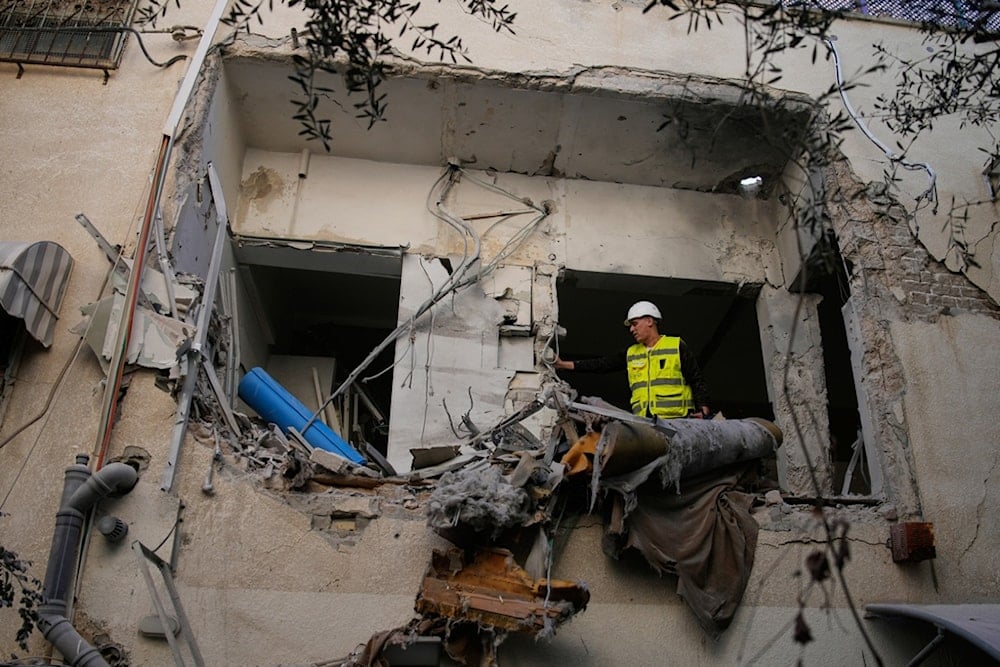
Israeli security forces inspect a damaged apartment building struck by an Iranian missile in Tel Aviv, Israel, Sunday, March 8, 2026. (AP)
Israeli Security Minister Israel Katz said Wednesday that the joint US-Israeli bombing campaign against Iran will continue indefinitely, as Tel Aviv vows to intensify its attacks across the country.
“This operation will continue without any time limit, as long as necessary, until we achieve all the objectives and decide the outcome of the campaign,” Katz said.
The Israeli minister claimed that the ongoing strikes have inflicted heavy losses on Iranian forces and infrastructure.
Katz alleged that Iranian leadership figures were fleeing “like mice into tunnels,” adding that hospital morgues in Iran were reportedly full, though he insisted the casualties were not civilians.
He also warned that the Israeli military would continue targeting sites in the Iranian capital and elsewhere in the country.
“Strikes will continue in Tehran and across the country, day after day, target after target,” he said.
Read More: 'We're just getting started': Araghchi on Iran strikes
War escalates following US-Israeli strikes
The current war began after the United States and Israel launched coordinated strikes on Iran on February 28, dramatically escalating tensions across West Asia.
The attacks resulted in the martyrdom of Sayyed Khamenei and triggered a rapidly widening military confrontation across the region.
Israeli officials have framed the campaign as an effort to weaken Iran’s military capabilities and strategic infrastructure.
Katz said the attacks are also intended to create conditions that would allow internal opposition to challenge Iran’s political system.
“We are acting in order to allow the Iranian people to rise up, act, and remove this regime,” he said, adding that any political change ultimately “depends on them.”
US and Israeli officials have nevertheless stated that their military operations are not formally aimed at regime change.
Region-wide confrontation deepens
The conflict has since expanded across the region, with Iran launching multiple waves of retaliatory drone and missile strikes targeting Israeli-occupied territories as well as US military bases across West Asia.
Iranian officials have described the attacks as defensive responses to what they call ongoing US-Israeli aggression against the country.
The fighting has already inflicted significant losses. Reports indicate that around 150 US troops have been wounded during the first ten days of the war, highlighting the scale of the confrontation.
The war has also begun to generate growing political pressure inside Washington. US President Donald Trump is facing calls from some lawmakers and advisers to outline a strategy for ending the conflict, as concerns rise over the costs of a prolonged war and the surge in global energy prices.
Meanwhile, disruptions to shipping through the Strait of Hormuz, a critical route for global oil supplies, have shaken international energy markets and triggered economic repercussions across Europe and Asia.
Analysts warn that if the fighting continues to escalate, the war could deepen instability across West Asia and further disrupt global trade and energy supply chains.
Read More: First 2 days of Iran war cost US $5.6bln in munitions: Reuters


