
First 2 days of Iran war cost US $5.6bln in munitions: Reuters
 4 Min Read
Lawmakers in the United States are seeking greater transparency about the war on Iran, as officials warn that prolonged fighting could strain military readiness and require tens of billions in additional funding.
-
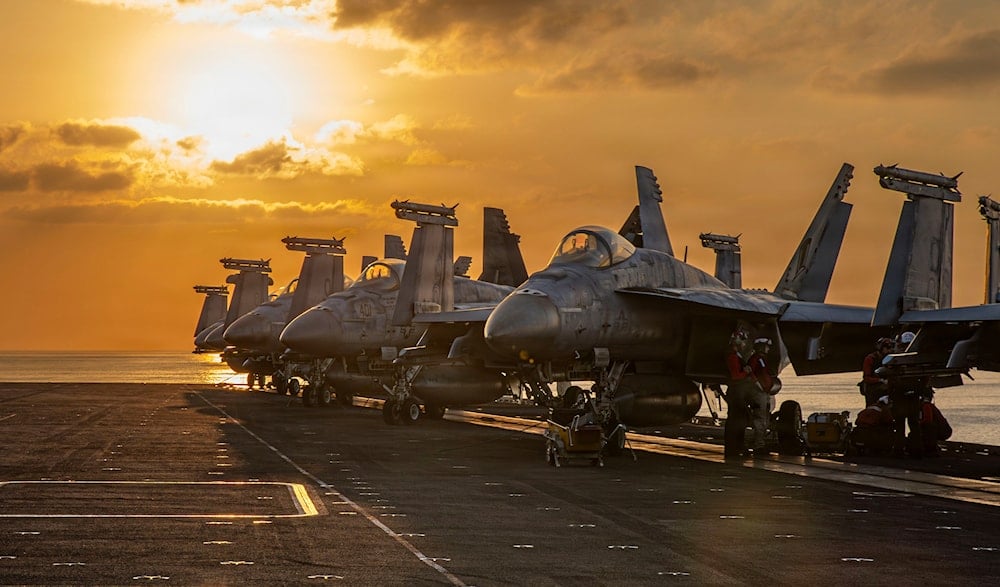
Aircraft on the flight deck of the USS Abraham Lincoln (CVN 72) that are operating in the war on Iran, March 3, 2026. (US Navy via AP)
The US administration spent about $5.6 billion on munitions during the first two days of strikes against Iran, according to a report provided to congressional committees, a source familiar with the matter told Reuters on Tuesday.
Members of the United States Congress, who may soon be asked to approve additional funding for the war, have raised concerns that the war could significantly reduce US weapons stockpiles.
Lawmakers have warned that such depletion could occur at a time when the defense industry is already struggling to keep pace with rising demand for weapons and military equipment.
Pentagon seeks to replenish supplies
Trump met with executives from seven defense contractors on Friday as the United States Department of War worked to replenish military supplies used in the early stages of the war.
The administration has not yet released a public estimate of the total cost of the war, which began on Feb. 28.
Democratic lawmakers have called for more information about the war, including public testimony from administration officials on how the war could affect US military readiness.
Officials from the administration have already held several classified briefings with members of Congress and their staff.
Speaking as he opened the Senate session on Tuesday, Democratic Senator Chuck Schumer urged administration officials to testify before lawmakers.
“When it comes to sending our servicemembers into harm's way, the American people need to understand why. But right now, they don't even have a 'why.' That needs to change,” Schumer stressed.
Additional war funding request expected
Several congressional aides said the White House is expected to submit a request to Congress for additional funding related to the war.
Some officials have suggested the request could total around $50 billion, though others have said that figure may ultimately prove too low.
First 100 hours of US war on Iran cost $3.7 billion: Analysis
According to an analysis by the Center for Strategic and International Studies (CSIS) cited by CNN last week, the first 100 hours of the US-Israeli war on Iran cost approximately $3.7 billion,
The estimate suggests that Washington has been spending more than $890 million per day since the start of the war.
According to the analysis, less than $200 million of the estimated total represents operational costs already included in the Pentagon’s existing budget.
The remaining $3.54 billion will likely require additional funding from the US Department of Defense, either through supplemental appropriations or another reconciliation bill.
Munitions replacement expected to drive future costs
Beyond operational expenses, a major portion of future spending will likely go toward replacing expended munitions, particularly interceptor missiles.
The issue is critical as concerns grow over depleting US and allied missile defense stockpiles.
Additional costs may also stem from equipment losses, including the three F-15 fighter jets shot down in an incident in Kuwait.
Costs could shift as war evolves
Analysts say the overall financial burden of the war could change depending on several factors, including:
- The potential shift to cheaper munitions
- The intensity of US military operations
- The scale and effectiveness of Iranian retaliation
These variables could significantly affect the total cost if the conflict continues over a longer period.
War on Iran pushes Treasury yields higher, raising inflation concerns
The US-Israeli aggression on Iran has disrupted financial markets, halting a weeklong rally in US government bonds and pushing the yield on the 10-year Treasury note above 4%, raising concerns over higher borrowing costs for businesses and consumers.
Treasury yields, which rise as bond prices fall, saw their largest one-day gain since last June on Monday, and climbed further on Tuesday, with the 10-year note reaching 4.1%. The rise comes after weeks of declining yields, which had helped lower 30-year mortgage rates below 6% for the first time in more than three years.
A report by The Wall Street Journal (WSJ) has lately reported that investors had been turning to Treasurys as a haven amid stock market volatility, but the recent escalation in West Asia and surging energy prices have shifted the focus to inflation fears.
The report added that the war has contributed to a spike in oil and gas prices. Higher energy costs can feed into broader inflation, prompting businesses and consumers to expect sustained price increases.


