
Senate rejects bid to scale back Iran war
 3 Min Read
The US Senate voted 53‑47 to reject a resolution requiring congressional approval for further military action in Iran, effectively backing Trump’s war on Iran.
-
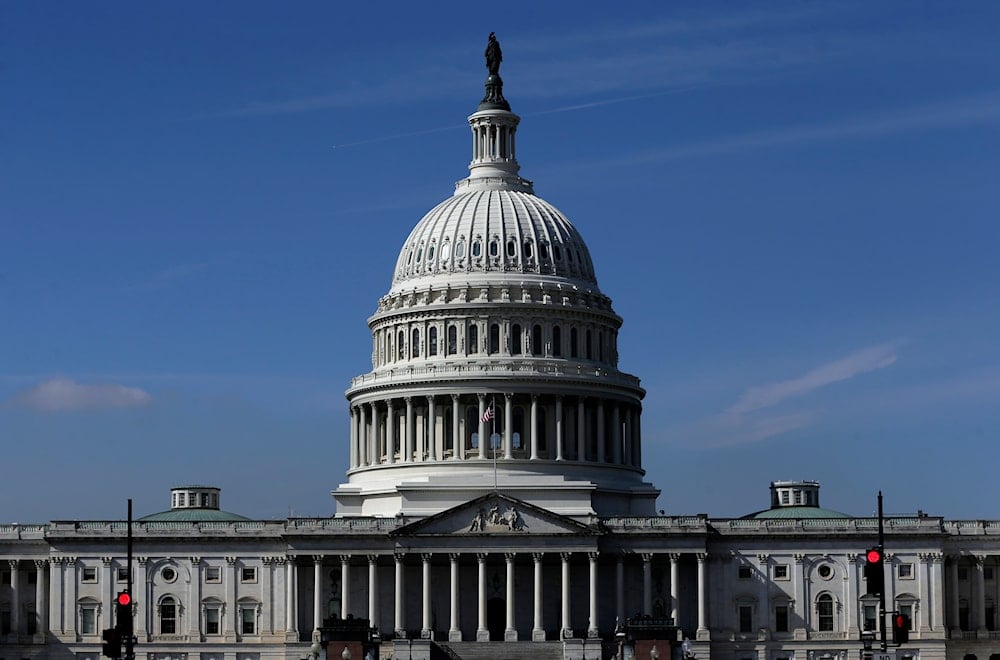
The US Capitol is photographed on February 27, 2026, in Washington. (AP Photo/Rahmat Gul)
The US Senate voted 53‑47 on Wednesday to reject a resolution that would have required congressional approval for further military strikes on Iran, effectively backing President Donald Trump’s war. The vote largely split along party lines, with Republican senators uniting to defeat the measure.
Senator Rand Paul of Kentucky, a cosponsor, was the only Republican to support the resolution. Democratic Senator John Fetterman of Pennsylvania broke with his party in backing the strikes, giving GOP leaders additional leverage to defeat the measure.
The result mirrors a similar vote last June, when the Senate rejected an effort to limit Trump following US airstrikes against Iran’s nuclear facilities.
Key lawmakers break ranks
Some Republicans voiced concerns despite opposing the resolution. Senator Todd Young (R-Ind.) cited the need for congressional oversight and public clarity on the conflict, while warning that limiting US military options could increase risks to Americans.
Democrats highlighted potential dangers of a prolonged engagement in the Middle East. Senator Chris Murphy (D-Conn.) criticized the campaign, noting six American deaths and the economic and regional fallout. Senator Tim Kaine (D-Va.) said public sentiment could influence GOP support as casualties and costs mount.
House lawmakers are expected to weigh in on Thursday with a similar war powers resolution, which is also projected to fail. Critics argue that the administration has struggled to provide a coherent strategy or clarify the operation’s duration, raising questions about the limits of executive military authority.
Administration officials briefed lawmakers behind closed doors, emphasizing that operations are narrowly targeted at Iran’s missiles and military capabilities rather than "pursuing open-ended regime change."
Public opinion and political fallout
Public sentiment appears skeptical of the military campaign. A CNN poll conducted by SSRS found nearly 60 percent of Americans disapprove of the strikes, with most anticipating a prolonged war. Democrats hope this will influence the midterm elections and sway Republican lawmakers in future votes.
Top officials, including Secretary of State Marco Rubio, Defense Secretary Pete Hegseth, and Joint Chiefs Chair Gen. Dan Caine, have briefed lawmakers on the campaign. Hegseth cautioned that the war “has only just begun” and will intensify, while Republicans like Senator Lindsey Graham (R-S.C.) argued the strikes are necessary to weaken Iran and protect US interests.
Lawmakers have also raised concerns about the rapid depletion of US missile and interceptor stockpiles, highlighting logistical and strategic challenges as the campaign continues.
Sanders, Schumer accuse Trump of serving Netanyahu
Earlier, US Senator Bernie Sanders sharply criticized US President Donald Trump’s handling of the war, accusing him of aligning American military policy with the agenda of Israeli Prime Minister Benjamin Netanyahu.
“Netanyahu wanted billions to flatten Gaza. He got it,” Sanders wrote on X.
“Netanyahu wanted war with Iran. Trump just gave it to him.”
On the other hand, Senate Majority Leader Chuck Schumer also criticized the administration, focusing on what he described as a lack of preparation for evacuating US citizens from the Middle East.
“More Trump chaos and incompetence,” Schumer wrote.
He said hundreds of Americans, including many New Yorkers, remain stranded across the region, alleging that the State Department’s response amounted to telling citizens “good luck".


