
Iran war could hinder Arab normalization with 'Israel': Israeli media
 4 Min Read
Israeli assessments suggest the war on Iran has weakened prospects for Gulf normalization with “Israel”, as states reassess ties with Tehran and regional security risks.
-
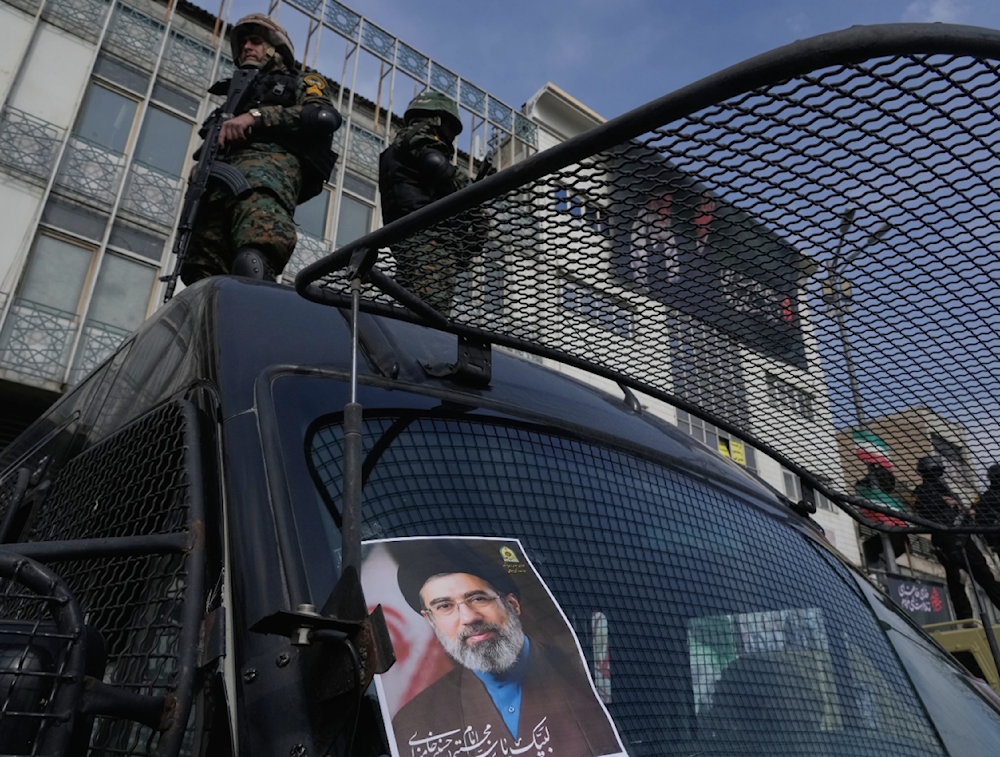
A poster of Sayyed Mojtaba Khamenei is placed on an anti-riot police car as policemen stand on top of the car, during a rally in Tehran, Iran on March 9, 2026. (AP)
Israeli assessments indicate that the outcome of a war on Iran has weakened prospects for further normalization between “Israel” and Arab states, particularly in the Gulf, according to a report in the Israeli newspaper Yedioth Ahronoth.
Senior Israeli officials reportedly believe that the current trajectory of the war reduces the likelihood of expanding normalization agreements, at least in the near term.
According to the report, Israeli estimates suggest that Gulf countries may now lean toward closer engagement with Iran and Turkey, driven not by political alignment but by security considerations and regional realities. This shift is described as a pragmatic response to the risks exposed during the recent aggression on Iran and Lebanon, rather than a fundamental political realignment.
A Financial Times report last week noted that Gulf states, including Saudi Arabia, feel they have been drawn into a war they initially sought to avoid, while now facing direct security risks from Iranian retaliation.
Although it continues to view Iran as a "strategic threat" and supports efforts to curb its missile and drone capabilities, according to the report, the kingdom has reportedly opposed actions that could trigger uncontrolled escalation, such as attacks on energy infrastructure or attempts at regime change.
UAE described as an exception
The report highlights the UAE as a distinct case, noting that security coordination and strategic alignment between Abu Dhabi and “Israel” reportedly strengthened during the war.
A senior Israeli source cited in the report said Gulf states observed the war closely and recognized the risks of confrontation with Iran.
According to the source:
- Gulf states engaged the US privately, urging continued pressure on Iran
- Publicly, they maintained a cautious and restrained position
- They assessed that the war would remain unresolved and potentially open-ended
- They feared retaliation if they openly aligned with “Israel” and the US
As a result, some states opted for neutrality, viewing it as a safer bet with Tehran.
The report reflects growing Israeli concern that the regional impact of the war may reshape Gulf strategic calculations, slowing normalization momentum while increasing indirect engagement with multiple regional powers.
Gulf states reassess security after US failures exposed: NYT
After weeks of US-Israeli aggression on Iran triggered a wave of retaliatory strikes across the region, Gulf Arab states are confronting a transformed security landscape following the announcement of a fragile ceasefire between the United States and Iran, the New York Times reported.
According to the report, the war has shattered long-standing assumptions among Gulf governments that their wealth and strategic partnerships, particularly with Washington, would shield them from direct confrontation. Instead, Iranian missile and drone operations reached deep into countries hosting US military bases, reflecting their exposure as frontline actors in a war they did not directly initiate.
Iran’s response largely targeted US and Israeli-linked assets across the region, including military installations and infrastructure tied to the American presence, as part of its retaliation following the February 28 US-Israeli aggression on Iranian territory.
The fallout has left Gulf states facing both material damage and economic strain, with energy exports disrupted and uncertainty surrounding the Strait of Hormuz, one of the world’s most critical oil transit routes, continuing to weigh on outlooks. Analysts say the crisis has exposed how deeply regional economies remain tied to a US-led security architecture that, rather than insulating them, has drawn them into the line of retaliation.
Alliances under strain
Beyond immediate risks, Gulf states are now reassessing their relationships not only with Washington, but also with Iran and "Israel", as the war has exposed the limits of their influence over US decision-making despite longstanding political and military ties.
“We suffer in the Gulf because he started the war,” Sager said, referring to US President Donald Trump. “We told him the consequences. We were never consulted.”
The report added that efforts by some Gulf countries to ease tensions with Iran in recent years are now under renewed scrutiny, with officials warning that rebuilding trust will be difficult. “When this war eventually ends, in order for there to be any rebuilding of trust will take a long time,” Saudi Foreign Minister Prince Faisal bin Farhan said.


