
Iran will address US ceasefire violations in talks with Pakistan PM
 2 Min Read
Iran's negotiating delegation is set to address ceasefire violations committed by the United States in a meeting with Pakistani Prime Minister Shehbaz Sharif.
-
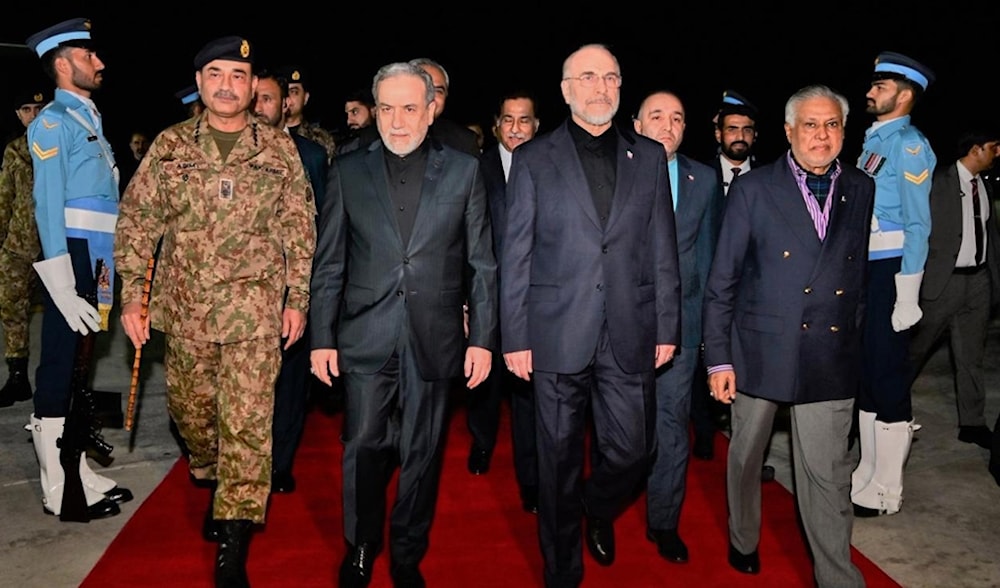
Iran's Parliament Speaker Ghalibaf and Foreign Minister Araghchi are greeted by Pakistan Foreign Minister Ishaq Dar and Army Chief Asim Munir at Nur Khan airbase in Rawalpindi, Pakistan, April 11, 2026. (Pakistan Ministry of Foreign Affairs via AP)
The Islamic Republic of Iran is expected to raise the issue of the United States' violations of the agreement during a meeting between Tehran's chief negotiators and Pakistani Prime Minister Shehbaz Sharif in Islamabad, Tasnim News Agency reported.
Iran has stressed that any talks with the United States are contingent on Washington accepting Iran’s preconditions before formal discussions can begin, underscoring Tehran’s position that prior commitments must be addressed before advancing toward a ceasefire agreement.
These include several non-negotiables, including a ceasefire in Lebanon and the release of frozen Iranian assets. While the US allegedly informed Pakistan that it agrees to demands, some other terms and issues have not yet been addressed, Tasnim stated.
For today, the Iranian delegation intends to assess the American position and the extent of its commitment to the agreement framework before deciding on whether negotiations would occur.
Iran ties ceasefire to Lebanon's deal
Tehran’s 10‑point proposal, accepted by Washington as the framework for talks during the two-week ceasefire, calls for the cessation of all regional aggression as a precondition for negotiations. The plan demands an end to wartime attacks and guarantees that further aggression will not target Iran or allied forces.
The proposal also includes ending all US and Israeli military operations against Iran and its allies, as well as halting Israeli attacks on Lebanon and other countries in the region. Iran’s negotiators stress that without a permanent stop to aggression on all fronts, any ceasefire would be meaningless and allow enemy forces to regroup.
Hours after the ceasefire deal was announced, Israeli Prime Minister Benjamin Netanyahu declared support for the US decision to suspend strikes on Iran for two weeks, but immediately limited the agreement, claiming it does not apply to Lebanon, despite Pakistan, Iran, and US media affirming it does.
"Israel" then launched a brutal aggression on Lebanon, attacking 100 locations with approximately 150 airstrikes within ten minutes, killing 357 people and wounding 1,223, according to the Lebanese Civil Defense.
Read more: Iran rejects Islamabad talks amid ongoing war on Lebanon: Exclusive


