
Iranian army vows unity and strength to defy enemy pressure
 4 Min Read
Iran’s military reaffirms its readiness to support the government, strengthen national defense capabilities, and help address challenges facing the country.
-
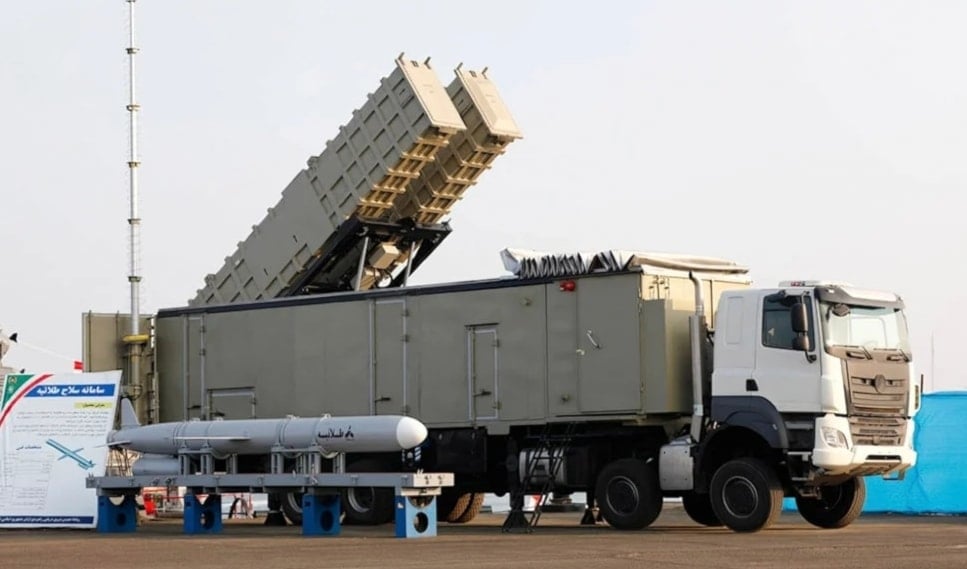
The Talaeieh land attack cruise missile system is displayed in an unveiling ceremony at a naval base near the Indian Ocean in the southern Iranian port in southern Iranian port of Konarak, Iran, on December 24, 2023. (Iranian Army via AP)
The Iranian Army said on Monday that operational cohesion and national unity constitute key pillars of the Islamic Republic’s strength, enabling it to withstand challenging circumstances and counter pressure from its enemies.
In the same context, the Iranian Army reaffirmed its readiness to coordinate with and support the government in advancing the country, while strengthening national defense capabilities and strategic resilience and contributing to efforts to address the people’s problems.
IRGC Spokesperson: Trump’s economic war bid admits US defeat
For his part, Iranian Islamic Revolution Guard Corps (IRGC) spokesperson Brig. Gen. Hossein Mohebbi described US President Donald Trump’s announcement of an economic war against Iran as an acknowledgment and implicit admission of the severe defeat suffered by the United States.
Mohebbi stressed on Sunday that Iran has repeatedly stated that it has scenarios ready to confront any hostile action undertaken by the enemy, including economic warfare.
In a similar vein, Iranian President Masoud Pezeshkian said on Sunday that Iran has stood strong despite war, sanctions, assassinations, and mounting economic pressure, arguing that expectations abroad that the country would fracture under the strain had failed.
Pezeshkian: Iran foiled collapse attempt despite war, sanctions
Speaking during a ceremony marking the start of Government Week, Pezeshkian pointed to the pressures confronting both the Iranian state and the population, ranging from military confrontation and sanctions to shortages and structural problems affecting essential sectors.
"The enemies imagined that with their pressure and actions Iran would collapse. Not only did this not happen, but the power and unity of the Iranian nation amazed the world," he said.
Pezeshkian made the remarks after he and members of his cabinet visited the mausoleum of Imam Khomeini, founder of the Islamic Republic, near Tehran, where they renewed their allegiance to the principles of the Islamic Revolution and paid tribute to those killed in the country's recent confrontations.
The Iranian president honored the memory of the martyrs, the late Leader, military commanders, scientists, students, members of the armed forces, and civilians, while stressing that the government has been forced to operate amid an exceptionally difficult political and economic environment.
President acknowledges domestic challenges
Beyond the effects of war and sanctions, Pezeshkian acknowledged significant domestic challenges affecting water supplies, electricity, gas, fuel, the environment, and the banking sector.
He nevertheless credited the Iranian public with preventing those pressures from translating into broader instability.
"Our dear people truly performed a miracle," Pezeshkian said, adding that the country's ability to withstand such conditions had confounded assessments of how Iran would respond to prolonged pressure.
Iran will pass these crises with strength: Pezeshkian
His comments reflected an effort to place the government's domestic difficulties within the broader context of external pressure, while also recognizing the hardship facing ordinary Iranians.
"Of course, we are ashamed before the people that problems exist. But as long as we have breath in our bodies, we will serve our dear people, work to improve their lives and welfare, and pass through these crises with strength."
Pezeshkian said his administration would continue working to address economic and infrastructure problems despite the conditions surrounding the country.
Government Week is observed annually in Iran to commemorate former President Mohammad Ali Rajai and Prime Minister Mohammad Javad Bahonar, who were assassinated in a bombing in 1981, while also serving as an occasion for the government to present its record and priorities.
Read more: Pezeshkian: Iran will not surrender, armed forces remain ready


