
Iranian retaliatory operations force Israeli gas fields shutdown
 3 Min Read
Retaliatory Iranian operations forced "Israel" to halt production at the Leviathan and Karish gas fields, exposing vulnerabilities in its energy sector.
-
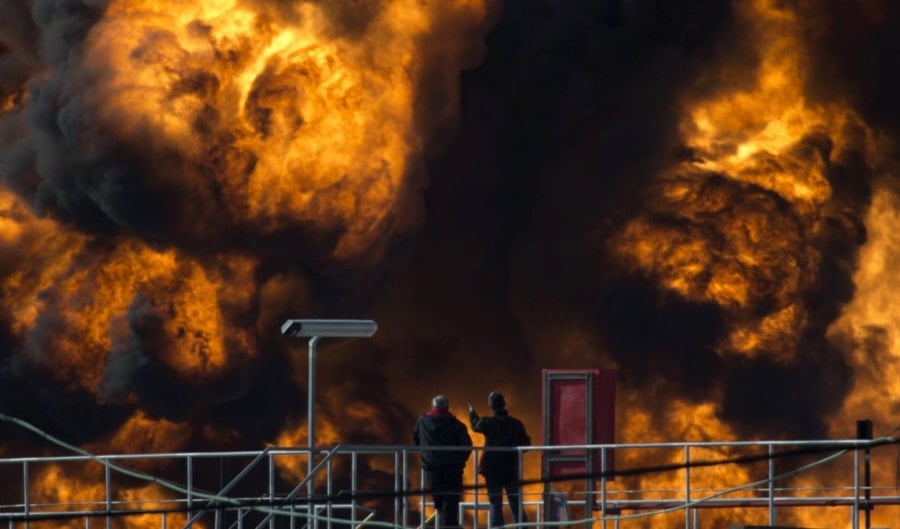
Workers watch firefighters fight flames in a fuel tank in Oil Refineries Ltd in Haifa bay, occupied Palestine, Sunday, Dec. 25, 2016. (AP)
Retaliatory missile strikes linked to Iran’s response to the US-Israeli aggression have shaken "Israel’s" energy sector, forcing the suspension of gas production at major offshore fields in the Mediterranean and exposing vulnerabilities in the country’s energy system.
According to the Israeli newspaper Haaretz, the war has created a shock in "Israel’s" energy market after missile threats forced the halt of most natural gas production from offshore fields over fears that platforms could be targeted.
The disruption has already pushed "Israel’s" electricity grid to rely again on more polluting fuels such as coal and diesel in order to compensate for the drop in gas supplies.
Meanwhile, Ynet reported that missile threats led to the suspension of exploration and production activities at the Leviathan and Karish gas fields as global energy markets simultaneously experience rising oil prices.
With the shutdown of the two major offshore fields, Tamar has become the primary source of natural gas supplying "Israel’s" electricity sector since the beginning of the war, following security directives that ordered production to stop.
'Israel' energy stability concerns
The situation has sparked debate within "Israel’s" energy sector about how long the entity can maintain stability if the war continues for an extended period, with some experts warning that prolonged disruptions could eventually drive up fuel and electricity prices.
Amit Mor, chief executive of Eco Energy strategic consulting and a lecturer at Reichman University, warned that if gas continued flowing while a platform was struck by a missile, the resulting damage could reach billions of dollars, explaining why production was halted temporarily.
Mor added that output could resume once the missile threat subsides, but cautioned that if the shutdown lasts longer than a month, it could begin to affect electricity supplies.
He also noted that the Haifa oil refinery is currently operating partially, a situation that could influence fuel availability and potentially affect the supply of aviation fuel.
Mor concluded that "Israel" must take into account the economic cost of rising global energy prices while the conflict continues to disrupt international energy markets.
Iran warns over oil exports
The developments reflect the broader impact of Iran’s retaliatory pressure on strategic infrastructure linked to "Israel’s" economy following the US-Israeli aggression on Iran.
In a related development, a senior Iranian military official told Al Mayadeen that new deterrence equations would reshape the confrontation.
The official warned that “not a single liter of oil” would be allowed to reach the opposing side and its partners until further notice.
He added that navigation through the Strait of Hormuz would be subject to strict military and security regulations under wartime conditions, describing the movements of US and Israeli forces as shifting toward “unconventional behavior” after the failure of their offensive plans.
The Strait of Hormuz normally handles around 20% of global oil shipments and liquefied natural gas, making it one of the most critical chokepoints in the global energy system.
Read more: WHO warns toxic fallout from US-Israeli aggression on Iran oil sites


