
Iraq-US relations enter new phase as Iraqi PM visits Washington
 3 Min Read
Ali al-Zaidi is set to visit the US to strengthen bilateral relations through economic, energy, and defense cooperation while reaffirming the Strategic Framework Agreement.
-
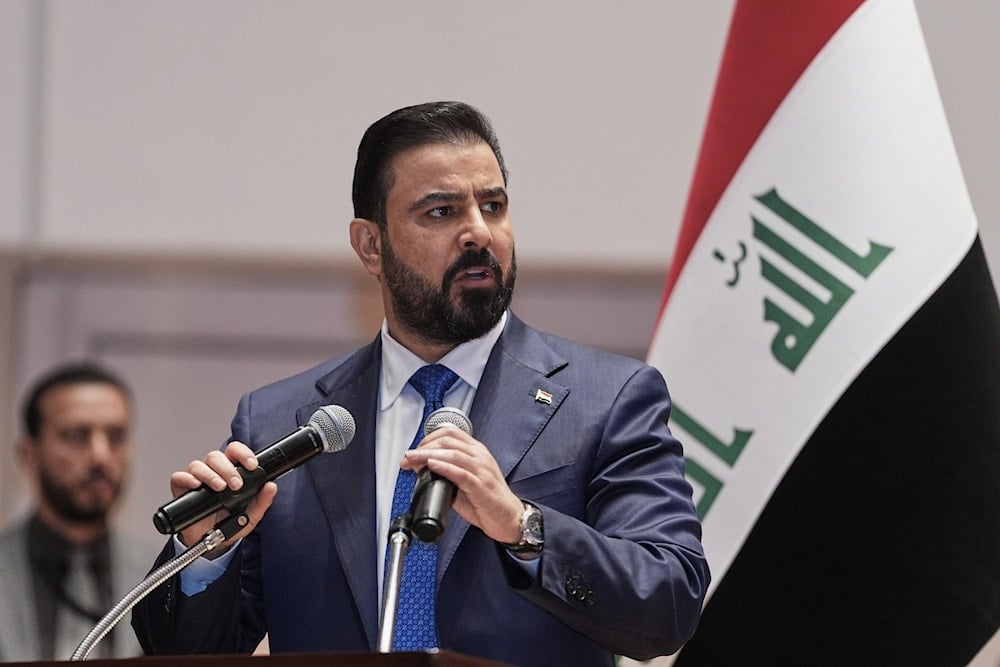
Iraq's Prime Minister, Ali al-Zaidi, speaks to Iraqi lawmakers before submitting his government in Baghdad, Iraq, May 14, 2026 (AP)
Iraqi Prime Minister Ali Falih al-Zaidi will travel to Washington on Monday at the head of a high-ranking government delegation for an official visit aimed at bolstering bilateral cooperation, particularly in the fields of economy, energy, and defense, the Iraqi government announced today.
The visit, which comes at the formal invitation of the US administration, marks a significant shift in the trajectory of Iraq-US relations, as Baghdad seeks to move beyond the security-dominated framework that has characterized ties over the past two decades.
Government Spokesperson Haider al-Aboudi stated that discussions in Washington would cover economic reform, energy sector development, and the armament of Iraqi military forces. He emphasized that the trip would not alter the foundational Strategic Framework Agreement between the two nations.
"There is no change to the Strategic Framework Agreement with the United States," al-Aboudi said. "All understandings and agreements are based on this accord."
He added that Iraq is preparing to receive specialized US energy companies, underscoring that bilateral relations are transitioning from "crisis management" to a partnership rooted in economics and investment. Al-Aboudi also confirmed that both sides are set to sign memoranda of understanding in the oil and gas sectors, with Iraq planning to bring in American firms to help boost crude production capacity.
Security gains as foundation for broader strategic vision
Separately, Major General Sabah al-Nu'man, spokesperson for the Commander-in-Chief of the Armed Forces, described the upcoming visit as a "pivotal strategic step" that reflects Iraq's new reality of stability, growth, and sovereignty.
"Iraq is approaching this round from a position of strength and sustainable stability," Nu'man said, citing the state's decisive transition toward comprehensive security empowerment and strategic development.
Nu'man stressed that the visit's vision links the preservation of security gains with accelerated economic growth, opening new avenues for international partnerships and attracting major global corporations, all within the framework of strategic agreements that safeguard Iraq's sovereign interests and enhance its investment climate.
He further noted that the security stability achieved by Iraqi armed forces now serves as a fundamental basis for advancing reconstruction and development projects. "Iraq's international engagements aim to leverage this stability in building a prosperous economy and strong state institutions, reinforcing Iraq's standing regionally and internationally," he said.
The prime minister's Washington trip comes amid concerted Iraqi efforts to reshape the nature of ties with the United States, pivoting toward economic, investment, and energy cooperation after years in which security and military affairs dominated the bilateral agenda. Observers view the visit as a potential turning point in cementing a more balanced, mutually beneficial partnership between Baghdad and Washington.


