
In first under new regime, Iraqi FM Fuad Hussein arrives in Syria
 3 Min Read
The Iraqi FM visits Damascus to discuss trade, border security, economic cooperation, and regional developments with Syrian officials.
-
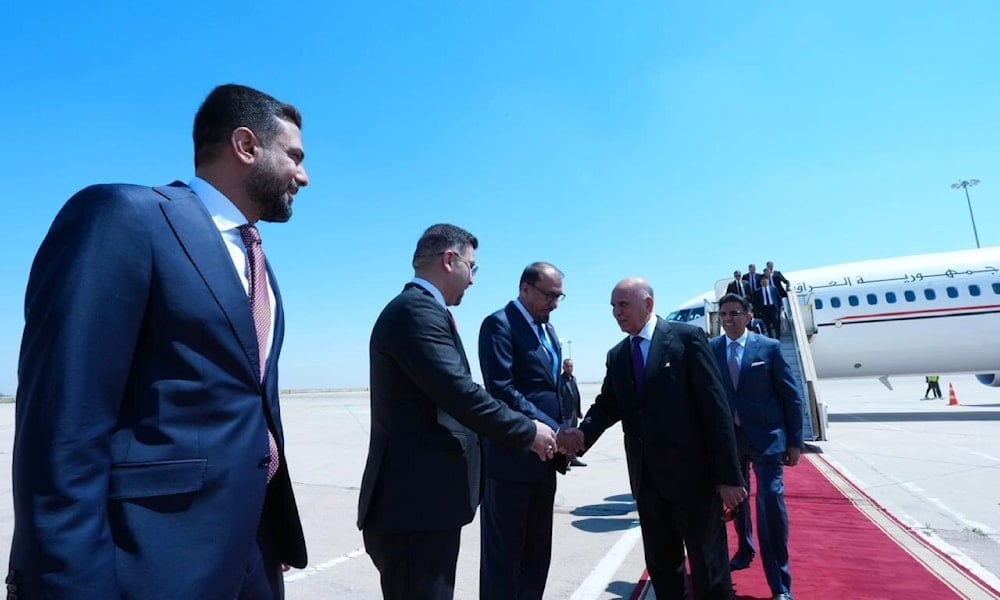
Iraqi Foreign Minister being welcomed by a Syrian delegation upon his arrival for high-level talks, Damascus, Syria, June 29, 2026 (X/ @Fuad_Husseein)
Iraqi Foreign Minister Fuad Hussein arrived in the Syrian capital on Monday for his first visit to the country since the overthrow of Bashar al-Assad's rule in late 2024, an Iraqi diplomatic source told AFP.
Hussein is scheduled to meet with senior Syrian officials, including President Ahmad al-Sharaa, Foreign Minister Asaad al-Shaibani, and Energy Minister Mohammed al-Bashir, the source confirmed.
The visit comes as Baghdad, which had adopted a cautious approach toward the new Syrian administration in its early months, now signals a clear desire to strengthen trade and security cooperation with Damascus. The two countries share a border stretching more than 600 kilometers.
Iraq recently began exporting limited quantities of oil through Syrian territory, following disruptions to shipping traffic in the Strait of Hormuz amid the ongoing Middle East conflict.
According to a statement from the Iraqi minister's office, the visit aims to "develop joint cooperation in various political, security, economic, and commercial fields" and to discuss "regional and international developments." The meetings will also address "ways to enhance coordination and consultation between the two countries regarding shared challenges."
Hussein's trip marks the first visit by an Iraqi political official of this rank to Damascus since al-Assad's fall in December 2024. The ousted Syrian leader had been a close ally of previous Iraqi governments.
Border reopenings and security cooperation top agenda
Since al-Assad's removal, several Iraqi delegations have traveled to Syria, most notably a high-level intelligence group led by Hamid al-Shatri, which focused on security cooperation and counter-terrorism.
Last year, an outstanding arrest warrant against al-Sharaa, dating back to his time as a militant with Al-Qaeda, during which he was imprisoned in Iraq for several years, sparked controversy in Baghdad after the Iraqi government extended an invitation for him to attend an Arab League summit. The matter was ultimately resolved when al-Shaibani represented Syria at the May 2025 meeting hosted in Baghdad.
Earlier this year, the US military transferred more than 5,700 detainees from Islamic State group cells from Syria to Iraq, following the withdrawal of Kurdish forces in Syria from detention facilities holding those prisoners.
While the international coalition has recently pulled out of Syria, US-led coalition forces remain in Iraq, specifically in the Kurdistan region, until September.
Al-Shaibani visited Baghdad in March 2025, emphasizing the need to boost bilateral trade.
In mid-April, Iraq reopened the Rabia border crossing, also known as al-Yarubiyah, with Syria after more than a decade of closure to commerce following the rise of the Islamic State group. With this reopening, all three border crossings between the two countries are now operational.
Iraqi authorities view the crossing as strategically vital, as it links Iraq to Syria's border with Turkey as part of the broader Development Road project, a 1,200-kilometer corridor currently under construction that will include highways and railways connecting Gulf states to Turkey via Iraq.


