
Iraq expects oil production recovery within two months after war
 3 Min Read
Iraq says oil production and exports could return to pre-war levels within two months as shipping through the Strait of Hormuz gradually resumes following the Iran-US MoU.
-
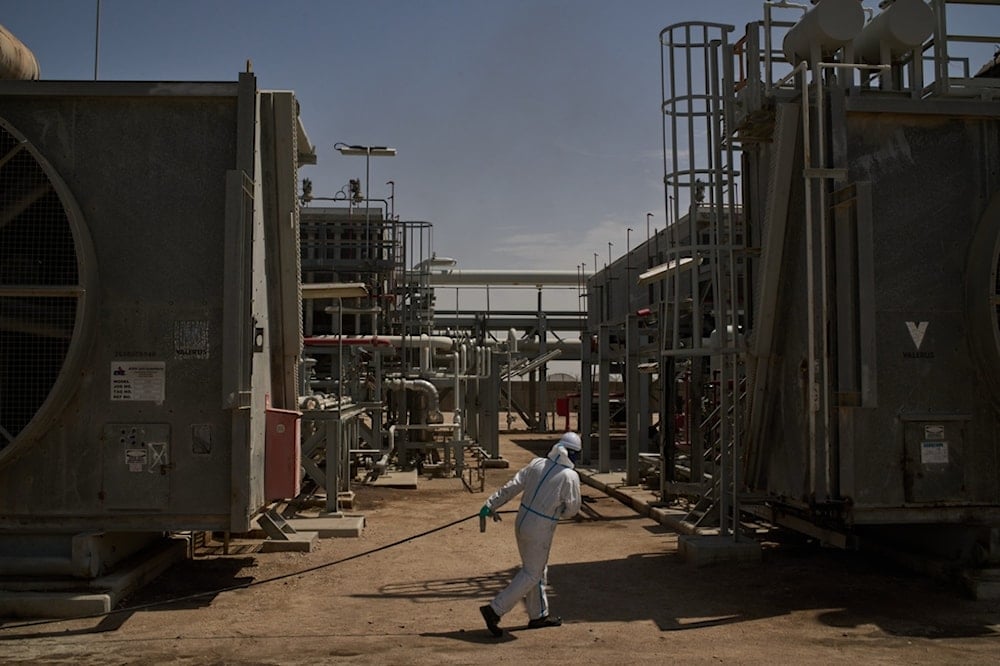
A worker pulling a hose at a degassing station in Zubair oil field, near Basra, Iraq, Saturday, March 28, 2026. (AP Photo/Leo Correa)
Iraq expects its oil production to return to pre-war levels within one to two months, according to officials from the country's Oil Ministry, as regional energy markets begin recovering from months of disruption caused by the US-Israeli war on Iran and the subsequent closure of the Strait of Hormuz.
Oil Ministry spokesperson Salim Farhoud told the Iraq News Agency (INA) that production capacity is already increasing at fields that had been forced to reduce output during the conflict.
"We can return within one to two months to the previous production levels," Farhoud said, adding that oil fields affected by production restrictions have begun restoring capacity.
The announcement comes days after Tehran and Washington signed a memorandum of understanding aimed at ending hostilities and reopening one of the world's most important maritime energy corridors.
Read more: Iraqi PM to visit Washington to strengthen strategic partnership
Strait of Hormuz reopening boosts export outlook
The gradual reopening of the Strait of Hormuz has improved expectations for Iraq's export sector after months of severe disruptions due to the US-Israeli war on Iran.
The Islamic Republic initially closed off the Strait to entities with ties to the US-Israeli aggression against it. After a ceasefire was announced in early April, Washington imposed its own blockade, further complicating international maritime travel through the vital waterway.
Iraqi Oil Minister Bassem Khodeir said exports would recover progressively as navigation through the strait returns to normal.
"Exports will return gradually based on the smooth flow through the Strait of Hormuz," Khodeir told INA.
The waterway handles a substantial portion of global oil trade, making its accessibility a critical factor for energy-exporting states across the region.
Read more: 12 years later, 800 'Speicher' massacre victims still unaccounted for
War dealt major blow to Iraqi oil exports
Before the outbreak of war in late February, Iraq exported approximately 3.5 million barrels of oil per day, most of which passed through the Strait of Hormuz.
The disruption forced Baghdad to scale back production across numerous oil fields as storage facilities filled and export capacity contracted sharply.
Authorities reported that crude exports through the strait dropped from an average of 93 million barrels before the conflict to just 10 million barrels in April.
During the disruption, Iraq relied largely on export routes through neighboring Syria and Turkey, though these channels were unable to compensate fully for the loss of maritime shipments.
Oil revenues remain critical to Iraq's economy
The recovery of oil exports carries major economic significance for Iraq, whose economy remains heavily dependent on crude sales.
Oil revenues typically account for around 90 percent of government income, making uninterrupted exports essential for public spending, salaries, infrastructure projects, and economic stability.
The anticipated recovery in production and exports is expected to ease financial pressures that emerged during the conflict and help stabilize government revenues in the coming months.
Read more: Iran cancels Swiss trip due to Israeli attacks on Lebanon: Sources


