
Iraqi PM to visit Washington to strengthen strategic partnership
 6 Min Read
Iraqi Prime Minister Ali al-Zaidi will visit Washington in July to boost economic, trade, and investment cooperation and deepen strategic ties with the US.
-
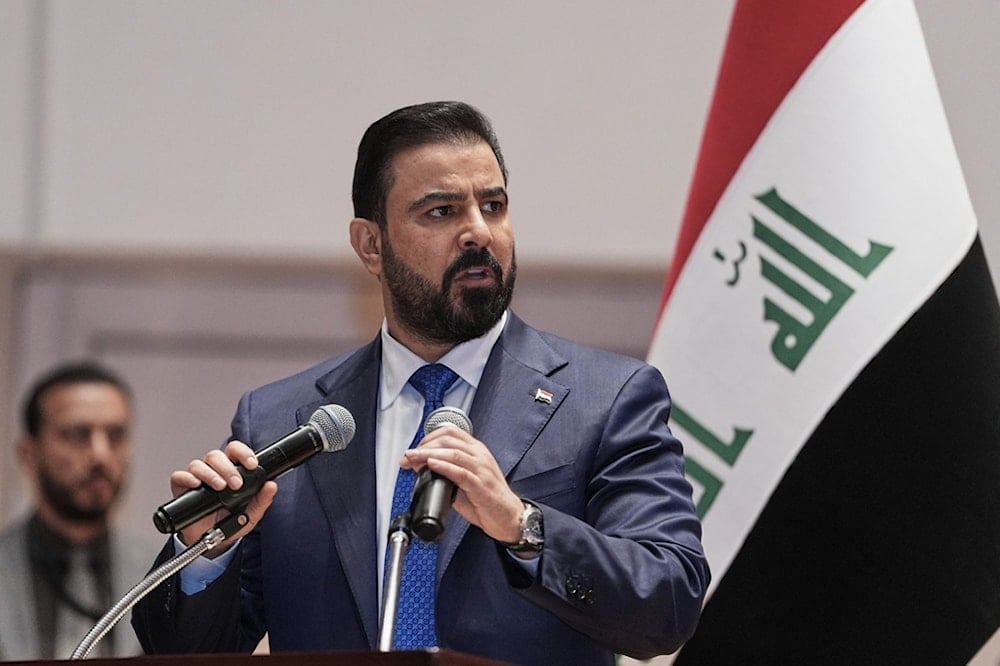
Iraq's Prime Minister-designate Ali al-Zaidi, speaks to Iraqi lawmakers before submitting his government in Baghdad, Iraq, Thursday, May 14, 2026. (Iraqi Presidency Office via AP)
Iraqi Prime Minister Ali al-Zaidi will visit Washington in mid-July to deepen strategic relations with the United States, with talks expected to center on economic, trade, and investment cooperation, according to the Iraqi government.
Government spokesperson Haider al-Aboudi said the visit aims to "enhance the Iraqi-US partnership based on mutual interests" and expand cooperation with international companies.
"The government aims to broaden the horizons of our strategic partnership with global companies and stimulate an investment-friendly environment that contributes tangible benefits to the Iraqi economy while strengthening internal stability," al-Aboudi told the state news agency.
Since taking office in May, al-Zaidi has made economic reconstruction, attracting foreign investment, and combating corruption key priorities of his administration.
Iraq seeks economic diversification amid diplomatic challenges
Baghdad is seeking to reduce its reliance on oil revenues and address longstanding economic challenges, including high unemployment, particularly among young people, and aging infrastructure.
At the same time, al-Zaidi faces major political and security challenges, including tackling entrenched corruption and balancing Iraq's relations with both Washington and Tehran.
The announcement of the visit comes shortly after the US and Iran reached an interim agreement aimed at ending the war in West Asia, a development that is expected to test Baghdad's ability to navigate a complex regional diplomatic landscape.
After being nominated for the premiership in April, al-Zaidi received congratulations from US President Donald Trump, who expressed hope for closer cooperation between Baghdad and Washington.
Iraq and the US maintain a Strategic Framework Agreement covering security, economic, and cultural cooperation. However, bilateral ties have periodically been strained over the presence of US troops in Iraq and US pressure on Iraq.
Rising US pressure over armed factions in Iraq
Tensions over the future of armed groups in Iraq have intensified as Washington continues to press Baghdad to move toward disarming and integrating Resistance factions into state institutions.
Kataib Hezbollah reiterated last month that it would not surrender its weapons, rejecting mounting US pressure on the Iraqi government to disarm Resistance groups. In a statement, the group’s security chief Abu Mujahid al-Assaf said that “Resistance is today a collective duty,” adding that the group would continue its operations on behalf of factions that have stepped back, signaling its refusal to abandon its military capabilities.
Al-Assaf’s remarks come as Iraqi Prime Minister Ali al-Zaidi seeks to consolidate state authority over all weapons following his assumption of office in mid-May, repeatedly stressing that arms must remain under exclusive state control.
While some factions have signaled willingness to integrate into state structures, Kataib Hezbollah maintains that any discussion on disarmament cannot proceed under external pressure, and has linked the issue directly to the continued presence of US forces in Iraq, including those deployed under the US-led coalition mission in the Kurdistan region, scheduled to conclude in September.
Nujaba Movement rejects disarmament, invokes struggle against ISIS
Separately, Harakat Hezbollah al-Nujaba Secretary-General Akram al-Kaabi has reaffirmed that the weapons of the Iraqi Resistance are a “red line,” rejecting calls for disarmament and warning against efforts aligned with US and Israeli interests in Iraq.
In a statement, al-Kaabi said the group’s position on retaining its weapons was “final and irreversible,” arguing that Resistance arms remain essential for defending Iraq, protecting its sovereignty, and countering foreign interference. He said the issue had already been settled by the movement, adding that al-Nujaba had publicly declared its stance weeks earlier and would not reverse it.
Al-Kaabi linked the debate over disarmament to broader concerns over the continued presence of US forces in Iraq and alleged violations of national sovereignty, accusing Washington of exerting pressure on Baghdad in coordination with "Israel" to weaken Resistance factions.
He also criticized Iraqi political figures whom he accused of aligning with foreign agendas, urging Resistance groups to maintain unity and warning that relinquishing weapons would expose Iraq to further external intervention.
Framing the issue within Iraq’s past conflict with ISIS, al-Kaabi said Resistance weapons had played a decisive role in defeating the group, stating, “The weapons of the Resistance front are the red line… It was with these weapons that we cleansed Iraq from the stain of ISIS and its American sponsors. We will not hand over our arms as long as we are alive.”
Intensified anti-ISIS operations ahead of Washington visit
The visit also comes as Baghdad continues efforts to bolster domestic security and stability. Last week on Saturday, Iraqi military intelligence announced the arrest of a senior ISIS operative responsible for managing the group's financial support networks in Anbar province.
The suspect, identified as "Abu Musab," was detained in the border district of Al-Qaim during an operation conducted by intelligence units affiliated with the Seventh Infantry Division in coordination with the Al-Qaim Intelligence and Counterterrorism Department. Iraqi authorities said he was responsible for distributing financial support and allowances to ISIS members and their families within the group's so-called "Wilayat al-Furat" network, which historically spanned areas along the Iraq-Syria border.
The arrest came two days after Iraq's Joint Operations Command announced the killing of two ISIS members, including a senior operative, in F-16 airstrikes in eastern Iraq. Although Baghdad declared victory over ISIS in 2017, the group continues to maintain sleeper cells and small militant networks, particularly in remote areas of Anbar, Diyala, Kirkuk, and Salah al-Din provinces, prompting Iraqi security forces to intensify intelligence-led operations aimed at preventing the group from rebuilding its support infrastructure.


