
IRGC says identified 10 intel agencies tied to foreign-backed riots
 5 Min Read
Iran's IRGC Intelligence Organization said riots and violent incidents across the country were orchestrated by 10 foreign intelligence services as part of a US-Israeli plan, adding that security operations thwarted the effort and led to multiple arrests in Tehran.
-
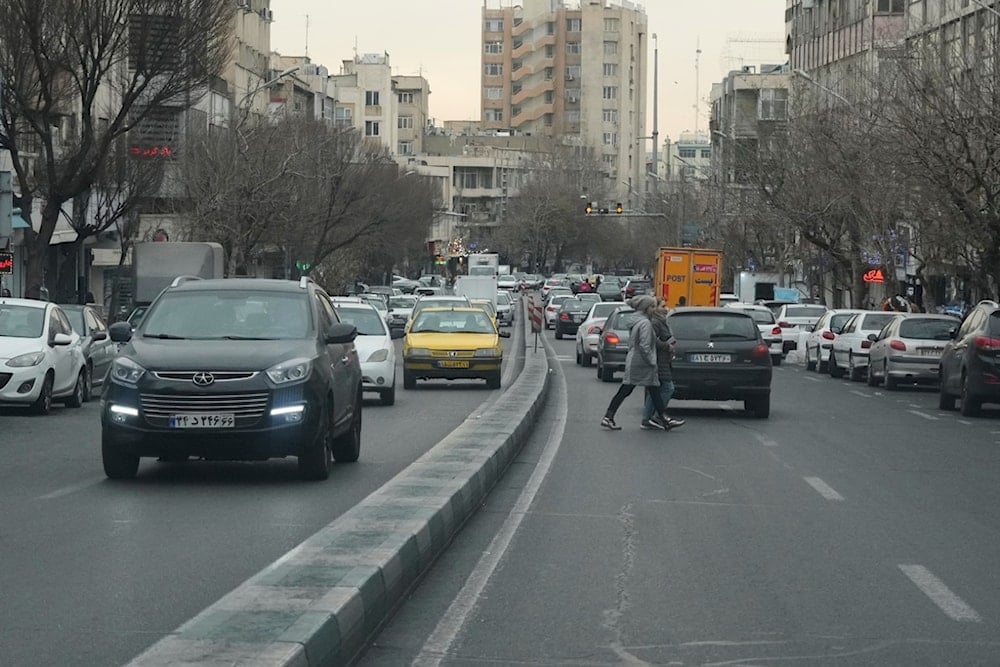
Vehicles drive on a street in downtown Tehran, Iran, Thursday, Jan. 15, 2026. (AP Photo/Vahid Salemi)
The IRGC on Friday reported that it uncovered evidence of an “enemy command room” involving 10 foreign intelligence services, established immediately after the recent 12-day Israeli aggression in June 2025.
In a statement released to coincide with Pasdar [Guards] Day and the Islamic month of Sha’ban, the IRGC said the unrest formed part of a broader US-Israeli scheme aimed at undermining Iran following the military confrontation.
“These terrorist incidents were designed in continuation of the 12-day war and influenced by the strategic failures of the ruling global powers, carried out hastily,” the statement said.
According to the IRGC, intelligence reviews indicated that immediately after the war, hostile actors activated a joint operational command involving 10 foreign intelligence services. The command room’s mission, the statement said, was to manufacture an existential threat to Iran by simultaneously igniting internal turmoil, encouraging armed group activity, and preparing the ground for foreign intervention.
The IRGC said documents and information obtained from the command room showed that the operation focused on three main axes: domestic unrest, militant group mobilization, and external military pressure, all designed to push Iran toward instability.
Security operations
In response, the intelligence organization said it carried out “cognitive intervention and a set of intelligence operations” to control and neutralize the scale and intensity of the threats. Between late June and early December, the statement said, security forces implemented a targeted operational plan focused on dismantling internal turmoil and disrupting group activity linked to the riots.
These measures, the IRGC said, resulted in the arrest or summons of hundreds of individuals tied to anti-security networks, while thousands of others deemed vulnerable to recruitment were managed through guidance and monitoring. Authorities also reported extensive engagement with social groups and professional sectors to raise awareness, alongside the seizure of hundreds of illegal firearms, including military-grade and hunting weapons.
The statement further said that 46 individuals connected to networks collaborating with foreign intelligence agencies were identified and employed within counter-intelligence efforts.
Engineered combined operations campaign
Describing the unrest as a redesigned and weakened form of combined operations by Iran’s adversaries, the IRGC said the riots were deliberately engineered to target the country’s political system and national unity. According to the statement, the operational plan, codenamed “Operation Lightning Strike,” relied on mixing rioters with civilians, leveraging foreign political and security support, manipulating social media algorithms and satellite channels, and using criminal elements such as armed robbers, traffickers, and hired thugs.
The IRGC said these actions resulted in the killing of civilians as well as members of the security forces, law enforcement, and the Basij, during what it described as violent and bloody confrontations.
Outlining ongoing priorities, the intelligence organization said it continues to infiltrate and monitor communication networks used by rioters to coordinate with foreign handlers, conduct surveillance of hostile elements along border regions, and exploit misguided participants within enemy structures. It also said it remains engaged in cognitive operations aimed at the planners and executors of the combined operations, while working with citizens and social groups to dismantle street-level support networks.
Expressing confidence in Iran’s ability to overcome foreign-backed threats, the statement concluded by emphasizing loyalty to the country’s leadership and invoking religious faith.
“We are confident that with the grace of Imam Mahdi (may God hasten His reappearance), under the leadership of the Supreme Commander-in-Chief and with the synergy of the country’s intelligence community and the tireless cooperation of the dear people, just as we disappointed the enemy from victory in the military battle, we will prevail over its malicious design in the terror and separatist war against Islam and dear Iran, God willing,” the statement said.
16 Arrested in Tehran Terror Incidents
In a related announcement, Iran’s Ministry of Intelligence of Iran said 16 individuals identified as criminal figures involved in the December terrorist incidents in Tehran were arrested during the past 24 hours in a joint operation with law enforcement authorities.
The ministry said eight suspects were detained in the Sattarkhan, Marzdaran, and Golestan Shahr areas, noting that one was intoxicated with alcohol, resisted arrest, and was shot in the leg. Authorities said the group played key roles in attacks against security forces and in setting fire to public and private vehicles.
Security forces reported confiscating more than 40 cold weapons, including blood-stained machetes, along with stolen police and Basij uniforms, military ammunition, narcotics, and large quantities of alcohol. Officials added that some detainees were financially affluent, including at least one factory owner.
An additional eight individuals were arrested in other parts of Tehran, including the Baharestan district, on charges related to manufacturing and deploying homemade bombs, arson attacks, and assaults on security forces.
The ministry said the arrests underscored that operations targeting networks coordinating foreign-backed unrest inside Iran remain ongoing.
Read more: Israeli military-grade ammo found in children killed during Iran riots


