
Israeli drone threats target Lebanese Army in Sarda, South Lebanon
 3 Min Read
Israeli occupation forces opened fire on a newly established Lebanese Army post in Mazraat Sarda and deployed a low-flying drone to issue threats, in ongoing violations of the November 27, 2024 ceasefire agreement and Resolution 1701.
-
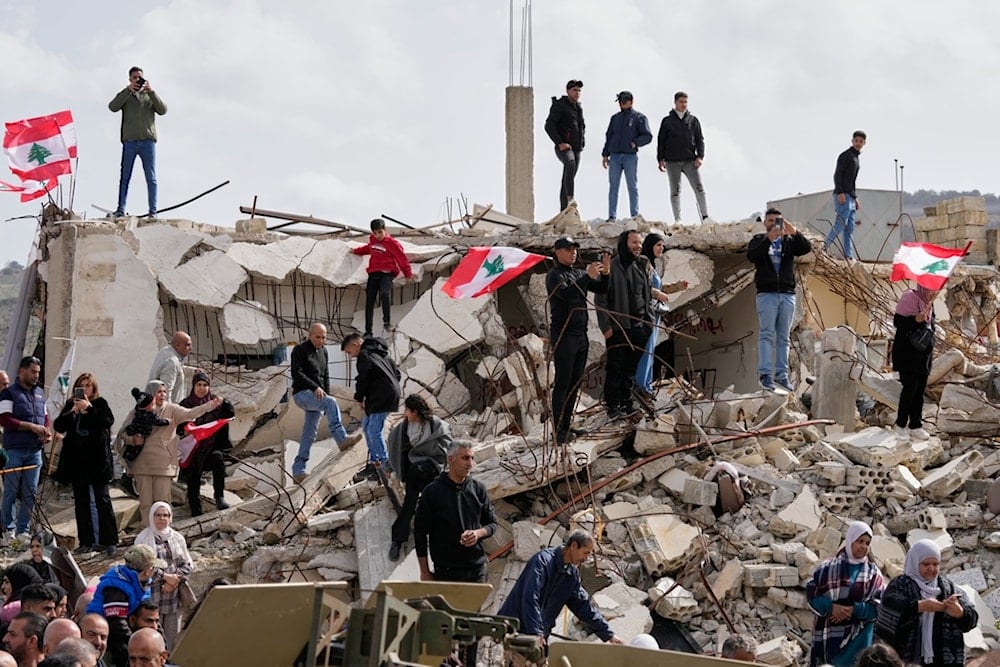
People gather as Lebanese Prime Minister Nawaf Salam tours areas in southern Lebanon that the Lebanese army says it has cleared of the armed presence of Hezbollah, in the village of Yarine, Saturday, Feb. 7, 2026. (AP)
Israeli ceasefire violations in southern Lebanon continued as occupation forces used drones to issue threats and opened fire near a Lebanese Army position in the border area of Mazraat Sarda.
Al Mayadeen’s correspondent in southern Lebanon reported that Israeli occupation drones broadcast public threats directed at the Lebanese Army, accompanied by machine-gun fire in the area of Mazraat Sarda.
Israeli drone threats in Mazraat Sarda
According to field reports, an Israeli drone flew at low altitude over the Sarda–Marjayoun area while broadcasting warnings aimed at forcing Lebanese soldiers to withdraw from their positions. The aerial threats coincided with gunfire in the vicinity, raising tensions along the southern border.
Lebanese Army statement on border incident
Earlier in the day, the Lebanese Army confirmed that Israeli forces opened fire near one of its observation posts being established along the southern border in the Sarda–Marjayoun area.
The Army stated that the drone’s low-altitude flight and broadcast threats were intended to pressure personnel into abandoning the post.
أثناء استحداث الجيش نقطة مراقبة عند الحدود الجنوبية في منطقة سردة - مرجعيون، تعرض محيط النقطة لإطلاق نار من الجانب الإسرائيلي، بالتزامن مع تحليق مسيّرة إسرائيلية على علو منخفض وإطلاقها تهديدات بهدف دفع العناصر إلى المغادرة. وقد أصدرت قيادة الجيش الأوامر بتعزيز النقطة والبقاء فيها… pic.twitter.com/2iHmZ4Gmf5
— الجيش اللبناني (@LebarmyOfficial) February 24, 2026
In response, the Army Command ordered immediate reinforcements to the location and instructed troops to remain in position and respond to the sources of fire. The situation is being followed in coordination with the committee overseeing the cessation of hostilities agreement and the United Nations Interim Force in Lebanon (UNIFIL).
The Lebanese Army's southern border deployment forms part of broader efforts to reinforce state authority and stabilize the border region.
Violations of the November 27, 2024 ceasefire and Resolution 1701
These developments come amid ongoing Israeli ceasefire violations in southern Lebanon, including breaches of the November 27, 2024, ceasefire agreement.
The incidents also constitute violations of UN Security Council Resolution 1701 (2006), which calls for respect for Lebanese sovereignty and stability along the Blue Line.
Background: Expansion of so-called 'buffer zones'
The latest escalation comes amid an openly declared shift in Israeli policy toward Lebanon and Syria.
On February 19, Israeli Prime Minister Benjamin Netanyahu announced that "Israel" would not withdraw from so-called “buffer zones” in southern Lebanon and Syria and would instead expand them, declaring that “there is no longer a policy of containment.”
Following the November 27, 2024, ceasefire agreement, Israeli occupation forces retained five elevated positions inside southern Lebanon beyond the February 18, 2025, withdrawal deadline. These positions overlook the towns of Maroun al-Ras, Aita al-Shaab, Bint Jbeil, Ramyah, and Blida, giving direct line-of-sight into civilian areas.
Despite objections from the Lebanese government and concerns raised by UNIFIL, "Israel" maintained its presence at what it described as five “strategic points,” reinforcing them with earthworks, fortified berms, surveillance systems, and access roads throughout 2025. Lebanese officials argue that the continued deployment constitutes a violation of both the ceasefire framework and national sovereignty.
In parallel, Israeli forces advanced into the UN-mandated demilitarized zone in southern Syria following developments in December 2024, with reports throughout 2025 documenting the construction of new military bases and fortified outposts in Quneitra and Daraa provinces.
Against this backdrop, Tuesday’s gunfire incident near Marjayoun is likely to deepen Lebanese concerns that "Israel’s" expanded “buffer zone” doctrine is translating into direct military pressure on Lebanese Army positions along the border. No casualties were reported, but the episode has heightened the risk of further escalation.


