
Israeli expert warns Tel Aviv risks isolation over Iran strategy
 3 Min Read
Former Israeli defense official and nuclear expert criticized Tel Aviv's regional approach, warning that inflammatory rhetoric and reliance on military force risk deepening international isolation.
-
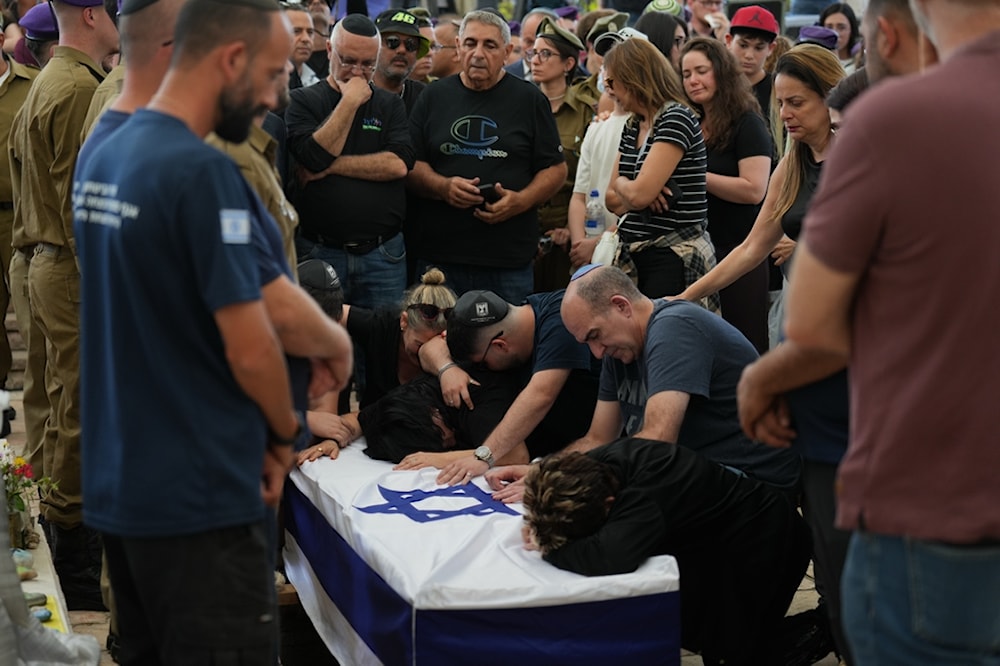
Settlers over the coffin of Israeli soldier Sgt. Rotem Yanai, who was killed in a retaliatory drone strike by Hezbollah in the northern occupied lands, Occupied Palestine, Thursday, May 28, 2026. (AP Photo/Ariel Schalit)
A former senior Israeli official and nuclear expert has pointed to what he described as a growing strategic dilemma facing the occupation state amid emerging understandings between Washington and Tehran, set against continued regional escalation across multiple fronts.
Speaking to Israeli radio station 103FM, Avner Whelan said that despite criticism inside “Israel” of the developing US-Iran framework, he views the situation with cautious assessment rather than alarm.
He described the emerging agreement as “a very bad agreement,” while stressing that the occupation state remains a powerful regional actor that must define clearer strategic objectives.
“Israel is still a strong country. We are much stronger than both Hezbollah and Iran. We will have to start behaving like a country that knows what it wants and knows how to define goals for itself,” he said.
His remarks reflect an ongoing debate within segments of the Israeli government over how to respond to shifting US strategy with Iran.
Read more: Iran will never abandon its friends in Lebanon: Source to Al Mayadeen
Criticism of political rhetoric and international fallout
Whelan also criticized recent statements by Israeli political figures regarding Lebanon, arguing that such rhetoric contributes to growing international scrutiny and diplomatic isolation.
He referred to comments by Police Minister Itamar Ben-Gvir, who stated that for every grieving Israeli mother, “a thousand mothers should be crying in Lebanon.”
“This is the statement of a tweeter, not of the Minister of National Security,” Whelan said. “The damage that this is causing us in the international community is unbelievable.”
According to him, such statements reinforce negative perceptions of Israeli decision-making as Tel Aviv tries to change the international narrative regarding its aggressions on Lebanon and the wider frontlines connected to the confrontation with the Resistance axis.
Limits of military force in regional confrontation
The former official also questioned the reliance on military force as the primary instrument of policy, arguing that it cannot deliver long-term strategic outcomes.
“Force is a very significant tool in our toolbox, certainly in the Middle East, but it cannot be the only tool,” he said.
He dismissed the idea that expanded military escalation, such as strikes on Iranian infrastructure, would produce decisive strategic gains.
“Let's say we were to bomb Iran and damage their civilian infrastructure. What would that have done for us?” he asked.
His comments come amid continued escalation by the occupation forces against the Lebanese people and Resistance, with the latter maintaining sustained operations in response to ongoing Israeli attacks and infiltration attempts.
Read more: IOF 'Hezbollah targets' narrative debunked; Lebanon buries civilians


