
Italy blocks EU plan to use frozen Russian assets for Ukraine
 4 Min Read
Italy and France raised parliamentary concerns over an EU plan to back a Ukraine loan using frozen Russian assets, with Rome ultimately blocking the proposal.
-
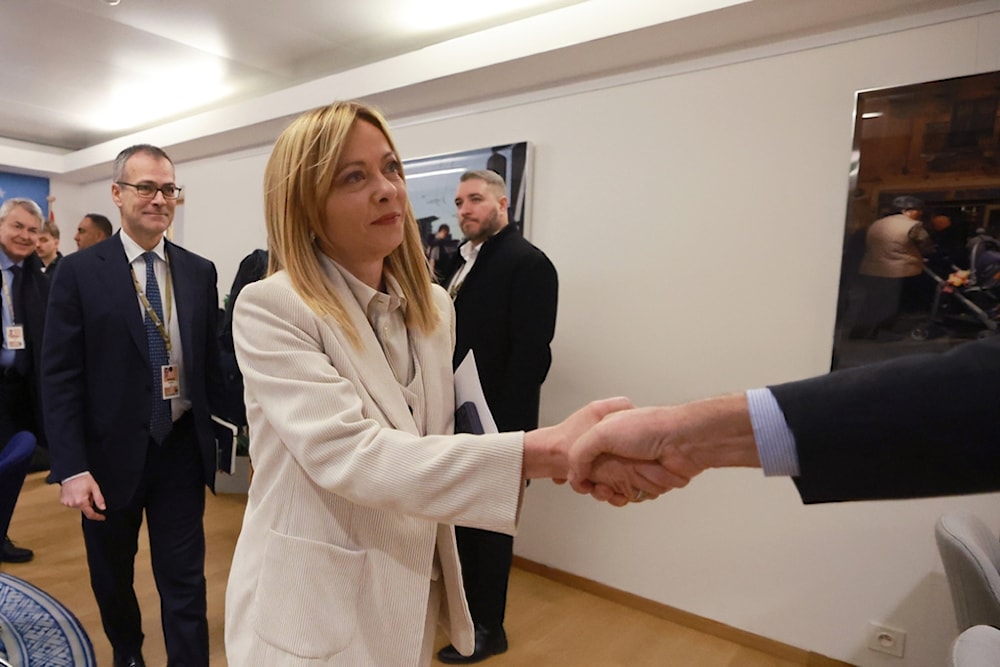
Italy's Prime Minister Giorgia Meloni, center, is greeted as she arrives for a round table meeting on migration at the EU Summit in Brussels, Thursday, December 18, 2025 (AP)
Italy and France played a key role in negotiations over a proposal to use frozen Russian assets to back a so-called “reparations” loan for Kiev, but Italian Prime Minister Giorgia Meloni ultimately blocked the plan, the Financial Times reported on Friday, citing people familiar with the discussions.
“Meloni was the killer,” a senior EU diplomat told the newspaper on condition of anonymity.
According to the report, Meloni and French President Emmanuel Macron raised concerns when presented with an updated version of the proposal, questioning whether their national parliaments would approve the financial guarantees demanded by Belgium. Their objections reportedly shifted the atmosphere in the negotiating room and stalled momentum around the initiative.
“It was never going to fly ... Something that technical and obscure spooked the leaders ... it felt like an ambush,” another senior EU diplomat told the Financial Times.
Earlier on Friday, EU Council President Antonio Costa said the European Union would provide Ukraine with a €90 billion ($105 billion) loan, funded through the EU budget and potentially repayable using frozen Russian assets. Macron has described frozen Russian funds as one of the main sources of leverage against Moscow in negotiations over a political settlement.
Following the launch of Russia’s military operation in Ukraine in 2022, the EU and G7 countries froze nearly half of Russia’s foreign currency reserves, estimated at around €300 billion. Roughly €200 billion of that amount is held in European accounts, mainly at the Belgium-based securities depository Euroclear. The European Commission has been seeking member-state approval to use the assets to finance Kiev’s war effort.
Belgium, Italy fear legalities amid German push for weaponization
Belgium, home to Euroclear, the institution that holds most of the frozen Russian reserves, has expressed the strongest reservations. Brussels fears being left to absorb the financial and legal fallout if the scheme triggers retaliation or court rulings abroad.
Those anxieties intensified after Russia’s central bank filed a $230bn lawsuit against Euroclear in Moscow, with the first hearing scheduled for January 16, 2026. Belgian officials also worry that courts in jurisdictions close to Russia might seize Western assets to enforce claims.
Aligning with Belgium's stance, Prime Minister Giorgia Meloni warned Italian lawmakers that using Russian assets without watertight legal guarantees would hand Moscow "the first victory since the start of the war". She added, "Italy, of course, considers sacred the principle that Russia should primarily pay for the reconstruction of the nation it attacked, but this result must be achieved with a solid legal basis."
Financial markets have also begun flashing warnings. Credit rating agency Fitch recently placed Euroclear on "rating watch negative", citing growing uncertainty over the EU’s asset-backed funding plans and the legal exposure stemming from Russia’s lawsuit. The rating action reflects concerns that the unprecedented scheme could undermine the financial stability of one of Europe’s core settlement systems.
Despite the risks, Germany is pushing hard for the plan to proceed. Chancellor Friedrich Merz told reporters he would continue fighting to make up to €90 billion of the frozen Russian assets "usable for Ukraine’s defence", adding that securing agreement among member states was "50/50", telling lawmakers the funds would support the Ukrainian army for "at least another two years".
Brussels rejects unanimity as Hungary digs in
EU diplomats preparing the summit say that any financing mechanism requiring unanimous backing, such as using the EU budget as collateral, is effectively dead, as Hungary maintains its promise to veto it, leaving the reparations-loan model as the only politically viable path.
"A very large majority of member states favour the reparations loan," one senior EU official said, as quoted by The Guardian. "Any solution that would require unanimity, I don’t think is realistic, so we are back into the reparations loan."
Belgium has floated the idea of using the same emergency powers that froze Russia’s assets indefinitely to create an EU-backed loan without unanimity, but other capitals have dismissed the suggestion.
The EU is now edging toward a decision that would set a global precedent: transforming sovereign assets frozen under sanctions into war financing without a peace settlement or reparations agreement. That said, Moscow has already warned that such a move amounts to outright theft and would trigger sweeping retaliation, including seizures of Western corporate holdings in Russia.


