
Italy prepares navy deployment to Bab al-Mandab
 4 Min Read
With Saudi Arabia's East-West Pipeline disabled and October crude allocations to at least two European refiners now cancelled, Europe's remaining supply routes are narrowing fast.
-
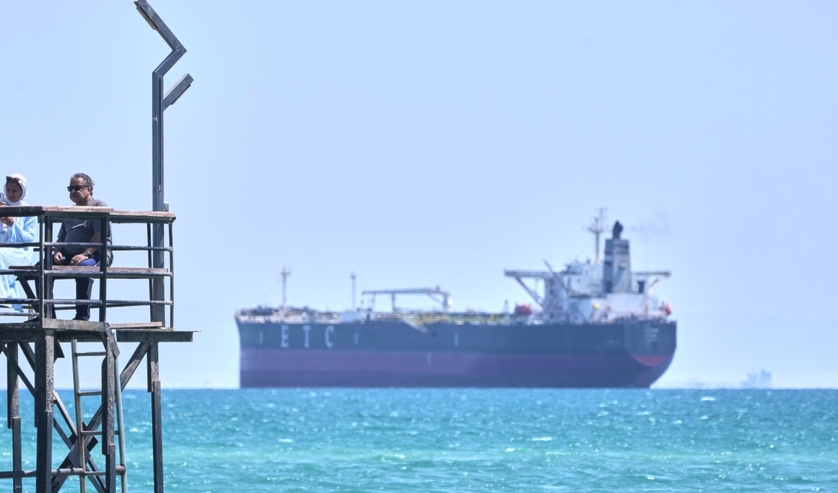
Holidaymakers sit in front of a tanker ship which sails through the Suez Gulf towards the Red Sea, at al Sokhna beach in Suez, Egypt, Saturday, Sept. 19, 2026. (AP Photo/Amr Nabil)
Italy is preparing to deploy up to four naval vessels, including frigates, to secure passage for its merchant fleet through the Bab al-Mandab Strait, Italian daily Corriere della Sera reported on Saturday, citing sources.
Italian Defense Minister Guido Crosetto reportedly told EU foreign affairs and security chief Kaja Kallas in a letter that "the need to adopt effective and timely decisions" was urgent to prevent further disruption to maritime traffic through the strait, which links the Red Sea to the Gulf of Aden.
Rome said it is prepared to act independently if other European Union member states do not move to reinforce the bloc's Aspides maritime mission, though it expects to share the financial burden with fellow EU states if others step up.
Crosetto said the Italian navy would ensure safe passage for Italian ships through the strait, which the Yemeni Armed Forces have moved to bring under their control as part of a wider offensive along Yemen's western Red Sea coast. An Italian warship already escorted a merchant vessel off the Yemeni coast on Friday.
The defense minister said Rome would not wait on the bloc's decision-making process, calling for an end to what he described as bureaucratic delays.
According to Italian news agency ANSA, the frigate Bergamini is currently docked in Djibouti, with at least a dozen Italian-flagged or Italian-owned merchant ships lined up requesting escorted passage. More than 1,200 ships a month have transited Bab al-Mandab since the start of summer, a 28 percent increase in traffic and a 43 percent rise in registered tonnage compared to the same period last year.
EU raises alert level
Italy's move comes a day after the European Union's own naval mission in the Red Sea, Operation Aspides, raised its alert level in response to intensifying conditions around the strait.
Kallas announced the measure Friday following talks with her Saudi counterpart, confirming Aspides would continue its escort duties for commercial shipping. "Given the worsening security situation, EU Operation Aspides has raised the alert level of its vessels as it continues its escort duties," she said.
The EU has also signaled it may expand the mission's mandate further, including adding minesweeping capability, and is considering redeploying ships originally pledged to a separate, as yet unformed coalition meant to protect the Strait of Hormuz.
Saudi Arabia halts October oil allocations to European refiners
The pressure on European supply lines is compounding. Saudi Arabia has informed at least two European oil refining customers that they will not receive crude allocations in October, invoking force majeure clauses that allow energy suppliers to cancel deliveries under extraordinary circumstances.
European refineries typically buy Saudi crude under term contracts designed to guarantee a standard monthly supply. The move follows a similar step by Qatar, which extended its own force majeure on liquefied natural gas shipments to European customers to early November because of the ongoing blockade of the Strait of Hormuz.
Saudi Arabia had appeared comparatively insulated from the regional war due to its East-West Pipeline, which carries crude from the Gulf to the Red Sea port of Yanbu, bypassing the Strait of Hormuz entirely. The pipeline allowed the kingdom to maintain roughly two-thirds of its pre-war export volume, close to four million barrels per day.


