
Ivory Coast steps up crackdown on illegal gold mining
 5 Min Read
Ivory Coast is expanding its fight against illegal gold mining as authorities target environmental damage, lost revenue and networks supporting clandestine extraction.
-
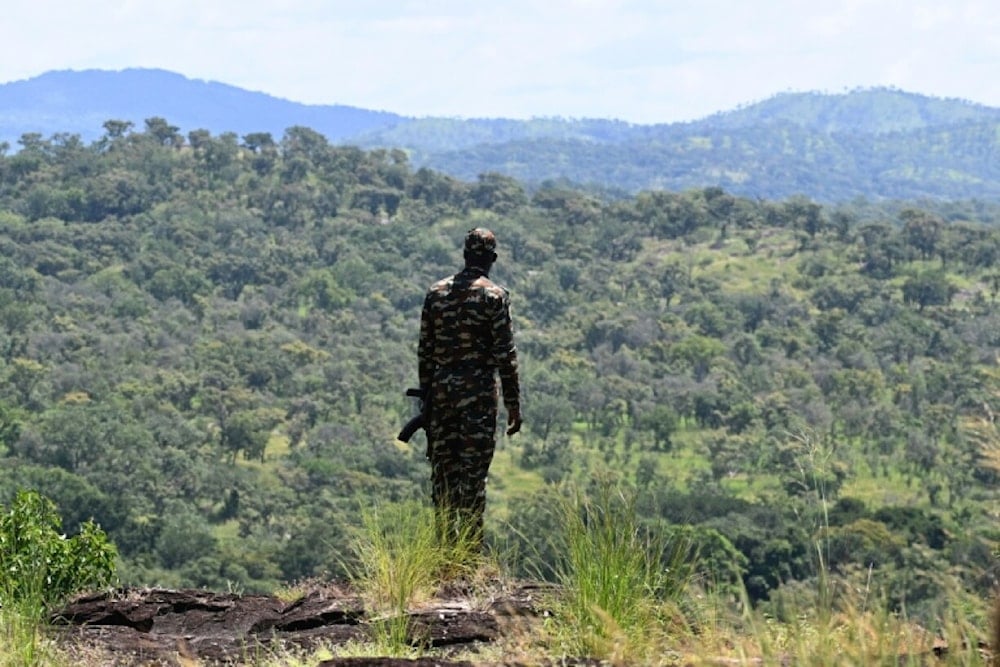
Undated photo of a soldier patrolling a forested area in the Ivory Coast for illegal gold mining. (AFP)
Ivory Coast is intensifying its campaign against illegal gold mining, deploying additional enforcement units and tightening penalties as authorities seek to dismantle a rapidly expanding informal industry blamed for environmental destruction and lost state revenue, Agence France-Presse (AFP) reports
The government has given regional authorities six months to eradicate illegal gold mining in their jurisdictions. The campaign includes increased surveillance, more specialized brigades and tougher penalties targeting not only miners but also those who finance, facilitate or profit from illegal operations.
The push comes as Ivory Coast's legal gold industry has expanded rapidly over the past decade, creating an increasingly valuable sector alongside a parallel illicit market.
Ivory Coast intensifies illegal mining crackdown
Near the central village of Baziafla, an expansive pit is all that remains of an illegal gold mine reportedly excavated by around 100 prospectors before local authorities forced them out.
The site in the Marahoué region is among numerous artisanal mining areas targeted by authorities. Regional officials have urged village leaders to monitor their communities and report miners and those facilitating their activities.
"We have to stamp out all forms of complicity," local official Gueu Georges Gombagui told AFP.
The government's response has accelerated in September.
On September 17, Ivory Coast's National Security Council announced plans to strengthen local security forces, expand the specialized brigades responsible for combating illegal gold mining and establish 21 river-security platoons to monitor the country's four major rivers and their tributaries.
The government subsequently adopted a bill on September 23 that would increase penalties for those who commission, finance, receive proceeds from, or own illegal mining sites. In certain circumstances involving public officials, sentences could reach 20 years in prison.
Read more: US Mint linked to global gold laundering network, report finds
Gold rush leaves environmental damage
The consequences are particularly visible around mining sites where vegetation has been cleared and soil excavated with basic equipment and machinery.
Residents in Baziafla told AFP that illegal mining has also affected agricultural production. Michael Gohore Bi Vro, deputy leader of the local youth organization, said he avoided the activity because of the damage caused to the land.
"We can't grow anything anymore," he told AFP.
The impact extends to Lake Kossou, Ivory Coast's largest lake and an important regional water source. According to local authorities, miners dredge lake sediments and use mercury to separate gold before dumping contaminated waste back into the water.
"The fish are no longer able to reproduce," Gombagui said.
The government has consequently incorporated ecological restoration into its response, alongside enforcement and the economic reintegration of national miners. Authorities have also proposed measures to professionalize the gold sector, including vocational training, purchasing offices, mapping of mining resources and the establishment of refineries.
Enforcement targets wider mining networks
Officials say the crackdown must extend beyond the people physically working the pits.
Regional mining authorities have pointed to landowners who rent out property, people supplying fuel and machinery, and alleged financiers as part of the wider chain supporting illegal operations.
The government's new legislation specifically seeks to increase accountability for commanders, financiers, receivers and owners of illegal mining sites, rather than focusing exclusively on individual miners.
The approach reflects a recognition that clandestine mining cannot be dismantled solely through raids on individual sites.
The authorities have already dismantled thousands of illegal pits. Official figures indicate that since 2021, approximately 4,500 people have been brought before courts on illegal mining charges, around 65% of them foreigners, while 8,500 illegal pits have been dismantled.
Critics, however, argue that enforcement has disproportionately affected small-scale miners while those financing or organizing operations have more often avoided prosecution.
A gold boom with a darker side
Ivory Coast's illegal mining expansion emerged during the political crises of the 2000s, when weakened state institutions created space for clandestine extraction.
The sector continued expanding after the country returned to greater political stability.
Official gold production nearly quadrupled between 2012 and 2023, rising from 13 tonnes to 51 tonnes, according to AFP. Ivory Coast also possesses significant deposits of iron, diamonds, nickel, manganese, bauxite, copper and coltan.
The growth of the legitimate mining sector has therefore coincided with persistent illegal extraction.
Experts cited by AFP have also raised security concerns, saying profits from illicit gold can contribute to financing armed groups operating across the neighboring Sahel. Such claims point to the wider regional significance of controlling gold production and trade as West African states confront armed violence, informal economies and competition over natural resources.
For rural communities, however, illegal mining remains tied to a more immediate economic reality.
"Gold mining suited everyone," one young resident of the town of Boré said, reflecting the financial incentives that have helped sustain the activity despite its environmental costs.
Read more: Ghana to formalize 127 tons of artisanal gold trade


