
Judge blocks Trump's move to end South Sudan TPS
 5 Min Read
A federal judge has blocked the Trump administration's attempt to end Temporary Protected Status for South Sudanese nationals, citing the ongoing humanitarian crisis.
-
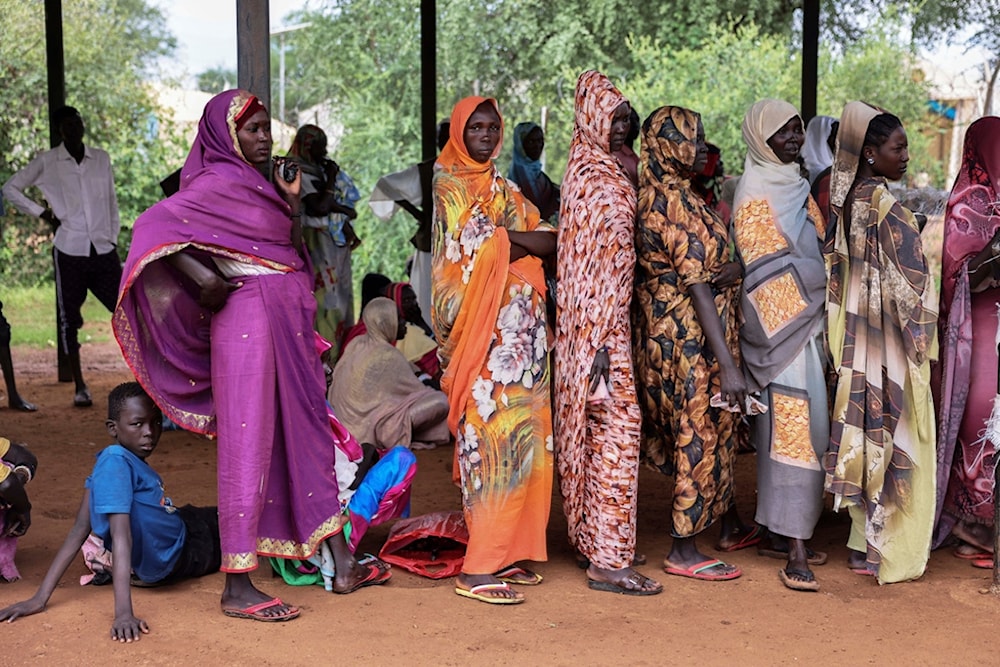
Women wait for cash assistance and dry grain from the U.N. World Food Program in Gendrassa refugee camp, Maban, South Sudan, on Aug. 20, 2025 (AP)
A US federal judge on Tuesday blocked the Trump administration from ending temporary deportation protections for hundreds of South Sudanese nationals living in the United States, dealing a setback to the administration’s efforts to roll back the humanitarian program.
US District Judge Angel Kelley in Boston granted an emergency request filed by several South Sudanese nationals and the immigrant rights group African Communities Together, preventing their temporary protected status (TPS) from expiring as scheduled after January 5. Kelley issued an administrative stay that halts the policy while litigation continues.
In her ruling, Kelley said allowing the termination to take effect before the court could assess the case’s merits would have an immediate and severe impact, stripping beneficiaries of lawful status and potentially leading to their deportation. The judge, appointed by former President Joe Biden, said the consequences could be imminent.
The lawsuit was brought by four South Sudanese migrants and African Communities Together, which argued that the US Department of Homeland Security acted unlawfully in terminating the protections and exposed beneficiaries to deportation to a country grappling with ongoing humanitarian crises.
Trump admin fires back
Homeland Security Department spokesperson Tricia McLaughlin criticized the ruling, saying it ignored President Donald Trump’s constitutional and statutory authority. She added that TPS for South Sudanese nationals “was never intended to be a de facto asylum program.”
South Sudan has been designated for TPS since 2011, the year it gained independence from Sudan. The designation allows eligible nationals from countries affected by armed conflict, natural disasters or other extraordinary conditions to live and work in the United States temporarily without fear of deportation. According to the lawsuit, about 232 South Sudanese nationals currently hold TPS, while another 73 have pending applications.
Homeland Security Secretary Kristi Noem announced the termination of South Sudan’s TPS designation in a notice published on November 5, arguing that the country no longer met the criteria for the status. The lawsuit counters that the decision violated the law governing TPS, disregarded persistent humanitarian dangers in South Sudan, and was motivated by racial discrimination in violation of the Fifth Amendment.
Diana Konate, deputy executive director of policy and advocacy at African Communities Together, said in a statement that the administration’s actions were part of a broader mass deportation agenda aimed at removing Black and Brown immigrants from the United States “as quickly and as cruelly as possible.”
The war in South Sudan, in brief
Conflict has continued to devastate South Sudan since its independence, including a five-year civil war that ended in 2018 after killing an estimated 400,000 people. Fighting persists in parts of the country, and the US State Department advises against travel there.
South Sudan’s civil war erupted in December 2013 after political tensions between President Salva Kiir and his former vice president Riek Machar escalated into armed conflict. What began as a power struggle within the ruling elite soon took on ethnic dimensions, spreading rapidly across the young nation just two years after independence.
The fighting has had a catastrophic impact on civilians, with widespread killings, sexual violence, and the destruction of homes and livelihoods. Millions of people have been forced to flee, many multiple times, seeking safety from clashes between government forces, opposition groups, and local militias.
Humanitarian conditions have sharply deteriorated as the conflict disrupted farming, trade, and access to basic services. Food insecurity, malnutrition, and disease have become widespread, while children have faced school closures, forced recruitment, and long-term psychological trauma.
Although a 2018 peace agreement formally ended the civil war, violence has continued in parts of the country due to political rivalries and intercommunal clashes. Years of conflict have left South Sudan deeply fragile, with lasting consequences for social cohesion, economic recovery, and civilian survival.
Trump admin wages war against Temporary Protected Status
The Trump administration has pursued an aggressive effort to roll back Temporary Protected Status (TPS), a humanitarian program that allows migrants from crisis-hit countries to live and work legally in the United States. Beginning in early 2025, the administration argued that TPS had been improperly expanded and signaled plans to restore what it called the program’s “temporary” nature.
In February 2025, the administration moved to end a Biden-era extension of TPS for Venezuelan nationals, a decision later allowed to proceed by the U.S. Supreme Court in May. In July 2025, the Department of Homeland Security announced the termination of TPS for Afghanistan, with protections set to expire on July 14, followed by notices ending TPS for Haiti, Honduras, Nepal, Nicaragua, and Cameroon later in August and September.
The campaign continued into the fall, with Homeland Security Secretary Kristi Noem publishing notices on November 5, 2025, terminating TPS for South Sudan, setting an expiration date of January 5, 2026. Protections for nationals of Myanmar were also scheduled to end on January 26, 2026, affecting tens of thousands who fled armed conflict and repression.
The sweeping terminations prompted a wave of lawsuits and court challenges, with judges in several cases temporarily blocking the administration’s actions. Immigrant advocates argue the decisions ignore ongoing humanitarian crises and unlawfully expose long-term residents to deportation, while critics say the policy marks a sharp departure from decades of US humanitarian practice.


