
Kallas defends EU-US relations amid criticism in US security strategy
 3 Min Read
At the Doha Forum, EU foreign policy chief Kaja Kallas emphasized the importance of EU-US relations despite critical remarks in the US National Security Strategy, as talks over a Ukraine ceasefire continue.
-
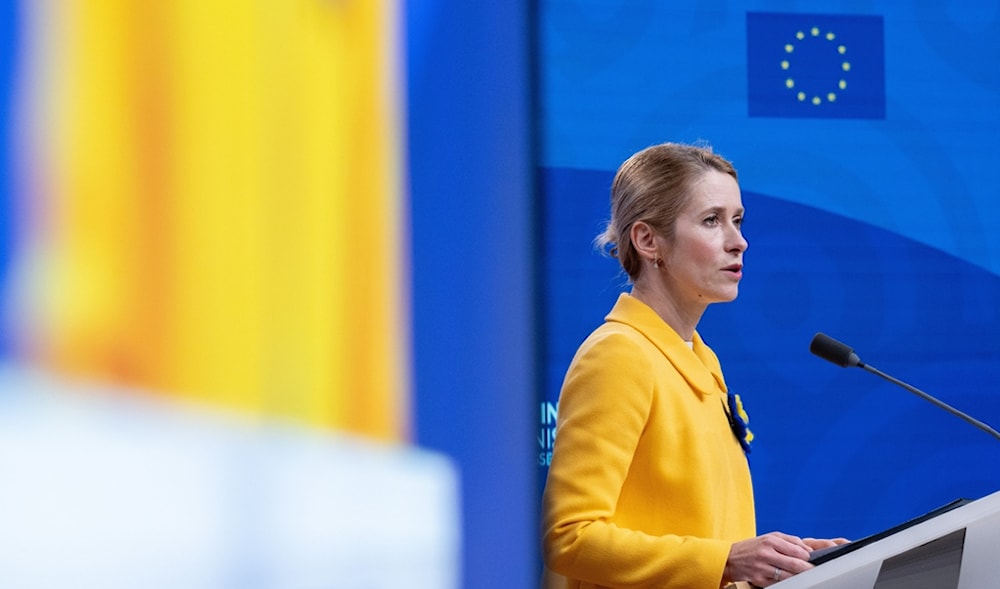
European Union foreign policy chief Kaja Kallas speaks during a media conference at the European Council building in Brussels, Nov. 21, 2025. (AP)
EU-US relations remain strong, European Union foreign policy chief Kaja Kallas affirmed, despite the criticism of Europe in a US strategic document, amid ongoing Ukraine ceasefire talks.
Speaking at the Doha Forum in Qatar on Saturday, Kallas acknowledged elements of the US National Security Strategy Europe assessment, which accused the continent of lacking “self-confidence” and warned of “civilizational erasure”, a claim widely rejected by European officials. However, she maintained that the EU and the US should “stick together”.
“I think we haven’t always seen eye to eye on different topics, but I think the overall principle is still there. We are the biggest allies,” Kallas stated, adding that Washington’s role should be to help Europe “correct its current trajectory”.
What is currently happening?
The document reportedly cast doubt on Europe’s future reliability as a strategic partner. Trump had urged European NATO members to increase their defense spending, accusing them of relying excessively on Washington’s support during the Russia-Ukraine war.
This comes after Trump proposed a plan to end the war in Ukraine, which heavily relies on territorial swaps and provisions that have been viewed as "pro-Russia," in exchange for limited security guarantees, falling short of Kiev's long-standing goal of joining the NATO alliance, which directly contradicts Europe's demands.
Meanwhile, US and Ukrainian officials entered a third consecutive day of negotiations on Saturday. These talks follow a five-hour session in Moscow on Tuesday, during which Russia was provided with multiple proposals for a potential ceasefire, and where both Moscow and Washington reaffirmed their intent on economic cooperation.
After Friday’s discussions, Washington stated that “real progress” would hinge on Russia’s readiness to show serious commitment to long-term peace, including efforts toward de-escalation and an end to the violence.
Kallas echoes war preparedness
Addressing the diplomatic efforts, Kallas criticized any strategy that involved pressuring Kiev to concede territory.
“Placing limitations and stress on Ukraine actually does not bring us long-lasting peace,” she told the Doha Forum.
“If aggression is rewarded, we will see it happen again, and not only in Ukraine or Gaza, but all around the world.”
Kallas further noted that Europe has underestimated its own capacity to confront Russia, echoing a war rhetoric that the Union has been escalating in recent months. “Towards Russia, for example… we should be more self-confident,” she said.
Clashing stances within bloc
As Kallas seeks to maintain the EU's relationship with the United States, French President Emmanuel Macron warned that Washington could be preparing to “betray” Ukraine, Politico reported, citing a leaked transcript of a call between European leaders discussing support for Kiev published by German magazine Der Spiegel.
The phone call, held on Monday, included Macron, German Chancellor Friedrich Merz, NATO Secretary-General Mark Rutte, Finnish President Alexander Stubb, Ukrainian President Volodymyr Zelensky, and others. The discussion reportedly centered around US-led peace talks involving Kiev and Moscow.
“There is a possibility that the US will betray Ukraine on the issue of territory without clarity on security guarantees,” Der Spiegel quoted Macron as saying, adding that there was “a great danger” for Zelensky.
Read more: Russia did not start war, sought peace for 8 years: Putin


