
Kang Kon destroyer will bolster DPRK's nuclear deterrence: Kim Jong Un
 2 Min Read
Leader Kim Jong Un says the newly commissioned Kang Kon destroyer will strengthen the DPRK's nuclear deterrent as Pyongyang expands its naval capabilities.
-
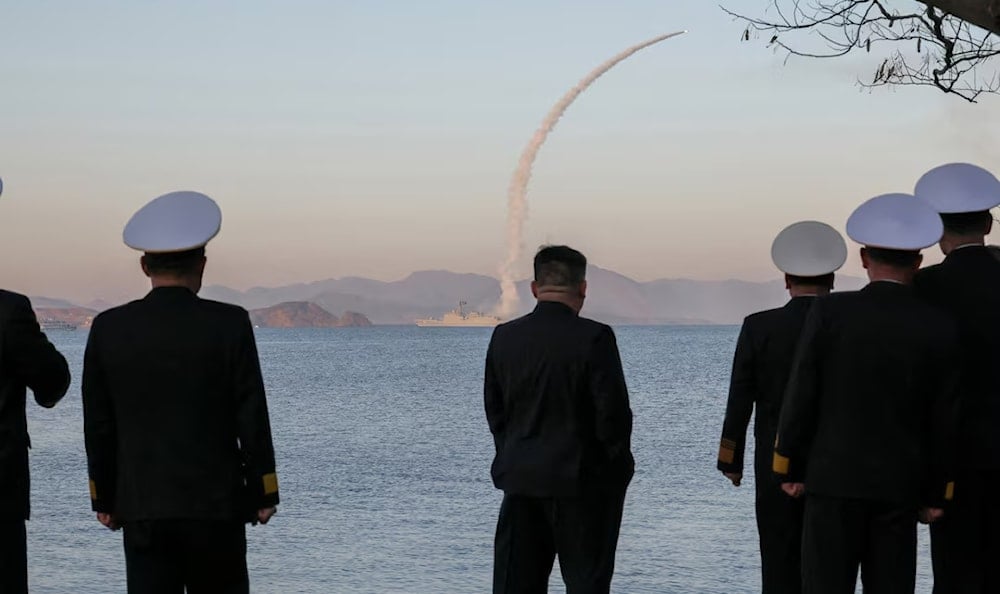
Kim Jong Un observes as strategic cruise missiles and anti-warship missiles are test-fired from the destroyer Choe Hyon, Democratic People's Republic of Korea, April 12, 2026 (KCNA)
The Democratic People's Republic of Korea's newest warship would form part of its nuclear deterrent system and could carry out "devastating retaliatory strikes," Leader Kim Jong Un disclosed, according to the Korean Central News Agency (KCNA).
Speaking at the commissioning ceremony for the new destroyer in the eastern coastal city of Wonsan, Kim said deploying the warship at sea off the east coast of the Korean Peninsula would send a "clear message" to the DPRK's adversaries, according to the agency.
"It is time to exercise our sovereignty at sea and underwater," Kim said.
Kang Kon destroyer joins naval forces
KCNA reported that the Kang Kon, a 5,000-ton destroyer, is the second warship of its class to enter service after the launch of the Choe Hyon on the west coast of the DPRK about three months ago.
The nuclear destroyer is part of Pyongyang's continuing efforts to modernize its naval forces and expand its strategic capabilities at sea.
Kim stressed that the DPRK's development of its nuclear naval capabilities is progressing and said his country would continue expanding its “most powerful strategic assets” in key waters to protect its maritime sovereignty and regional security.
DPRK reshuffles military leadership
Last week, the DPRK reshuffled its senior military leadership, removing Defense Minister No Kwang Chol from his post and appointing Kim Song Gi as his replacement.
The changes were approved during a meeting chaired by leader Kim on Saturday, according to KCNA, which described the decisions as part of “structural reorganization plans.”
The reshuffle affects several senior positions across the country’s military and defense establishment, including the Central Military Commission and Political Bureau.
Alongside the defense ministerial change, the DPRK announced a series of appointments and promotions involving other senior military figures.
The reshuffle comes as Pyongyang continues to place considerable emphasis on strengthening its defense capabilities and military preparedness amid heightened tensions on the Korean Peninsula.


