
DPRK warns US-led drills are driving nuclear tensions
 4 Min Read
Pyongyang condemns the upcoming US-South Korea military exercises, warning that expanding trilateral cooperation is escalating nuclear risks on the Korean Peninsula.
-
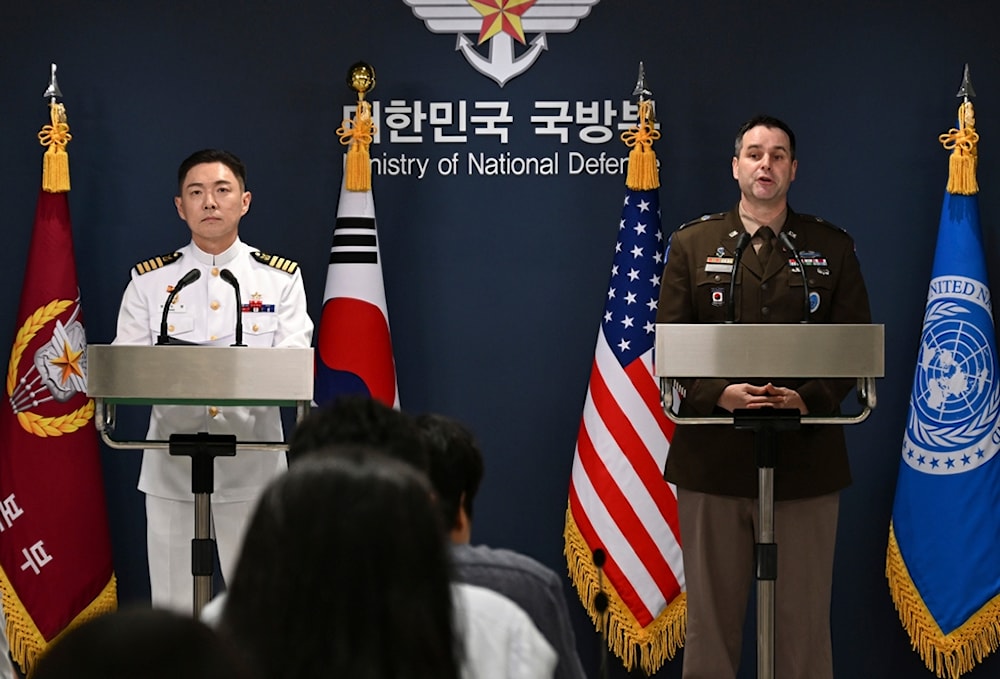
Public affairs director of South Korea's Joint Chiefs of Staff, Col. Jang Do-young, and public affairs director of the UN Command, Combined Forces Command, and US Forces Korea, Col. Ryan Donaldn, attend a press briefing at the Defense Ministry in Seoul, South Korea, on August 10, 2026. (Song Kyung-Seok/Pool Photo via AP)
The DPRK condemned the upcoming US-South Korean Ulchi Freedom Shield (UFS) military exercises, warning on Friday that expanding military cooperation between Washington, Seoul, and Tokyo is creating a more dangerous security environment on the Korean Peninsula.
Pyongyang further pledged to strengthen its nuclear deterrence, arguing that the US is pursuing a nuclear strategy that could lower the threshold for the use of nuclear weapons and push global security toward a nuclear confrontation.
The annual UFS military exercises are scheduled to take place from August 17 to 27.
DPRK news outlet KCNA cited a Foreign Ministry spokesperson as saying that this year's drills are more provocative than last year's.
Read more: DPRK test-fires ballistic missle as Japan intensifies militarization
DPRK condemns US-South Korea military drills
The upcoming exercises will include training designed to respond to drones, GPS disruption, and cyberattacks, according to the source material, as Washington and Seoul adapt their military planning to the DPRK's evolving capabilities.
Pyongyang has routinely condemned joint US-South Korean exercises as a form of provocation, arguing that the military maneuvers contribute to instability on the peninsula and amount to preparations for confrontation.
The DPRK's Foreign Ministry spokesperson said US-Japan-South Korea military cooperation is developing into a "nuclear alliance", according to KCNA.
South Korea's Unification Ministry said the statement represented the DPRK's first official response to this year's UFS exercises.
In a separate KCNA commentary, Pyongyang warned that the strategy could push global security "to the brink of a nuclear war."
The commentary pointed to US nuclear cooperation with South Korea and Washington's extended-deterrence commitments to Japan, arguing that the Korean Peninsula could become a priority target under the alleged US strategy.
The recent Resolute Dragon exercises between the US and Japan involved land-seizing drills, which the DPRK blasted as aggressive and offensive.
US-led military cooperation draws DPRK response
Military cooperation between Washington, Seoul, and Tokyo has expanded in recent years, with the three countries increasing joint exercises and coordination in response to what they describe as threats from the DPRK.
Pyongyang, however, has repeatedly condemned this trilateral military architecture, arguing that it represents a growing strategic threat.
US commitments to extended nuclear deterrence for South Korea and Japan have been accompanied by closer coordination involving Washington's strategic capabilities. The DPRK has continuously called out these developments as evidence that the regional security environment is becoming increasingly militarized.
The upcoming UFS exercises consequently take place against a backdrop of growing military competition rather than in isolation.
For Pyongyang, the exercises, expanded trilateral coordination, and US nuclear commitments form part of a broader pressure campaign that requires the strengthening of the DPRK's strategic deterrence.
Missile launches amid rising tensions
On Wednesday, the DPRK fired a ballistic missile toward waters off the eastern coast of the Korean Peninsula, according to South Korea's Joint Chiefs of Staff.
The missile was launched from the Wonsan area, the JCS said, six days after the DPRK fired another ballistic missile from the same area.
The DPRK has maintained that its missile and nuclear programs are intended to strengthen its ability to deter military action by the United States and its allies. Washington and Seoul, however, characterize the DPRK's strengthening of its deterrence capabilities as a security threat that requires stronger military coordination and increased US presence on the peninsula.
Read more: DPRK's Kim supervises weapons tests on new destroyer


