
US, Japan hold island seizure drills, DPRK condemns
 2 Min Read
US Marines and Japanese soldiers have practiced seizing and defending contested islands in the annual Resolute Dragon exercises, drawing condemnation from DPRK, which called the drills "aggressive and offensive."
-
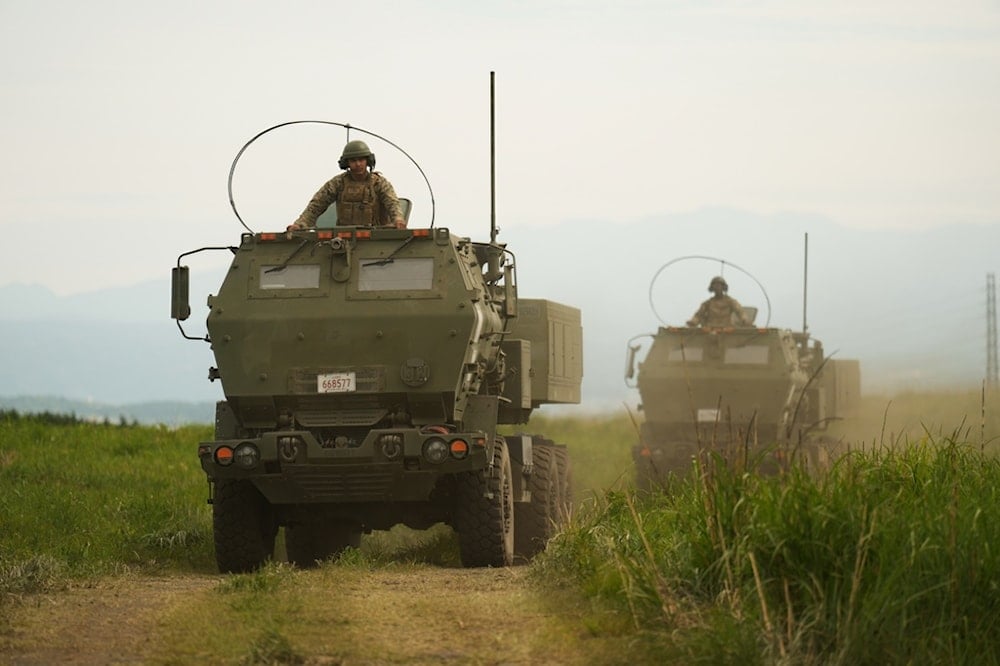
US Marines appear to show the High Mobility Artillery Rocket System (HIMARS) mounted on trucks during a media tour after live-fire training at Camp Fuji, in Gotemba, Japan, Wednesday, May 20, 2026. (AP Photo/Hiro Komae)
Ninety US Marines and 300 Japanese soldiers have practiced seizing and defending contested islands during the annual Resolute Dragon exercises on Japan's Kyushu island, as Washington and Tokyo continue to deepen their military cooperation in the region, according to a report by Stars and Stripes.
The large-scale training is taking place in June at 23 locations in Okinawa and Kyushu, with an aim to develop and improve tactical island defense capabilities, the report said. Soldiers brought rifle and mortar fire to bear on targets at progressive distances, with UK, Philippine, French and Australian armed forces observing the drills.
The rehearsal involved Japan's Type 19 wheeled self-propelled 155mm howitzers, Type-16 Maneuver Combat Vehicles, the US's unarmed Neros Archer drones and a Stalker VXE30 drone with a 16-foot wingspan, the report added.
North Korea condemns drills as 'aggressive and offensive'
Earlier in the day, DPRK condemned the Resolute Dragon-26 drills as aggressive and offensive, Central News Agency reported.
Pyongyang has consistently criticized US-Japan military exercises as provocations that threaten regional stability.
In recent years, Japan has escalated tensions in the region by deepening its military alliance with the US, having previously limited itself to observing exercises but now deploying its forces and openly using long-range strike weapons designed for preemptive strikes against neighboring countries, KCNA said.
Regional implications of US-Japan military cooperation
The Resolute Dragon exercises reflect the deepening military alliance between Washington and Tokyo, which has been strengthened under the Biden and Trump administrations.
Japan has been expanding its military capabilities, citing threats from DPRK and China, while the US has sought to bolster its presence in the Indo-Pacific region.
The exercises come amid heightened tensions in the region, including over Taiwan and the South China Sea. China has also criticized US-Japan military cooperation, viewing it as an attempt to contain its rise.
The drills are likely to further strain relations between Beijing and both Washington and Tokyo.


