
DPRK says nuclear status is irreversible amid US pressure
 4 Min Read
Pyongyang says its nuclear weapons status is irreversible, rejecting renewed denuclearisation calls by the US, Japan, and South Korea while defending its deterrence strategy.
-
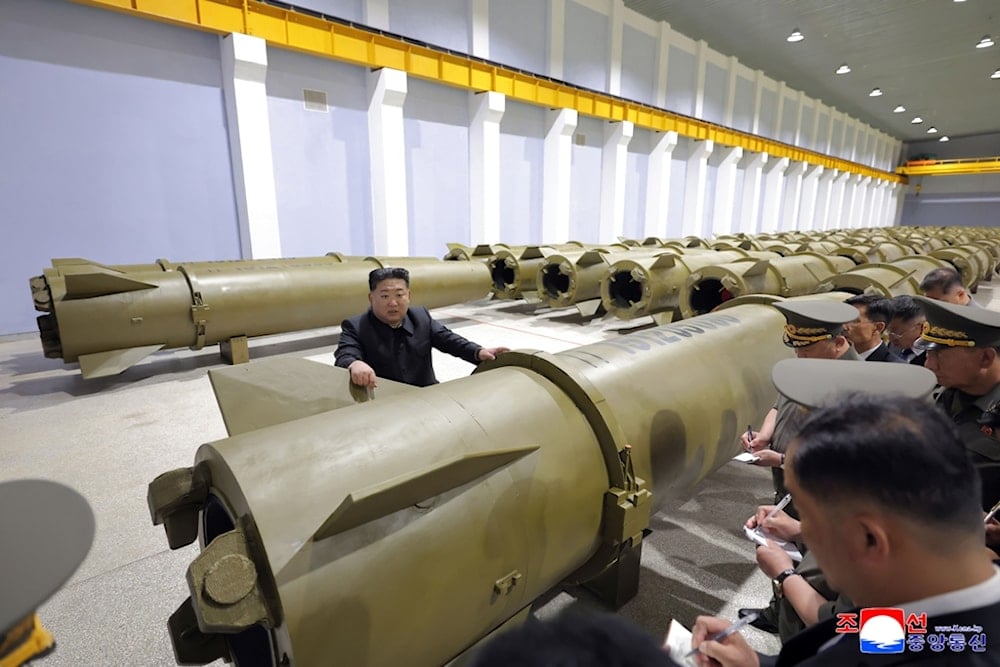
DPRK leader Kim Jong Un visits a weapons factory at an undisclosed place in the DPRK on Saturday, June 6, 2026. (Korean Central News Agency/Korea News Service via AP)
The DPRK has declared that its status as a nuclear weapons state is "irreversible," dismissing renewed calls from the United States, Japan, and South Korea for the denuclearization of the Korean Peninsula.
The statement, carried Sunday by the Korean Central News Agency, came after a trilateral meeting in Tokyo between senior officials from Washington, Tokyo, and Seoul, where the three allies reaffirmed their commitment to the "complete denuclearization of the Korean Peninsula."
Responding to the meeting, an unnamed DPRK official said efforts to pressure Pyongyang into abandoning its nuclear capabilities would have no impact on what was described as an established and irreversible reality.
"The US and its vassal forces' meaningless rhetoric against the DPRK... can never affect the irreversible position of the DPRK as a nuclear weapons state," the spokesperson said.
"The 'denuclearization' is an irreversibly finalized matter," the statement added.
Read more: DPRK condemns US approval of missile sale to South Korea
DPRK links deterrence to regional stability
Pyongyang has consistently made clear that its nuclear arsenal is a defensive necessity in response to escalating military pressure from Washington and its regional allies.
In Sunday's statement, the DPRK official pointed to continued US weapons sales and military cooperation with South Korea and Japan as justification for maintaining and advancing its nuclear programme.
The spokesperson described the country's nuclear capabilities as "a strong security guarantee for regional stability and peace," arguing that deterrence remains essential amid growing military activity in Northeast Asia.
"No matter how hard the US, Japan and the ROK may quibble, they will never change the present position of the DPRK as a nuclear weapons state," the official said.
The DPRK has long viewed the expanding military partnership between Washington, Seoul, and Tokyo as a direct security threat, while the three allies maintain that their cooperation is aimed at deterrence and regional security.
Collapse of diplomacy continues to shape policy
The latest remarks underscore how the collapse of diplomacy between Pyongyang and Washington continues to shape the DPRK's strategic outlook.
Negotiations effectively broke down in 2019 after talks between DPRK leader Kim Jong Un and US President Donald Trump ended without agreement in Hanoi.
Since then, the DPRK has accelerated the development of its missile and nuclear capabilities while increasingly framing denuclearization as a closed chapter.
Earlier this month, Kim Yo Jong, the sister of Kim Jong Un, described the country's nuclear policy as a "line of no retreat," signalling Pyongyang's continued rejection of future disarmament efforts.
In an apparent reference to the failed negotiations with Washington, Sunday's statement asserted that "no one can recover the 'denuclearization' permanently missed in the trend of the times."
Regional alignments deepen amid strategic rivalry
The statement comes as regional powers continue to strengthen competing political and security partnerships.
Recent months have seen deeper coordination among the United States, Japan, and South Korea, particularly in the areas of military planning, missile defence, and strategic deterrence.
At the same time, Pyongyang has expanded engagement with Beijing and Moscow as geopolitical rivalries intensify across the Asia-Pacific region.
Kim Jong Un recently hosted Chinese President Xi Jinping in Pyongyang following separate meetings between Xi, Trump, and Russian President Vladimir Putin.
Official accounts of those meetings made no reference to denuclearization, highlighting the diminishing role the issue now plays in broader regional diplomacy.
From negotiations to permanent deterrence
For decades, denuclearization formed the central objective of negotiations involving North Korea, the United States, South Korea, China, Japan, and Russia.
However, repeated diplomatic breakdowns, sanctions, military tensions, and shifting regional alliances have contributed to a significant transformation in Pyongyang's strategic doctrine.
DPRK officials now increasingly characterize the country's nuclear capabilities as a permanent element of its national defence posture rather than a subject for negotiation.
The latest statement reflects a broader shift away from previous diplomatic frameworks and signals that future regional security discussions are likely to take place within the reality of the DPRK's nuclear status rather than around prospects for disarmament.
Read more: Kim directs Navy to place destroyers Kang Kon, Choe Hyon into service


