
Kim vows 'exponential' expansion of DPRK nuclear forces
 3 Min Read
Kim Jong Un pledged an exponential increase in the DPRK's nuclear capabilities as Pyongyang unveiled a new nuclear facility and reaffirmed its rejection of denuclearization demands.
-
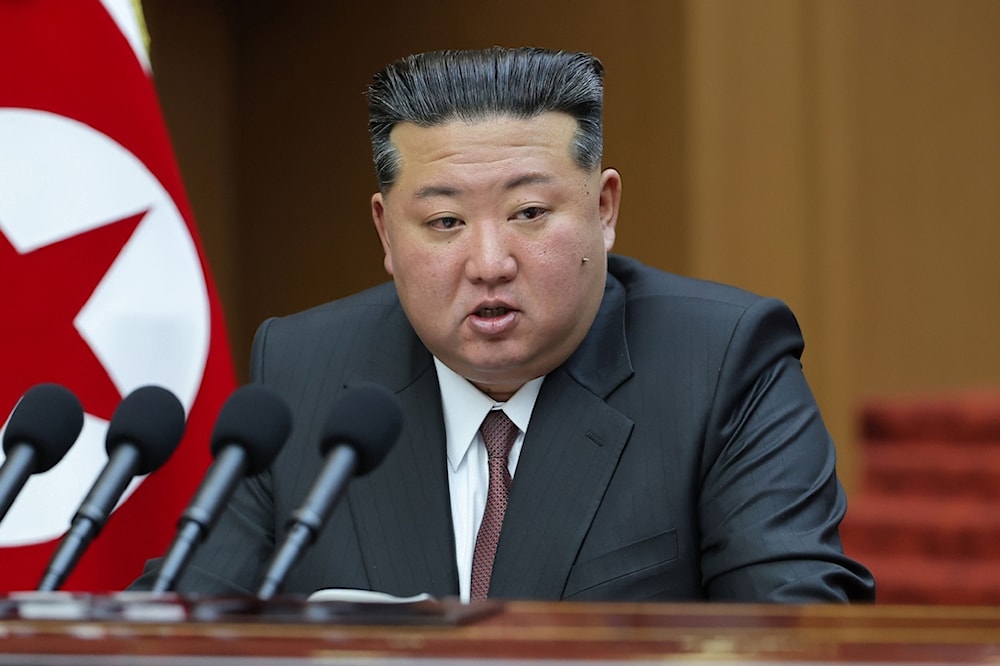
DPRK leader Kim Jong Un delivers a speech during a session of the Supreme People's Assembly at parliament in Pyongyang, DPRK, on March 23, 2026. (Korean Central News Agency/Korea News Service via AP)
DPRK leader Kim Jong Un has vowed an "exponential" expansion of the country's nuclear forces, signaling a further strengthening of Pyongyang's strategic deterrence capabilities amid continued pressure from Washington and its regional allies.
According to the Korean Central News Agency (KCNA), Kim visited a newly inaugurated nuclear materials production facility on Wednesday, where he outlined plans to significantly expand the country's nuclear arsenal.
During the inspection, Kim highlighted an "ambitious future plan designed to beef up our state's nuclear forces at an exponential rate," underscoring the central role of strategic deterrence in the DPRK's national security doctrine.
The visit comes as Pyongyang continues to reject US-led demands for denuclearization, maintaining that its nuclear status is irreversible and essential to safeguarding the country's sovereignty against external threats.
Read more: UN nuclear nonproliferation talks end without agreement
New nuclear facility points to expanding weapons production
While DPRK authorities did not disclose the location of the facility, analysts cited in the report suggested it is likely a newly completed uranium enrichment plant at Yongbyon, one of the country's key nuclear sites.
KCNA reported that the country's production capacity for weapons-grade nuclear materials has more than doubled over the past five years, reflecting a sustained effort to expand strategic capabilities despite sanctions and international pressure.
The announcement suggests that Pyongyang is moving beyond maintaining its existing arsenal and toward increasing production capacity to support future weapons development and deployment programs.
The DPRK is widely believed to operate uranium enrichment facilities at Yongbyon, Kangson, and Kusong, forming the backbone of its nuclear infrastructure.
Pyongyang rejects denuclearization demands
The latest declaration reinforces the DPRK's long-standing position that negotiations aimed at dismantling its nuclear arsenal are no longer under consideration.
Pyongyang has repeatedly argued that the military posture of the United States and its allies on the Korean Peninsula justifies maintaining and expanding strategic deterrence capabilities.
Analysts noted that the public unveiling of the facility may serve as a direct message to Washington amid ongoing global debates surrounding nuclear programs and strategic balance.
Yang Moo-jin, former president of the University of North Korean Studies in Seoul, suggested to AFP that the timing may be intended to emphasize that denuclearization is not open for negotiation.
The move comes as nuclear issues remain central to broader geopolitical tensions across Asia and beyond.
Nuclear build-up reflects shifting global strategic environment
The DPRK has conducted eight missile tests this year, continuing a pattern of military modernization that Pyongyang presents as a response to growing regional security challenges.
Analysts cited in the report said the expansion of nuclear material production reflects increasing demand for warheads intended for tactical missile systems that the DPRK has unveiled in recent years.
The developments also occur amid a broader transformation of the international security landscape, where major powers are investing heavily in military modernization and strategic deterrence capabilities.
Against this backdrop, Pyongyang appears increasingly confident in asserting its nuclear status while signaling that external pressure campaigns have failed to alter its strategic trajectory.
Read more: DPRK drops goal of reunification in revised constitution


