
DPRK vows deterrent buildup over US-ROK nuclear moves
 4 Min Read
The DPRK says the US-ROK military modernization and nuclear submarine plans are driving the Korean Peninsula toward nuclear confrontation.
-
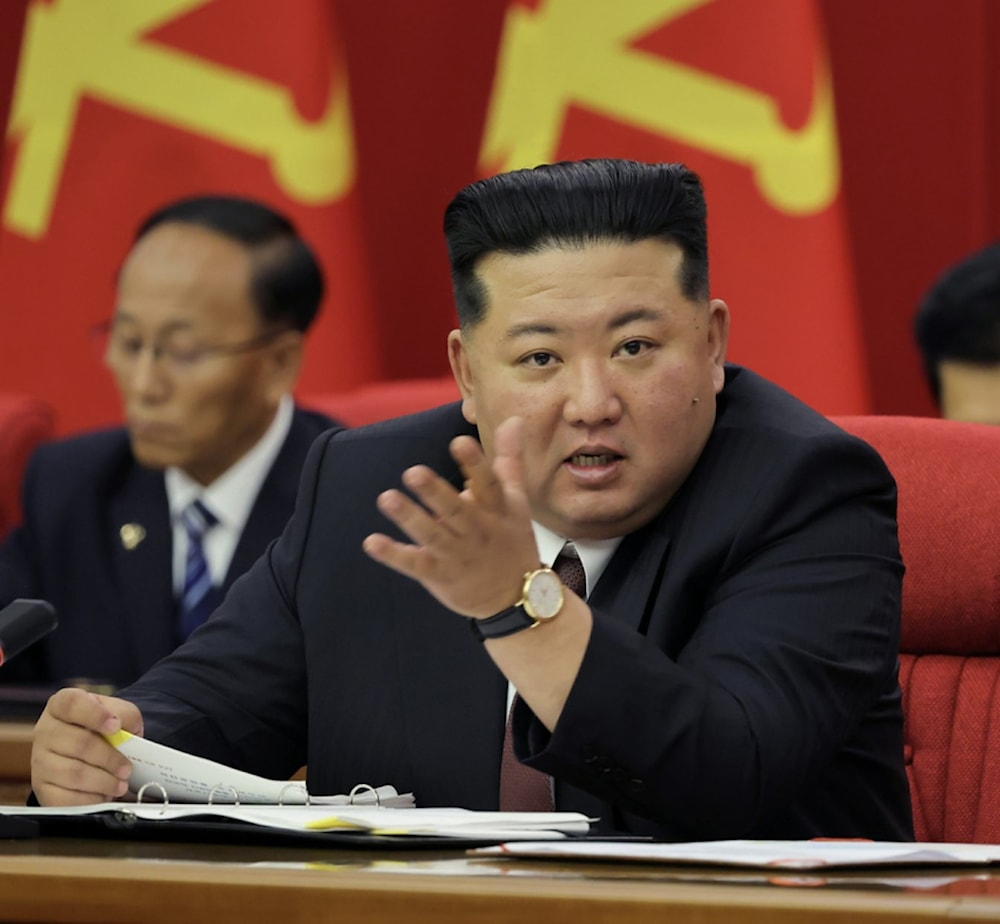
Kim Jong Un presided over the Enlarged Meeting of the 2nd Plenary Session of the 9th Central Committee of the Workers’ Party of Korea (KCNA)
The DPRK has reaffirmed its sovereign right to strengthen its national defense capabilities, warning that escalating US-ROK military moves are pushing the Korean Peninsula toward a dangerous nuclear confrontation.
DPRK leader Kim Jong Un made the remarks during a three-day meeting of the Workers' Party of Korea, which concluded on Monday and reviewed key policy priorities, including national defense, regional security, and the country’s strategic deterrent.
According to the official Korean Central News Agency, Kim "in his concluding speech reaffirmed the steadfast policy stand of our Party and state to beef up the national defense capabilities faster."
US-ROK military buildup fuels confrontation
Pyongyang pointed to Washington and Seoul’s expanding military coordination, including the ROK’s push to acquire nuclear-powered submarine capabilities, as evidence of a deepening hostile posture against the DPRK.
KCNA quoted Kim as saying "the US and the ROK are pushing forward with the ROK's possession of a nuclear submarine while getting evermore undisguised in their moves towards the reinforcement and modernisation of armed forces in the region."
He warned that these actions were "pushing the situation in the Korean peninsula to the brink of a nuclear war."
Against this backdrop, Kim said the DPRK would continue to strengthen its self-defensive deterrent, describing it as a necessary response to the military pressure imposed by Washington and Seoul.
He said it remained the DPRK’s "steadfast stand" to "further expand and strengthen the powerful and absolutely reliable deterrent for self-defence."
Deterrence presented as sovereign necessity
The DPRK’s position comes as Washington and its allies continue to demand denuclearization while maintaining sanctions and expanding military activity near the Korean Peninsula.
For Pyongyang, these policies show that the US and the ROK are not pursuing stability, but reinforcing a military environment in which the DPRK sees its nuclear deterrent as essential to safeguarding sovereignty and preventing war.
KCNA said the Workers' Party meeting "unanimously recognised that to steadily expand and strengthen the nuclear forces... is the most correct and unique way to actively and confidently cope with the unpredictable international military and political situation."
The agency added that the DPRK’s war deterrent, developed "with nuclear technology as a basis," would advance "at increasing speed."
Analyst Hong Min at Seoul's Korea Institute for National Unification told AFP that Kim’s rhetoric can be read as "a narrative that justifies strengthening its nuclear capabilities in line with movements from South Korea and the US."
He added that the wording "effectively shuts down any room for denuclearisation talks and treats the irreversibility of its nuclear status as a fait accompli," saying it also indicates Pyongyang’s intent to "use nuclear weapons as a standing diplomatic and strategic lever."
Pyongyang rejects pressure over its nuclear status
The DPRK has repeatedly declared itself an "irreversible" nuclear state since the collapse of Kim’s 2019 summit with Trump in Hanoi, where talks failed over disagreements on sanctions relief and the scope of denuclearization.
The director of the General Affairs Department of the Workers' Party of Korea, Kim Yo Jong, said earlier this month that the DPRK’s nuclear policy was a "line of no retreat," reaffirming Pyongyang’s position that its nuclear arsenal is not subject to bargaining under pressure.
Meanwhile, ROK President Lee Jae Myung said last week that US President Donald Trump had told him it was time to "pay attention to the North Korea issue."
Lee said he told Trump during a meeting on the sidelines of the G7 summit in France that sanctions imposed on the DPRK were "ineffective".
"I also said that we can no longer deal with the North Korean nuclear issue in the same way we deal with other countries, and President Trump agreed," Lee added.
Read more: DPRK condemns US approval of missile sale to South Korea


