
DPRK slams NATO expansion into Asia-Pacific, defends nuclear deterrent
 3 Min Read
The DPRK accuses the US-led alliance of fueling bloc confrontation and justifying Pyongyang’s continued nuclear buildup.
-
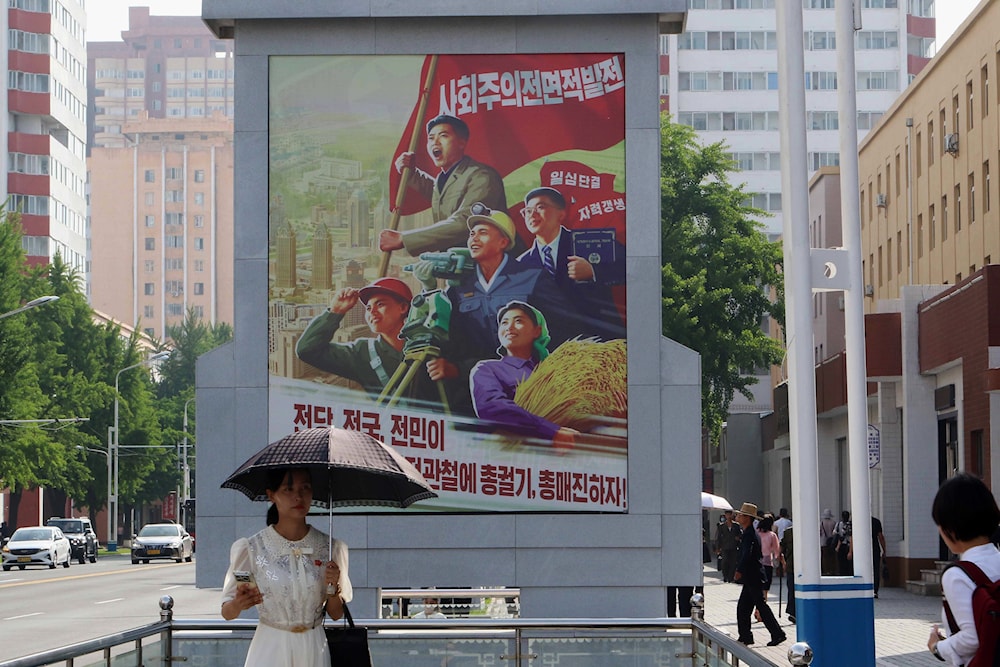
People walk in the street of the Central District in Pyongyang, DPRK, Monday, June 22, 2026. The poster reads, "Comprehensive development of socialism, single-minded unity, self-reliance. All party, all country, and all people, let's turn out in implementing the decisions of the Ninth Congress of the Workers' Party of Korea!" (AP)
The DPRK denounced on Saturday the United States and its allies for deepening military confrontation through NATO’s expanding arms buildup and growing cooperation with countries in the Asia-Pacific region.
In a statement carried by the Korean Central News Agency, the DPRK's Foreign Ministry said NATO had once again distorted Pyongyang’s legitimate exercise of sovereign rights by presenting it as a security threat.
The Ministry said the summit in Türkiye exposed the alliance’s increasingly confrontational character, pointing to higher military spending, large-scale weapons procurement and closer defense coordination with US allies beyond Europe.
At the NATO summit in Ankara on Tuesday, alliance members announced more than $50 billion in military procurement and defense industry agreements, as Washington continued pressing European states to increase their military contributions.
South Korean President Lee Jae Myung also said on the sidelines of the summit that Seoul hoped to broaden cooperation with NATO members in advanced technology, military research, and the production of weapons systems.
Asia-Pacific strategy and regional concerns
Pyongyang said such developments demonstrated that NATO was expanding its bloc-based military strategy into the Asia-Pacific and strengthening a US-led network aimed at surrounding independent states and undermining regional stability.
The Foreign Ministry described NATO as an organization driven by war and confrontation, accusing it of pursuing narrow geopolitical interests at the expense of peace and security in both Europe and Asia.
It also rejected renewed Western calls for the DPRK to abandon its nuclear weapons, stressing that efforts to impose denuclearization on Pyongyang had been "irreversibly terminated."
The Ministry said any serious discussion of denuclearization should first address the nuclear protection extended by the United States to South Korea and Japan, as well as the ambitions of NATO members participating in the alliance’s nuclear-sharing arrangements.
It accused Washington and its allies of applying double standards by condemning the DPRK’s defensive nuclear capabilities while expanding their own nuclear infrastructure and military deployments.
Commitment to sovereignty and defense
The Ministry said the DPRK would continue to defend its sovereignty, national security, and regional peace through the "responsible exercise of its sovereign rights."
The statement followed a KCNA report on Friday saying Pyongyang had adopted new measures to strengthen its nuclear forces "quantitatively and qualitatively," as DPRK leader Kim Jong Un moves to modernize the country’s armed forces in response to growing military pressure from the United States and its allies.
Read more: DPRK's Kim supervises weapons tests on new destroyer


