
Kim Jong Un asserts diplomatic role as DPRK expands ties
 4 Min Read
Kim Jong Un receives credentials from 10 foreign ambassadors as the DPRK strengthens diplomatic engagement amid continued tensions with Washington.
-
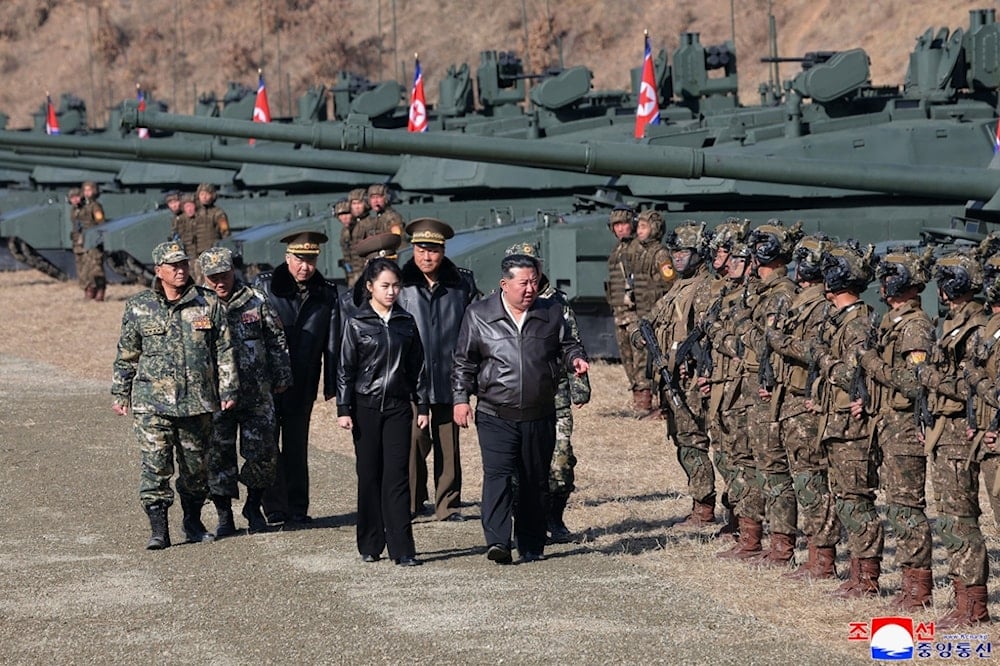
DPRK leader Kim Jong Un, center, and his daughter visit a military training base in the Democratic People's Republic of Korea, Thursday, March 19, 2026 (KCNA)
DPRK leader Kim Jong Un has resumed a diplomatic protocol last performed by his grandfather, Kim Il Sung, receiving credentials from 10 foreign ambassadors in Pyongyang on Sunday as the country seeks to expand international relations without pursuing a new summit with US President Donald Trump.
The ceremony marked the first time in decades that the DPRK leader personally received credentials from newly appointed ambassadors, a role traditionally exercised by Kim Il Sung. His son and successor, Kim Jong Il, transferred the responsibility to the chairman of the country's legislature after assuming the leadership in 1994.
According to state media reports published Monday, Kim delivered a speech as envoys from Russia, Sweden, Vietnam, and other countries attended the ceremony.
Kim expressed concern over the "political and economic chaos" around the world, telling the ambassadors that the DPRK prioritizes expanding diplomatic relations when they align with its security interests.
"The DPRK is ready to strengthen the ties of friendship and cooperation with all other countries that respect the sovereignty of our state and are friendly toward us," Kim said, according to state media.
DPRK rejects US overtures amid closer ties with Russia and China
Kim's diplomatic outreach comes amid continued tensions with Washington. Trump had sought a meeting with the DPRK leader during his trip to Asia last week, but Kim did not attend.
The DPRK also signaled that it does not regard the US as a "friendly country". During a visit to Russia last week, Kim's top aide, Jo Yong Won, said the DPRK's security environment was being pushed to "unpredictable danger by the US inveterate hostile policy."
The remarks marked the latest criticism of Washington by a senior DPRK official. Nuclear negotiations between the two countries collapsed in 2019, after which Pyongyang expanded its military capabilities and nuclear stockpile. The DPRK has since said it would not resume talks unless it is recognized as a nuclear state.
Meanwhile, Kim has strengthened relations with Beijing and Moscow, highlighting those ties at a military parade in Beijing last year, where he appeared alongside Chinese President Xi Jinping and Russian President Vladimir Putin.
Kim has been more diplomatically active than his father and grandfather, having met Trump three times during the US president's first term and held bilateral summits with the leaders of Russia, China, and Belarus.
Pyongyang gradually reopens diplomatic channels
The DPRK sealed its borders at the onset of the Covid pandemic, prompting most Western embassies to close and forcing international organizations to leave the country. Sunday's ceremony reflects Pyongyang's selective emergence from the isolation imposed during that period.
Sweden, which has historically served as an intermediary between the DPRK and some Western countries, became the first Western nation to return diplomats to Pyongyang in September 2024.
Singapore's foreign minister visited Pyongyang in May, while some United Nations officials have traveled to the country to prepare for a possible return. However, permanent UN staff remain largely absent.
DPRK vows to strengthen deterrence
The DPRK vowed to accelerate the development of its military capabilities, citing growing maritime threats from the US and its allies.
Pyongyang announced on Thursday that it would continue strengthening its war deterrence capabilities, stressing its readiness to take responsive measures in the face of escalating maritime threats and moves by Washington and its partners.
According to the Korean Central News Agency (KCNA), the development of the country's military deterrence capabilities will continue without interruption to counter threats posed by the US and its allies at sea.
The announcement comes as Pyongyang steps up its military testing activities. Last week, the DPRK announced that it had tested a new air defense system.
On October 15, it also announced two tests of strategic cruise missiles launched from submarines, following the launch of tactical ballistic missiles earlier that month.
The DPRK has been seeking to advance its naval capabilities and strategic deterrence systems, including underwater missile-launch capabilities.


