
Knowing US responsible, Trump still claimed Iran struck Minab school
 3 Min Read
Donald Trump cited dismissed intelligence to blame Iran for a deadly school strike later linked to a US Tomahawk missile, as a Pentagon investigation reveals major intelligence failures.
-
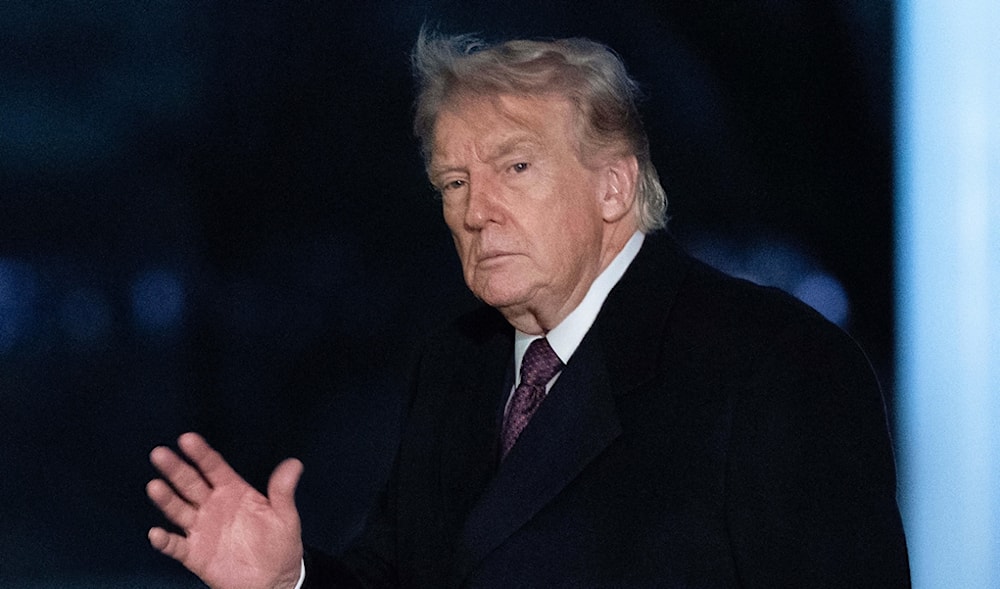
President Donald Trump gesture to the media as he walks on the South Lawn upon his arrival to the White House, Sunday, March 15, 2026, in Washington. (AP)
US President Donald Trump doubled down on blaming Iran for a lethal missile strike on Minab elementary school, even after intelligence clearly showed the opposite, sources say. Trump’s insistence came from an early US assessment that was quickly dismissed by analysts, yet he publicly pointed fingers anyway, raising questions about transparency as military investigations revealed the missile was likely American.
According to The Guardian, two sources familiar with the matter told reporters that Trump’s attempt to assign blame to Iran stemmed from an initial CIA assessment that the missile may have been Iranian. The assessment was almost immediately challenged, as the missile’s fins appeared positioned too low to be a Tomahawk cruise missile, typically used by the US.
Within 24 hours, further analysis using additional video angles confirmed the missile was indeed a Tomahawk, a weapon used exclusively by the US and a few allies, including the UK, Japan, and Australia.
Restless deflection
Despite the updated intelligence, Trump publicly suggested Iran was responsible for the strike during remarks on Air Force One last Saturday and repeated the position at a news conference the following day.
Former intelligence officials criticized both Trump and those who briefed him. “Giving Trump preliminary information is dangerous because he can turn it into a total embarrassment,” one former CIA officer said. “If the principal asks a question, the safest answer is ‘you don’t know,’ knowing how hard it is to correct later.”
Pentagon investigation confirms US responsibility
The Pentagon’s ongoing investigation has reached similar conclusions, finding the missile was fired by the US military and that outdated intelligence played a role in the strike.
The probe has focused on why outdated intelligence was used and whether verification protocols were properly followed.
Targeting procedures and oversight
Military targets are generally selected by the Defense Intelligence Agency and the National Geospatial-Intelligence Agency, which build satellite-based “target databases” using tools like the Maven Smart System.
Buildings are designated as potential targets years in advance with multiple layers of oversight. Once entered into the database, targets may not be re-reviewed until an operation is planned. Target lists can then be generated, sometimes using artificial intelligence tools like Anthropic’s Claude model, and adjusted for distance, destruction probability, or strategic priority.
For the opening phase of the war on Iran, potential target lists included thousands of sites, but it remains unclear whether each location was verified before strikes were executed.
White House echoes Trump's blames
White House spokesperson Anna Kelly claimed, “This investigation is ongoing. As we have said, unlike the terrorist Iranian regime, the United States does not target civilians.”
The school, located in the town of Minab, sits on the same block as an Islamic Revolution Guard Corps navy base. Originally part of a military compound, the building was converted into a school between 2013 and 2016.
The US strike resulted in what is now known as the Minab school massacre, which killed at least 165 little girls, aged 7-12.
Pictured are remnants from the missile that struck the Shajareh-ye Tayyebeh Girls’ Elementary School in #Minab, in #Iran’s Hormozgan Province, on Saturday, February 28, while it was filled with pupils during class hours.
— Al Mayadeen English (@MayadeenEnglish) March 9, 2026
Iranian authorities reported that 165 people were killed… pic.twitter.com/KhuwDbe32v


