
Knowledge and labor 'the two wings of progress', Sayyed Khamenei says
 3 Min Read
Sayyed Mojtaba Khamenei’s Workers Day and Teachers Day message highlights the vital role of education and labor in Iran’s development, emphasizing cultural and economic resilience amid current challenges.
-
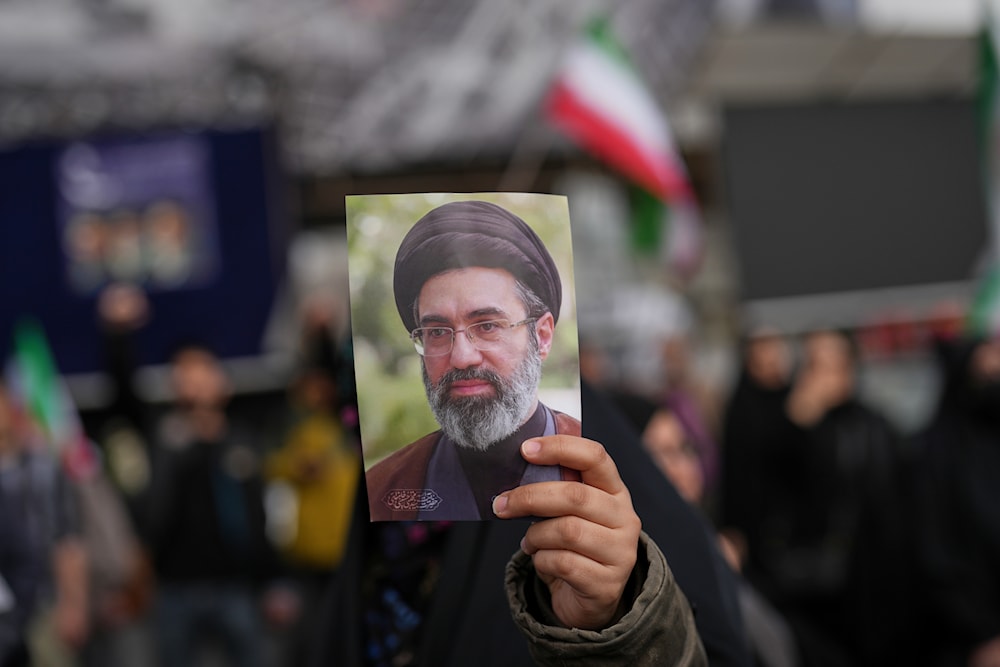
An Iranian citizen holds a picture of Iran's Leader Sayyed Mojtaba Khamenei during celebrations after announcement of a two-week ceasefire with the United States and "Israel", in Tehran, Iran, April 8, 2026 (AP)
In a message marking Workers Day and Teachers Day, Sayyed Mojtaba Khamenei underscored the central role of education and labor in national development as the two essential “wings” of any country’s progress: knowledge and work.
The message emphasized that beyond symbolic recognition, the advancement of any nation depends on the combined efforts of teachers and workers, who form the foundation of cultural and economic development.
Teachers as key drivers of cultural and educational formation
Sayyed Khamenei highlighted the critical role of teachers in shaping future generations, stating that educators carry a major responsibility in imparting knowledge, building skills, and forming the identity and awareness of students.
He noted that students raised under the guidance of teachers go on to reflect their education in various aspects of life, from family environments to workplaces and broader society, describing this influence as a lasting legacy of the education system.
Workers are the backbone of economic progress
The message also placed strong emphasis on the role of workers across all sectors of society, including homes, offices, farms, factories, mines, and service industries.
According to the statement, sustained national progress depends on three key elements in the labor sector: diligence, effort, and commitment. When these principles are upheld, economic development becomes stronger and more sustainable.
Sayyed Khamenei added that skilled and dedicated workers deserve recognition and appreciation, likening their value to that of educators in society.
Iran’s development through knowledge and labor
Reflecting on more than four decades of the Islamic Republic’s experience, the message stated that Iran has demonstrated significant capabilities in various fields, including military confrontations with adversaries.
However, it emphasized that future progress must also focus on the “economic and cultural struggle,” where teachers and workers play a central role.
Teachers were hailed as the most influential actors in cultural development, while workers were identified as essential contributors to economic resilience, forming the backbone of both sectors.
Call for practical support beyond symbolic recognition
The message stressed that annual celebrations alone are not sufficient, calling for practical measures to support both teachers and workers.
It urged stronger involvement of families in educational institutions, increased support for domestic production, and prioritization of locally made goods to strengthen national industry.
Employers were also advised to minimize worker layoffs, treating employees as valuable assets, while the government was called upon to support such efforts wherever possible.
Concluding the message, Sayyed Khamenei stated that Iran’s future progress depends on strengthening Iranian-Islamic identity through education and supporting domestic production through labor.
He expressed confidence that continued investment in teachers and workers would enable the country to reach higher levels of development and prosperity, emphasizing unity in cultural and economic efforts.
Read the full letter below:
Message from the Leader of the Islamic Revolution, Ayatollah Sayyed Mojtaba Khamenei, on the occasion of Workers’ Day and Teachers’ Day
In the name of God, the Most Compassionate, the Most Merciful
The 11th and 12th of May are observed as days honoring the status of the worker and the teacher. Beyond the verbal and symbolic recognition, which is valuable in itself, the progress of any country depends on two wings: knowledge and work.
The teacher plays a pivotal role in the initial stage of achieving this goal, bearing a heavy responsibility in imparting knowledge and developing skills. Teachers also play a vital role in shaping the awareness of the next generation and forming its identity. Students who grow up under the guidance of teachers will, in the near future, apply the knowledge and skills they have acquired, and may even reflect their teachers’ words and behaviors in their own character and conduct across various spheres of life, from the warmth of the family environment to the workplace and society at large, like a mirror reflecting that upbringing.
On the other hand, the field of work is a vast arena that extends across the entire country: from homes, offices, and commercial units to mosques, farms, workshops, factories, mines, and all forms of service professions. The more this sphere is characterized by diligence, effort, and commitment, three pillars of any major success, the greater and more sustainable the country’s progress will be.
We know that a worker, through dedication and quality performance, may at times reach a level where their skilled hands deserve to be kissed in appreciation and gratitude, just as the hands of teachers and educators are honored. This is the result of early upbringing by parents, followed by learning under the guidance of teachers.
Now, after more than forty-seven years of struggle, the Islamic Republic of Iran, relying on divine assistance, has been able to demonstrate to the world, through military confrontation with its adversaries, a portion of its remarkable capabilities. Today, it must also frustrate and defeat them in the fields of economic and cultural jihad.
Teachers are the most influential link in the cultural confrontation, while workers are among the most essential elements in the economic struggle. It can even be said that they form the backbone of both the cultural and economic spheres. Therefore, it is essential that they fully recognize the importance of their role, which goes beyond being merely a job for which they receive a wage.
At the same time, it must be emphasized that annual verbal appreciation, though appropriate, is not sufficient; recognition must be practical and deeper. Just as the Iranian people demonstrate their support for the armed forces through their presence in public arenas, it is also appropriate for them to show strong support for teachers and workers.
In this regard, the participation of students’ families in the management of schools and universities should be strengthened, and support for productive workers should be enhanced by prioritizing the consumption of domestic goods. Likewise, business owners, especially those facing difficulties, should avoid laying off workers as much as possible, regarding each worker as an asset to the institution, while the government should support this approach to the extent possible.
Dear Iran, just as you have become a military power after years of effort, you will, God willing, continue on the path of progress and prosperity by strengthening Iranian-Islamic identity in the hearts of the youth through the efforts of teachers, and by supporting domestic production, the fruit of workers’ labor, so as to reach the highest peaks of advancement and excellence, God willing.
Peace and God’s mercy and blessings be upon you.
Sayyed Mojtaba Hosseini Khamenei


