
Kurdish Autonomous Administration in Syria says ready to resume talks
 3 Min Read
The Autonomous Administration of North and East Syria announces it is awaiting Damascus to schedule new talks on implementing the March 10 integration agreement.
-
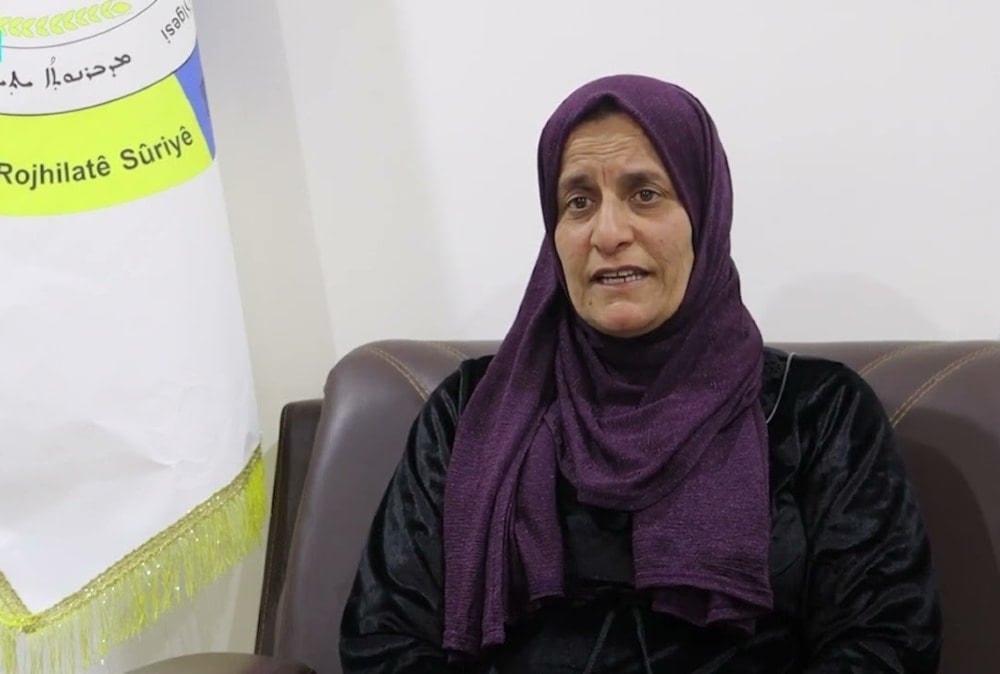
Mariam Ibrahim, the spokesperson for the AANES delegation negotiating with Damascus (source: social media)
The Autonomous Administration of North and East Syria (AANES) says it is prepared to return to the negotiating table and is now waiting for Damascus to set a date for the next round of talks.
Mariam Ibrahim, spokesperson for the AANES delegation, told North Press Agency on Saturday that the negotiating team is standing by for a new meeting schedule. She emphasized that the administration remains committed to a political settlement "despite Damascus' slow approach."
According to Ibrahim, there has been little progress since the March 10 agreement. The agreements reached at the time were only verbal, with no written documents or official signatures, something she argued reflects "a lack of seriousness" on the part of Damascus in implementing the deal.
She said the current deadlock shows that Damascus is "neither committed nor cooperative," even as the year-end deadline for implementing the March agreement approaches.
Ibrahim says that the AANES has shown considerable flexibility, explaining that "the delegation agreed to open the military file first at Damascus' request, even though it was meant to be the final issue, and most of its points have already been settled."
International guarantors monitor compliance
Ibrahim also stressed that the United States and France, who serve as guarantors of the dialogue, "fully understand who is abiding by the agreement and who is obstructing it."
She reiterated that it is up to Damascus alone to set a new date for the talks, and that the AANES delegation is ready to resume negotiations at any time.
She concluded by saying the Autonomous Administration remains committed to a political solution and to ensuring the success of the March 10 agreement, despite "Damascus' delays and failure to meet the agreed timeline."
The March 10 agreement
On March 10, the Interim Syrian presidency announced it had reached an agreement with the AANES. Key provisions included a nationwide ceasefire between the two sides and the integration of all civil and military institutions in the northeast, along with border crossings, the airport, and oil and gas fields, into the Syrian state apparatus.
Other key provisions in the agreement include: recognition of Kurdish identity as integral to Syria with full constitutional rights, prohibition of separatist rhetoric, formation of joint committees to oversee implementation, and a commitment to fight remnants of the old regime. France and the United States hailed the agreement as a significant step at the time.
However, implementation has been fraught with challenges. In April, the SDF withdrew from Kurdish neighborhoods in Aleppo and ceded control of the Tishreen Dam as gestures of de-escalation. By August, talks had stalled as the SDF insisted on preserving its military structure and advancing decentralized governance.
Tensions escalated sharply in October when fierce clashes erupted between the new Syrian army and SDF forces around Aleppo, prompting a comprehensive ceasefire announced by Interim Syrian Defense Minister Murhaf Abu Qasra and SDF Commander Mazloum Abdi after mediation by US envoy Thomas Barrack.
Despite an October framework allowing the SDF to integrate "as large military formations," deadly clashes erupted again in November in Raqqa and Deir Ezzor governorates.


