
Kurdish separatist groups reneged on Baghdad-Tehran security accord
 5 Min Read
Kurdish separatist forces have reportedly resumed operations from Iraq’s Kurdistan Region in breach of the 2023 Baghdad–Tehran security agreement.
-
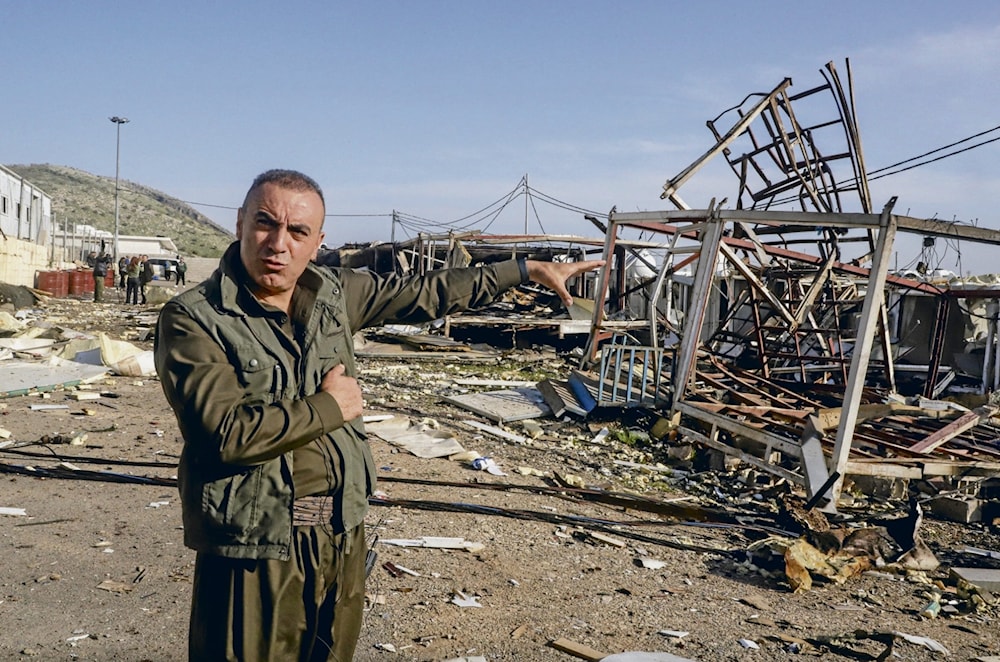
A member of the Komala Party shows the destruction following the April 14 attack on a camp belonging to the Iranian Kurdish separatists (AFP)
Iranian Kurdish separatist groups based in northern Iraq have failed to comply with the security agreement between Baghdad and Tehran and have resumed their activities amid escalating regional tensions, Al Mayadeen’s correspondent in Iraq reported on Sunday.
According to our correspondent, the groups have recently begun moving and reorganizing their activities as military and political developments across the region intensify, raising renewed concerns that Iraqi territory could be used to launch operations threatening Iran’s security.
Iraqi and Iranian officials have held a series of meetings over the past several months to discuss securing the shared border and strengthening intelligence and security coordination.
The talks have focused on preventing Iraqi territory from being used to plan, prepare, or carry out attacks against either country, particularly from areas of the Kurdistan Region near the Iranian border.
Agreement sought to close cross-border front
Baghdad and Tehran signed their original joint border-security framework on March 19, 2023. The agreement was signed by Iraqi National Security Advisor Qasim al-Araji and then-Secretary of Iran’s Supreme National Security Council Ali Shamkhani in the presence of Iraqi Prime Minister Mohammed Shia al-Sudani.
Under the arrangement, Iraq pledged not to allow armed groups based in the Kurdistan Region to use Iraqi territory to conduct cross-border attacks against Iran. The framework also called for greater coordination in protecting the two countries’ shared border.
The agreement followed repeated Iranian missile and drone strikes against bases belonging to Iranian Kurdish groups in northern Iraq. Tehran has long accused the groups of carrying out attacks inside Iran, supporting unrest, and maintaining links with foreign intelligence services.
In September 2023, Iraqi Foreign Minister Fuad Hussein announced that authorities had begun relocating the groups from positions near the Iranian border to camps deeper inside the Iraqi Kurdistan Region.
Tehran said the measures were also supposed to include disarming the groups, closing their military bases, and preventing them from moving fighters and weapons across the border.
The framework was further formalized in August 2025. Iraq’s National Security Advisory later clarified that the document signed in 2023 had initially been a joint security record and was subsequently converted into a memorandum of understanding containing the same provisions on border security and the activities of five Iranian Kurdish opposition parties.
Regional war revives armed activity
The issue returned to the forefront during the 2026 US-Israeli war on Iran, when several Iranian Kurdish factions began preparing for possible operations across the border.
In March, an official from the Kurdistan Freedom Party, known as PAK, said some of the group’s forces had moved toward the Iranian border in Sulaymaniyah province and were awaiting possible orders to enter Iran.
Officials from PAK and Komala also said they had been contacted by US representatives regarding potential operations, although the Pentagon denied that its military objectives depended on arming or supporting any particular Kurdish force.
The reports indicated that the border-security issue had developed into a potential new front in the broader war, with Iranian Kurdish armed groups seeking to exploit pressure on Tehran while Iraqi authorities attempted to prevent the country from being drawn deeper into the conflict.
Reuters reported that Iran and allied forces launched at least 388 missiles and drones against Iraq’s Kurdistan Region between the beginning of the war and the end of March.
Despite the agreement and earlier relocation measures, some fighters reportedly maintained facilities, training positions, weapons depots, tunnels, and networks connecting their bases in Iraq with areas inside northwestern Iran.
Camp targeted in Sulaymaniyah
Against this background, a camp belonging to an Iranian separatist group in Sulaymaniyah was targeted on Saturday, Al Mayadeen’s correspondent reported.
Three explosions were also heard over Erbil, the capital of Iraq’s Kurdistan Region, while an explosives-laden drone was intercepted by the air-defense system stationed at the US Consulate in the city.
Separate security reports said several drones had recently been intercepted near the consulate, while another drone strike targeted an ammunition depot in the Sulaymaniyah province.
Iran has continued to target positions belonging to Iranian Kurdish separatist groups in response to reported attempts by their members to infiltrate across the Iraqi-Iranian border.
Tehran maintains that the presence and renewed movement of the groups constitute a breach of the security commitments made by Baghdad, particularly the provisions requiring their disarmament, relocation, and removal from sensitive border areas.
Read more: Iraqi PM al-Zaidi announces 7 banks’ return to global banking channels


