
Lavrov warns strike on Iran risks regional escalation
 4 Min Read
Sergey Lavrov warned that a new strike on Iran would destabilize the region and Russia, stressing Tehran’s right to peaceful uranium enrichment under the NPT amid ongoing diplomatic efforts.
-
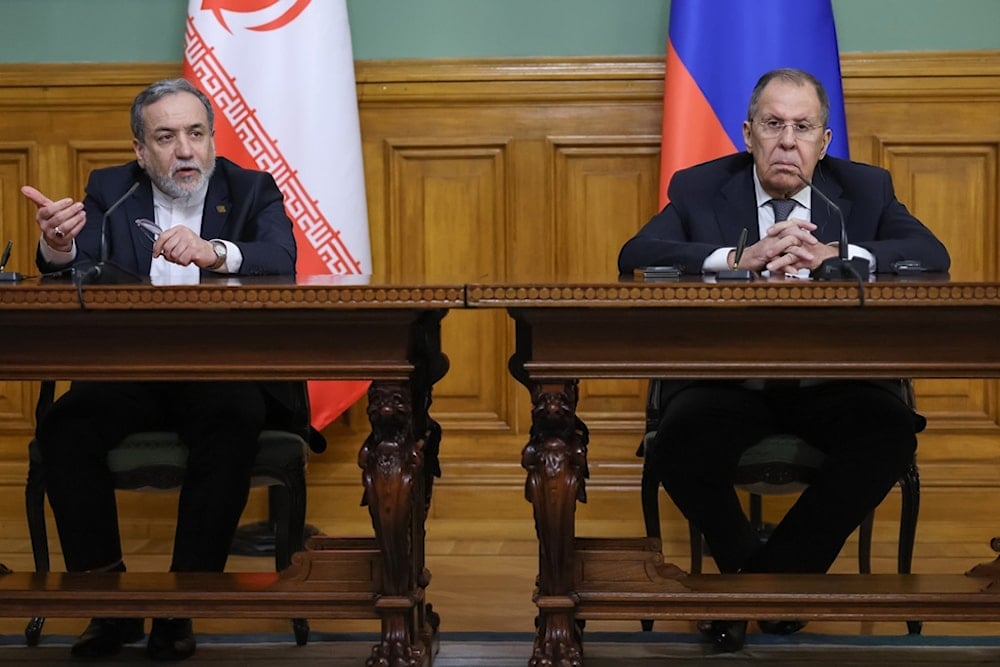
Russian Foreign Minister Sergey Lavrov, right, and Iranian Foreign Minister Abbas Araghchi attend a joint news conference at Zinaida Morozova's Mansion in Moscow, Russia, Wednesday, Dec. 17, 2025. (AP)
Russian Foreign Minister Sergey Lavrov warned that a new strike on Iran would have serious repercussions for regional stability and Russia, stressing that previous attacks created risks of a nuclear incident.
His remarks come amid intensified diplomatic activity surrounding Iran’s nuclear file, including recent coordination between Iran, Russia, and China at the International Atomic Energy Agency headquarters in Vienna, as well as ongoing indirect negotiations between Tehran and Washington in Geneva.
Lavrov: New strike on Iran would risk nuclear incident
Speaking in an interview with the Al Arabiya broadcaster, Lavrov said the consequences of renewed military action against Iran would be detrimental.
"The consequences [of a new attack] would be adverse. Strikes on Iran have already occurred in the past, targeting the nuclear facilities supervised by the IAEA. As far as we can tell, there were real risks of a nuclear incident," Lavrov said.
Lavrov’s remarks come amid continued tensions surrounding Iran’s nuclear program and growing calls for tougher measures against Tehran. According to the Russian foreign minister, previous US and Israeli attacks on Iranian nuclear facilities posed serious risks, particularly as the sites were under supervision by the International Atomic Energy Agency.
Russia opposes radical measures against Iran
Lavrov also addressed the stance of Israeli Prime Minister Benjamin Netanyahu, stating that Moscow sees him as insisting on radical measures against Iran.
Russia believes such steps would undermine Iran’s legitimate rights under international law and further destabilize the region.
The Russian position aligns with recent diplomatic coordination in Vienna, where the ambassadors of Iran, Russia, and China met IAEA Director General Rafael Grossi to discuss preparations for the upcoming Board of Governors session and ongoing issues related to Iran’s peaceful nuclear activities.
Lavrov: Demand to halt uranium enrichment violates NPT
In a separate part of the interview, Lavrov emphasized that calls for Iran to completely abandon uranium enrichment contradict the Treaty on the Non-Proliferation of Nuclear Weapons (NPT).
"The first of these demands is contrary to the NPT. Iran has the right to enrich uranium for peaceful purposes. It has always done so under the strict supervision of the IAEA [the International Atomic Energy Agency]. The agency has never stated that enriched uranium has been diverted for military purposes," Lavrov said.
He underscored that Tehran’s enrichment activities have consistently been carried out under IAEA oversight, and that the agency has not reported any diversion of enriched uranium for military use.
His comments also coincide with ongoing indirect Iran–US nuclear negotiations in Geneva. Iranian Foreign Minister Abbas Araghchi recently traveled to the Swiss city for a new round of talks, stating that Tehran had presented “genuine initiatives to achieve a fair and balanced agreement,” while emphasizing that halting uranium enrichment was not on the agenda.
Russia in close contact with Tehran
Lavrov added that Russia maintains close communication with the Iranian authorities regarding the nuclear dossier and does not doubt Tehran’s stated intention to resolve the issue in line with the NPT.
He further noted that Iran will cooperate with International Atomic Energy Agency inspectors once their regular work in the country is restored.
Moscow has repeatedly warned that escalation around Iran’s nuclear facilities could have far-reaching consequences, with Lavrov reiterating that another strike on Iran would negatively affect both the region and Russia, particularly at a time when diplomatic efforts continue on multiple tracks.


