
Lebanon to join Washington ceasefire talks, source to Reuters says
 4 Min Read
The Lebanese government plans to attend Washington talks with the US and “Israel”, Lebanese sources told Reuters.
-
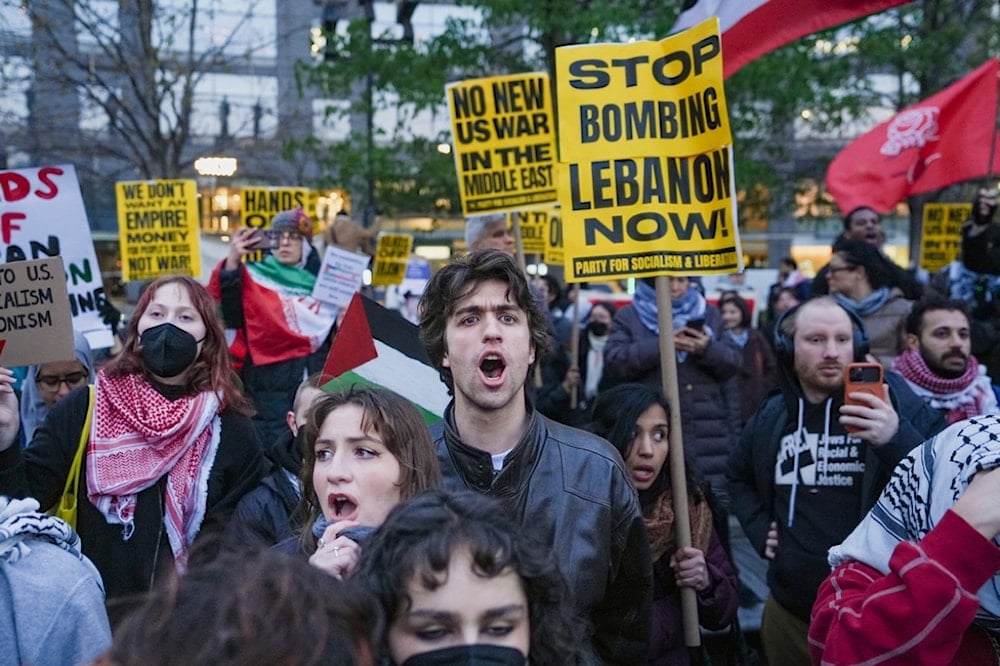
People march while taking part in a protest against the US-Israeli war on Iran, and against war on Lebanon, Wednesday, April 8, 2026, in New York. (AP Photo/Ryan Murphy)
Lebanon's government plans to participate in an upcoming meeting in Washington with representatives from the United States and “Israel” to discuss a possible ceasefire declaration, a Lebanese source told Reuters on Friday, although the date of the talks has not yet been confirmed.
The senior Lebanese official said the Nawaf Salam government considers a ceasefire a fundamental precondition for any further negotiations aimed at reaching a broader agreement with “Israel”.
Meanwhile, the office of Israeli Prime Minister Benjamin Netanyahu said he has instructed his government to begin direct negotiations with Lebanon as soon as possible, with talks expected to focus on the “disarmament of Hezbollah and establishing peaceful relations between Israel and Lebanon.”
Axios, citing an Israeli official, reported that “Israel” would not commit to a ceasefire in Lebanon, adding that Israeli airstrikes have continued despite a ceasefire agreement between Tehran and Washington. Iran has said the deal includes Lebanon, while both the United States and “Israel” have violated it.
Warnings over direct negotiations with 'Israel' as attacks persist
In a related development, Lebanon's Syrian Social Nationalist Party rejected any proposal for direct negotiations with “Israel”, warning that such a step would amount to recognition and could push Lebanon toward surrender if the government pushes further toward weakened national deterrence. The party called for adherence to the option of resistance.
Former MP and head of the Nahj Movement, Hassan Yaacoub, also criticized the government’s approach to negotiations, warning it could lead to further destruction and arguing against a repeat of past agreements such as the May 17 accord.
Israeli forces have continued strikes across multiple areas in Lebanon, resulting in hundreds of casualties, committing war crimes and violations of international law.
The developments come after Pakistani Prime Minister Shehbaz Sharif said Iran, the United States, and their allies had agreed to an immediate ceasefire across all fronts, including Lebanon. However, Israeli Prime Minister Benjamin Netanyahu unilaterally declared that the proposed ceasefire does not include Lebanon, a position that was only later supported by Trump.
In the same context, the Islamic Resistance has reiterated that its defensive operations will continue until the US-Israeli aggression against Lebanon and its people comes to an end.
Trump–Netanyahu call shifts US position, greenlights Israeli attacks
According to diplomatic sources cited by CBS News on Thursday, US President Donald Trump was informed that the ceasefire framework applied to the broader West Asia, and he reportedly agreed that this would include Lebanon. A White House official also told CBS News that "Israel" had agreed to the terms of the deal, reinforcing the initial understanding that the ceasefire extended to Lebanon.
Despite these repeated confirmations from mediators and regional officials, the US position reportedly shifted following a phone call between President Trump and Israeli occupation Prime Minister Benjamin Netanyahu.
Two sources familiar with the matter told CBS News that Washington’s stance changed after the call, raising questions about the consistency and independence of US decision-making in the negotiations.
The same sources added that the abrupt shifts in Washington’s position, combined with what they described as a fragmented and inconsistent approach within the Iranian side, have made diplomacy increasingly unstable and difficult to manage.
Additionally, according to The Wall Street Journal, during the phone call, Netanyahu secured approval from Trump to continue attacks on Lebanon, after which “Israel” launched a major wave of airstrikes against Lebanon.
In one of the deadliest escalations in decades, the attacks by Israeli forces against Lebanon targeted around 100 sites, killing more than 300 people in ten minutes.


