
Netanyahu secured Trump backing for continued attacks on Lebanon: WSJ
 3 Min Read
A Trump-Netanyahu call paved the way for large-scale attacks on Lebanon, triggering Iran’s response and placing the fragile ceasefire under immediate strain.
-
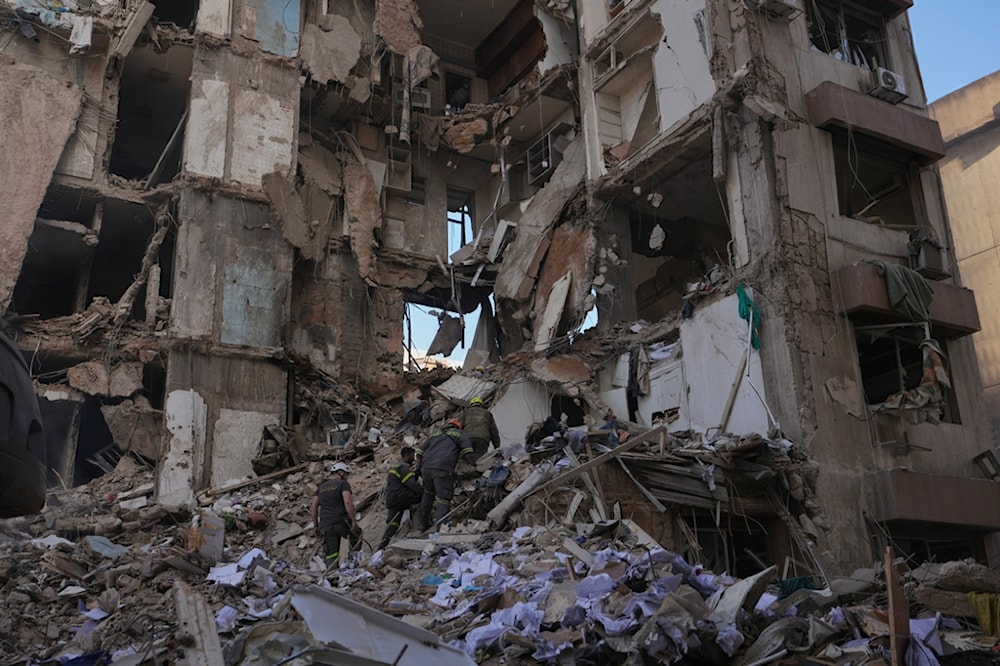
Lebanese civil defense workers search for victims in the rubble of a building destroyed in an Israeli airstrike a day earlier in central Beirut, Lebanon, Thursday, April 9, 2026. (AP Photo/Hassan Ammar)
On Wednesday, Prime Minister Benjamin Netanyahu received a phone call from US President Donald Trump informing him that a ceasefire in the Iran war was about to be publicly announced, according to people briefed on the discussion cited by The Wall Street Journal. Netanyahu agreed to support the announcement but was reportedly frustrated that "Israel" had not been formally included in the negotiations and was only informed after the deal had been finalized.
During the call, Netanyahu raised a key demand: that Israeli aggression against Lebanon be allowed to continue. The request, according to sources familiar with the conversation, was approved by Trump. Shortly afterward, "Israel" launched a large-scale air operation in Lebanon, striking roughly 100 targets within minutes.
"Israel’s" air raids in Lebanon came as part of an ongoing and expanding series of attacks against Lebanese civilians, under the guise of attacking Hezbollah, marked over the past months by sustained strikes, ground operations, and targeted attacks. The latest wave of bombardment significantly raised the intensity of the war, prompting warnings from Tehran.
Despite growing exhaustion in "Israel" over prolonged warfare and repeated emergency shelter alerts, Netanyahu has continued to present the aggression against Lebanon as "strategically successful," despite not meeting any of the presented war objectives.
Evolving objectives and contested outcomes
Netanyahu has positioned himself as the central architect of "Israel’s" post–October 7, 2023 military doctrine, expanding operations across Gaza, Lebanon, and Syria while establishing buffer zones in multiple territories.
However, critics argue that the government is relying heavily on military force without a clear political roadmap for ending the war. Opposition leader Yair Lapid said the war initially enjoyed widespread support but argued that extended fighting and mounting casualties have led to doubts over Netanyahu’s ability to deliver a decisive outcome.
In Gaza, Hamas has continued to resist disarmament despite sustained Israeli military pressure over more than two years, further complicating "Israel’s" long-term objectives.
Lebanon remains under fire, unmet strategic goals
Netanyahu said on Thursday that "Israel" would begin direct talks with Lebanon focused on the disarmament of the Resistance, although expectations for a lasting settlement remain low. He also reaffirmed that military operations would continue in response to rocket fire targeting northern occupied Palestine.
The dual track of diplomacy and continued strikes highlights the unresolved nature of the war and the absence of a clear exit strategy from the Lebanese front.
Iran’s continued operational capacity despite sustained strikes has raised doubts about whether "Israel" and the US achieved their broader strategic goals. Former intelligence officials suggest that battlefield gains have not translated into a decisive political or strategic shift.
Observers also point to "Israel’s" lack of a formal long-term national security doctrine, arguing that under Netanyahu, military operations have often advanced without a parallel diplomatic framework.
As tensions persist and ceasefire arrangements remain fragile, analysts warn that the war may settle into a cycle of repeated escalations, with no clear political resolution in sight as "Israel" and the US continue to change their strategies across the region.
Read more: Trump says Iran deal 'within reach' despite attacks on Lebanon


