
Israeli cabinet dispute highlights divide over unmet war objectives
 4 Min Read
Netanyahu reportedly clashed with Israeli cabinet members over how war "achievements" are presented, as ceasefire tensions expose internal divisions.
-
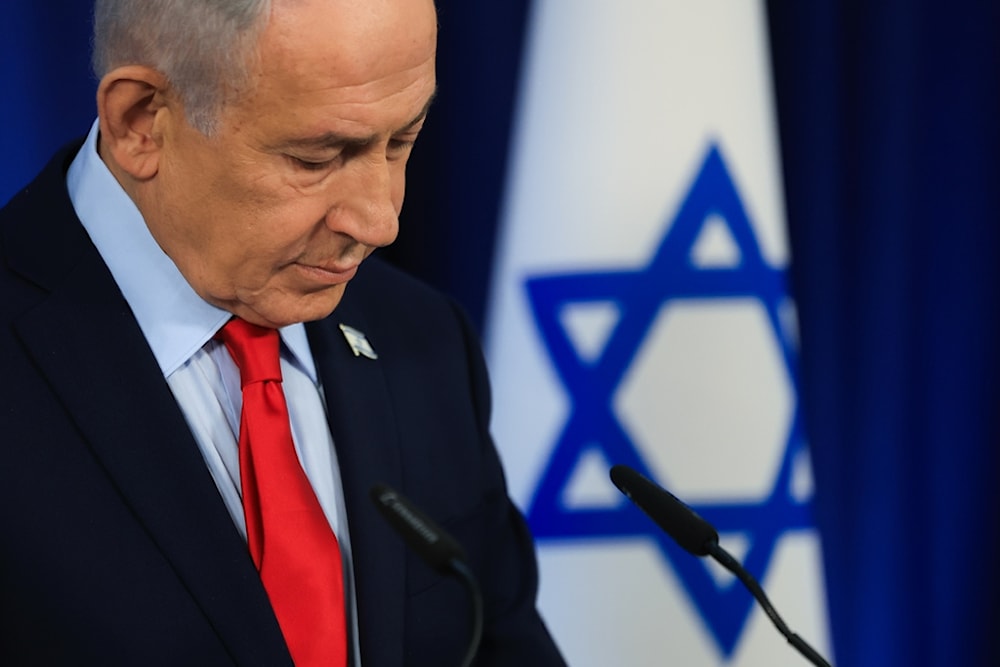
Israeli Prime Minister Benjamin Netanyahu holds a press conference in occupied al-Quds, Thursday, March 19, 2026. (Ronen Zvulun, Pool Photo via AP)
Increasingly sharp disagreements are emerging within the Israeli War Cabinet, coinciding with the entry into force of a tentative ceasefire in the region, Israeli media outlets have reported. The dispute centers on the widening gap between the Israeli military’s internal assessments of battlefield outcomes and the public perception among Israelis regarding the results of the latest confrontation.
According to the political correspondent for Israel’s Channel 12, Yaron Abraham, Prime Minister Benjamin Netanyahu delivered unexpected criticism during a cabinet meeting on Thursday evening, directed at Chief of Staff Eyal Zamir.
Quoting ministers who attended the meeting, Abraham reported that Netanyahu said that he is very satisfied with the military's performance, but not satisfied with how it is presented to the public, while also questioning, alongside other ministers, the lack of media promotion surrounding what he described as “important” military operations.
The criticism came after security officials presented assessments to ministers alleging that Iranian missile production capabilities and military command structures had been reduced to a minimum level. However, the political leadership reportedly argued that there is a “significant gap” between what is presented behind closed doors and the reality perceived by Israeli settlers, fueling frustration within the government over negative public evaluations of the war’s outcomes.
Deflecting unmet war objectives
According to the report, the political leadership, which had previously set highly ambitious objectives such as the “toppling of the regime” and the “elimination of Iran’s nuclear project and ballistic capabilities,” is now shifting criticism toward the military establishment, in an apparent attempt to distance itself from the failure to achieve those stated goals.
The Israeli occupation's military has so far declined to comment. The public dispute reflects deepening internal tensions in “Israel” following the end of the latest round of fighting without a clearly defined image of victory.
Poll points to fall of Netanyahu's political party after war on Iran
Furthermore, an opinion poll conducted following the announcement of the temporary ceasefire between the US and Iran revealed a major collapse in the occupation's political balance, particularly a steep decline in support for Benjamin Netanyahu's right-wing bloc.
According to the poll, Likud remains the largest parliamentary party, but lost three seats, dropping to 25, and consequently dropped Netanyahu's political camp down to 51 seats overall, reflecting its weakening position within the current electoral map.
Opposition gains momentum
In contrast to the decline in the ruling bloc, several opposition parties recorded gains.
The Yashar party, led by Gadi Eisenkot, saw a notable rise up to 14 seats. Naftali Bennett maintained a stable position with 19 seats, while Yair Golan’s Democrats strengthened their standing with 11 seats.
At the same time, Yesh Atid, led by Yair Lapid, saw a continued decline, falling to just 6 seats, marking one of its weakest performances in recent polling trends.
The poll also examined potential outcomes for Arab political representation. The Hadash-Ta’al alliance secured 5 seats, as did the United Arab List, while Balad failed to pass the electoral threshold.
According to the poll, a unified Arab list could increase representation to 12 seats. Such a development would further reduce Netanyahu’s governing camp to 50 seats.
Almost 60% think Israeli-US war on Iran failed
The poll also highlighted widespread public dissatisfaction regarding the ceasefire decision and the outcome of the confrontation with Iran.
A majority of respondents (56%) opposed the ceasefire agreement, expressing a preference for continued military aggression. Additionally, 58% believed that “Israel” and the United States failed to achieve a decisive victory in the war.
In contrast, only 25% of respondents said the decision to halt the aggression was correct or achieved the intended deterrence objectives.
Trust gap between military and political leadership
A clear divergence emerged between public trust in military leadership and political decision-makers.
The poll found that 69% of respondents believed the Chief of Staff managed the aggression effectively, while 57% expressed confidence in the head of Mossad.
However, political leadership received significantly lower approval ratings. Around 52% of respondents rated the performance of War Minister Israeli Katz as poor, while nearly half of those surveyed said Netanyahu’s performance did not meet the demands of the situation on the ground.


