
Mamdani defends revoking orders on BDS, IHRA definition
 4 Min Read
Zohran Mamdani defends revoking Adams-era executive orders on BDS and antisemitism, stressing free speech and rejecting the IHRA definition.
-
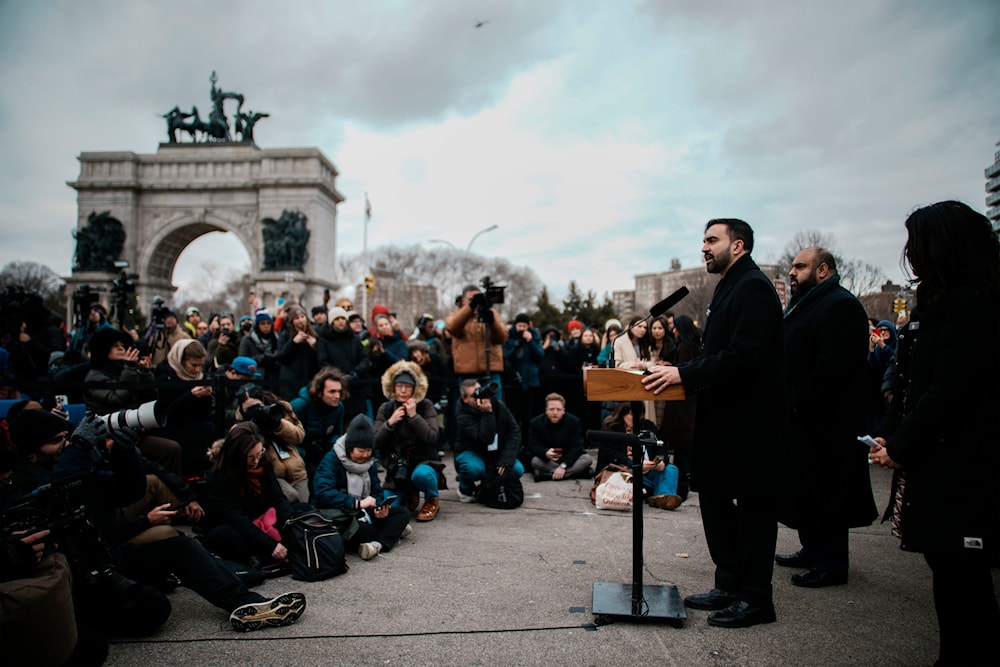
New York City Mayor Zohran Mamdani speaks during a press conference before signing executive orders in the Brooklyn borough of New York, Friday, Jan. 2, 2026 (AP)
New York City Mayor Zohran Mamdani has defended his decision to revoke two executive orders related to "antisemitism" and boycotts of "Israel", a move that has drawn sharp criticism from the Israeli government and raised concerns among some local Jewish groups.
Among his first actions in office, Mamdani declined to renew two orders signed by former Mayor Eric Adams: one that adopted a broad definition of antisemitism and another that barred city employees from participating in the boycott, divestment, and sanctions (BDS) movement against "Israel". The orders were part of a wider package of mayoral decrees issued under Adams that Mamdani rescinded after taking office.
Speaking during an unrelated press briefing on Friday, Mamdani sought to reassure Jewish New Yorkers, saying his administration would remain committed to combating antisemitism and other forms of hate. He emphasized a shift toward what he described as practical measures, including funding hate crime prevention initiatives and promoting social cohesion across the city.
Mamdani also addressed concerns surrounding the antisemitism definition adopted under Adams, which was based on the International Holocaust Remembrance Alliance framework. He noted that several Jewish organizations in New York City have expressed reservations about the definition, arguing that it can conflate certain criticisms of "Israel" with antisemitism.
“I also know that a number, as you said, of leading Jewish organizations have immense concerns around this definition,” Mamdani said, addressing a reporter who had asked about the orders.
The mayor’s decision to overturn the BDS-related order was widely expected, as Mamdani has previously voiced support for the movement. His actions have intensified debate over how City Hall should address antisemitism while balancing free expression and political advocacy within municipal government.
Mamdani pledges an inclusive, diverse New York City
Mamdani was publicly sworn in outside City Hall on Thursday, after taking the oath privately at midnight on New Year’s Eve. In his inaugural address, he emphasized inclusion and diversity, describing New York as a city shaped by people of different languages, faiths, and backgrounds.
Zohran Mamdani’s inauguration unfolded in two parts, starting just after midnight in the decommissioned Old City Hall subway station beneath Lower Manhattan, where he was sworn in on a centuries‑old Quran, a historic first for a New York City mayor.
“New York belongs to all who live in it together. We will tell a new story of our city,” Mamdani said, listing communities ranging from Pashto- and Mandarin-speaking residents to Jewish, Muslim, Christian, Sikh, and Hindu New Yorkers, as well as those who do not practice any religion. He also singled out Palestinian New Yorkers, saying they “will no longer have to contend with a politics that speaks of universalism and then makes them the exception.”
In his speech, Mamdani pledged to govern “expansively and audaciously,” promising to use government power to uplift working‑class New Yorkers and directly invoking residents from halal cart vendors to subway riders as central to his vision. He vowed not to lower expectations but to pursue transformative policies on affordability and equity.
The ceremony concluded with applause from the crowd as Mamdani pledged to tell a “new story” for the city, one rooted in equality and shared belonging. Supporters waved signs and flags while the new mayor greeted attendees, signaling the start of an administration he said would seek to restore trust in City Hall.


