
Mental health concerns grow aboard USS Lincoln after 240 days at sea
 3 Min Read
The US Central Command chief says the Lincoln had "among the lowest number of cases related to mental health" among the US Navy's 11 active aircraft carriers.
-
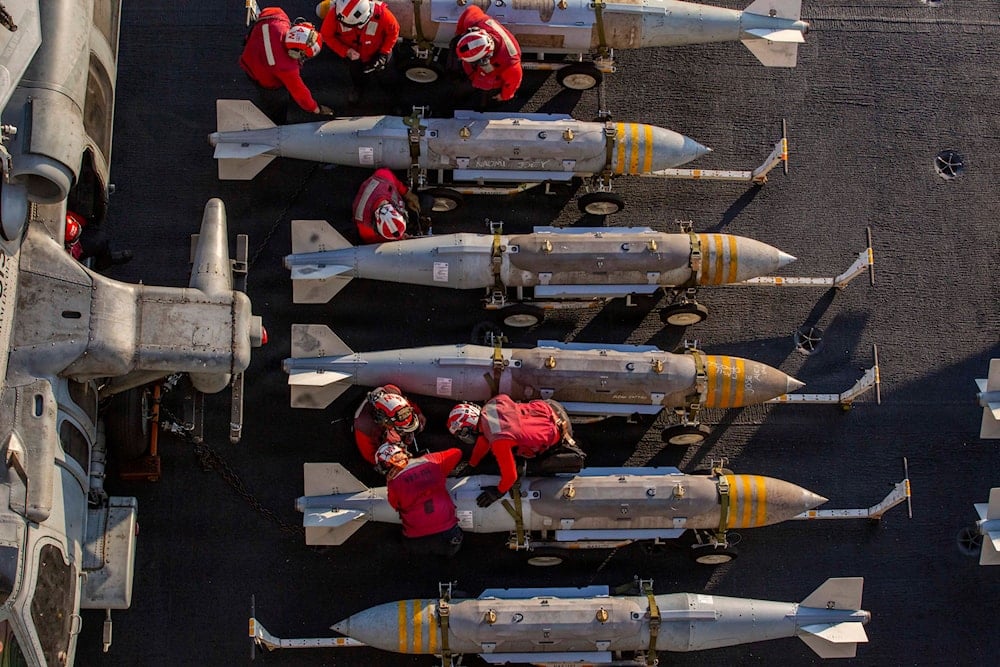
This image provided by US Central Command shows Navy sailors working with ordnance on the flight deck of the USS Abraham Lincoln (CVN 72) in support of "Operation Epic Fury" on Saturday, Feb. 28, 2026. (US Navy via AP)
Concerns over conditions aboard the USS Abraham Lincoln have intensified as the aircraft carrier approaches the end of an exceptionally prolonged deployment in the Middle East, where it has been supporting US military aggression against Iran, the BBC reported.
US Central Command chief Adm. Brad Cooper sought to address reports surrounding the well-being of the carrier’s roughly 5,000 personnel after visiting the ship on Saturday, saying mental health had become a priority for its leadership.
Cooper said the Lincoln had "among the lowest number of cases related to mental health" among the US Navy's 11 active aircraft carriers, while acknowledging the pressures faced by sailors kept at sea for extended periods.
Navy service under such conditions was "uniquely challenging and tough," he said.
"I've long believed that mental health is another aspect of individual health and requires our attention just like physical health and spiritual health.
"I applaud Lincoln's leadership for... stepping up and making mental health and crew resilience a leadership priority."
Months at sea raise concerns over crew wellbeing
The Lincoln arrived in the Middle East in January and has since played a role in the US war on Iran, including operations supporting Washington's blockade of Iranian ports.
Its deployment, initially expected to conclude in May, has repeatedly been extended. The carrier has now reportedly spent more than 240 uninterrupted days at sea, including over 200 consecutive days without a port call.
Reports published by Military Times and Stars & Stripes last week described difficult conditions aboard the vessel, including broken plumbing, sanitation problems, shortages of fresh food, and limited opportunities for sailors to go ashore.
Family members of personnel serving aboard the ship have also raised concerns about deteriorating mental health, with reports indicating that some sailors have attempted to jump overboard.
The US Navy acknowledged supply difficulties last week but rejected claims that the carrier was experiencing a wider mental health crisis.
Senators demand answers over prolonged deployment
The reports have also drawn scrutiny in Washington.
Thirteen Democratic members of the Senate Armed Services Committee sent a letter to Secretary of War Pete Hegseth on Saturday seeking answers over the length of the deployment and the conditions facing personnel aboard the ship.
Hegseth last week dismissed accounts of conditions aboard the carrier as "completely misrepresented".
US President Donald Trump also rejected concerns that the sailors had remained at sea for too long, telling reporters on Friday: "Not nearly long enough."
Maryland Governor Wes Moore, a Democrat and US Army veteran, criticized the reported situation aboard the carrier during an appearance on CNN on Sunday, describing the conditions as "heartbreaking" and saying Trump should have "more compassion".
The USS George Washington is reportedly sailing toward the Middle East to replace the Lincoln and could reach the region within approximately a week, potentially bringing an end to one of the carrier's longest uninterrupted periods at sea.
Read more: US carrier deployment sparks alarm over sailors’ exhaustion, shortages


