
MEPs call for sanctions on 'Israel', slam double standards
 3 Min Read
EU lawmakers debate sanctions on "Israel" and accuse the EU of double standards, as rising energy costs linked to the Iran conflict pressure Europeans.
-
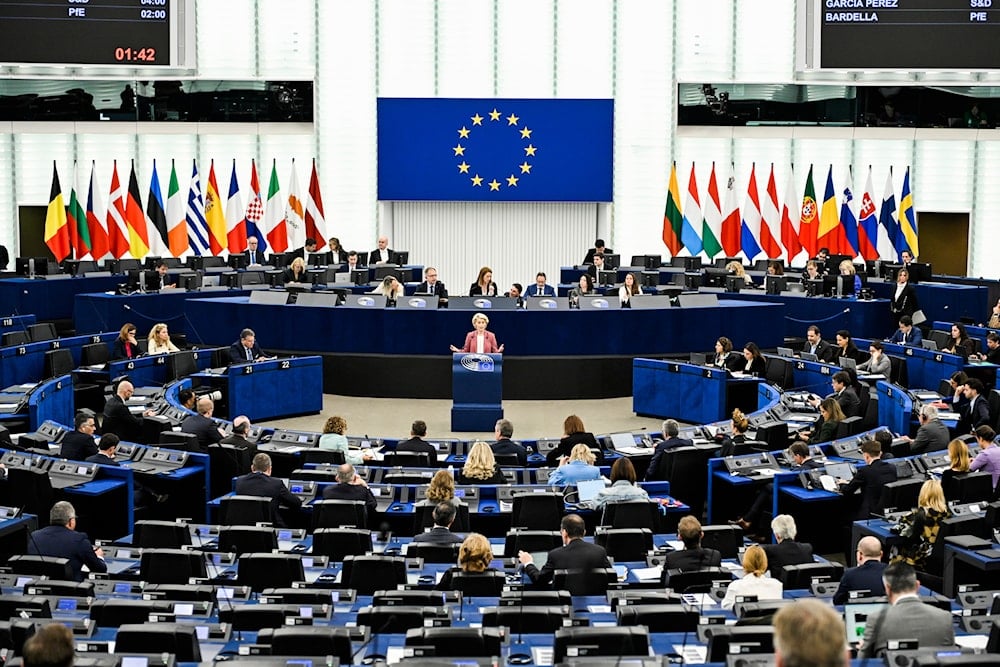
European Commission President Ursula von der Leyen speaks during a joint debate on the European Council and the situation in the Middle East, at the European Parliament in Strasbourg, eastern France, March 11, 2026 (AP)
European Parliament members have intensified calls for punitive measures against "Israel", accusing the West of applying double standards even as ordinary Europeans grapple with soaring energy costs linked to the protracted conflict ignited by the war against Iran.
During a heated debate in the European Parliament this week, lawmakers condemned "Israel’s" ongoing “crimes against humanity” against Palestinians and decried the European Union’s silence in the face of alleged breaches of international law.
“The EU is silent when international law is broken,” said Özlem Demirel, a German MEP, noting that despite the formal end of hostilities with Iran, the Israeli regime, backed by Western powers, continues to destabilize the region.
Swedish MEP Abir Al-Sahlani voiced personal frustration, stating, “I'm tired of watching old men destroy the international rules-based order. I am furious that they start wars, uphold occupation, weaponize humanitarian aid, while they enjoy wealth.”
Economic repercussions of US-Israeli war on Iran hit Europe hard
The economic repercussions of the war are being felt acutely across Europe. Since March, EU member states have paid an estimated €30 billion in additional energy costs as a direct result of the war in Iran, with much of that burden passed on to households. One member of the public stated, “Because of the fact that it's very expensive nowadays, I try to leave the car at home.”
Critics argue that the EU’s response to the crisis has been hobbled by glaring inconsistencies. While more than 300 Iranian individuals and entities are subject to EU sanctions, only seven Israeli targets, all linked to settlement activity, face similar restrictions. Tehran is subject to sweeping economic penalties, while Tel Aviv continues to enjoy preferential access to the European Union, its largest trading partner.
Belgian MEP Marc Botenga accused EU leaders of hypocrisy, saying, “Once it is about measures against Israel, it's like, oh no, I'm going to look elsewhere. Yes, we can stop Israel if we stop funding it. 30% of their trade is with the European Union.”
EU Foreign Ministers continue to avoid holding 'Israel' accountable
On Monday, EU foreign ministers again deferred action, instead tasking the European Commission with drawing up possible trade measures against "Israel", a move that critics say falls far short of the decisive response warranted by the scale of the crisis.
Economic uncertainty remains high, with analysts warning that "Israel’s" increasingly unpredictable and war-thirsty policies continue to destabilize the broader Middle East.
Yet some voices urged restraint and dialogue. One public respondent cautioned, “The only way forward is to create grand coalitions and understand those differences, and that can only happen through communication and dialogue, which changes the behaviors. Until that happens, I think we're going to just continually see around the world the upswelling of these different conflicts.”


