
Mexico offers humanitarian air bridge to Cuba amid crisis
 4 Min Read
Mexico says it is ready to open a humanitarian air bridge to Cuba if requested by Havana, as Mexican ships deliver aid amid Cuba’s energy and fuel crisis.
-
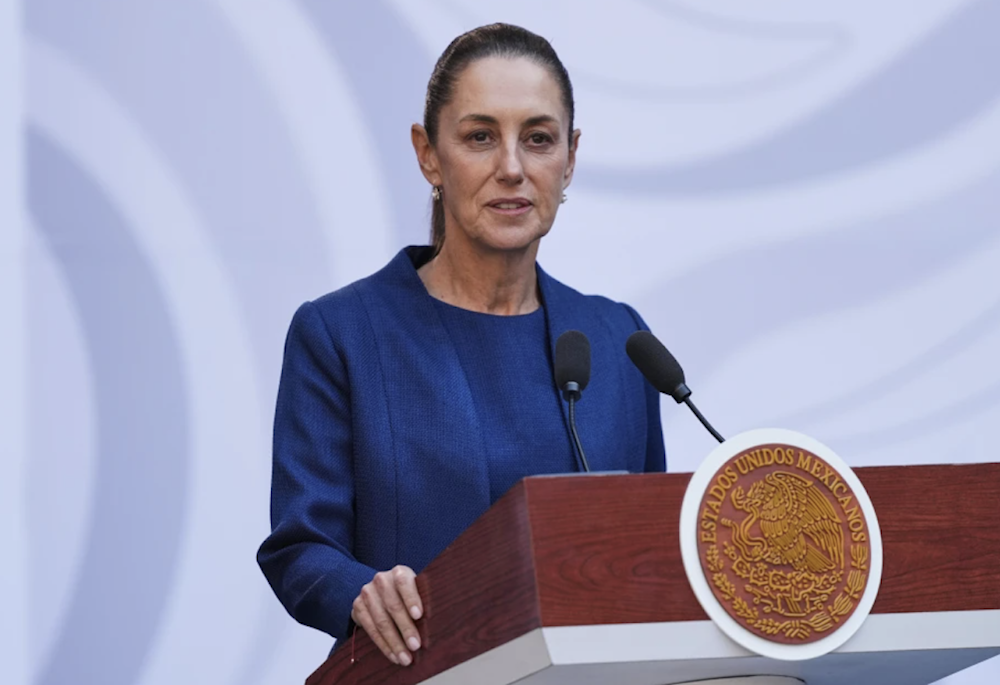
Mexican President Claudia Sheinbaum presents a new security strategy against violence for the Michoacan state at the National Palace in Mexico City on November 9, 2025. (AP)
Mexico has announced that it is prepared to establish a humanitarian air bridge to Cuba if the Cuban government formally requests such assistance, President Claudia Sheinbaum said on Friday.
Sheinbaum emphasised that Mexico’s geographical proximity and available aviation fuel (turbosina) make it well-positioned to support flights to Cuba, noting that Mexican airlines continue operating routes to the island and aircraft could refuel in Mexican territory as needed. She said, “If Cuba asks for it, there would be such conditions, of course.
On Sunday, Mexico dispatched two navy logistics vessels carrying 897 tons of essential goods to the island. The ministry added that an additional 1,650 tons of powdered milk and beans are currently being prepared for future transport to Cuba.
“In compliance with the tradition of solidarity of the Mexican people with the peoples of Latin America and the instruction of the President, Claudia Sheinbaum, the Secretariat of the Navy reports that the humanitarian aid sent by the Mexican government, through the Mexican Navy, arrived in the Republic of Cuba,” the ministry said in a communique. The Navy confirmed that the 1,650 tons of powdered milk and beans remain pending transportation.
The shipments come after Washington issued an executive order in late January authorizing import duties on goods from countries selling or supplying oil to Cuba.
”
Humanitarian aid arrives as fuel shortages deepen
The announcement comes in the wake of two Mexican-flagged ships carrying over 814 tons of humanitarian supplies docking in Havana, delivering essential food, hygiene items, and other goods to Cuban civilians struggling with shortages. The need for aid has intensified as Cuba’s energy grid is strained by fuel shortages and as the US continues to pressure to limit oil supplies to the island.
Sheinbaum stressed that Mexico’s support is rooted in solidarity and respect for Cuba’s sovereignty, and reiterated the country’s willingness to maintain humanitarian assistance and open logistical channels—whether by sea or potentially by air—if formally requested by Havana.
US sanctions push Cuba to the brink of catastrophe
Earlier this week, a coalition of US faith-based organizations urged Washington to lift sanctions on Cuba and reject what it described as a renewed shift toward coercive regime-change policies.
In a public appeal issued this week, the Friends Committee on National Legislation (FCNL), the FCNL Education Fund, and Friends Place on Capitol Hill, Quaker-affiliated, nonpartisan advocacy groups, called on US policymakers to “reduce hardship for ordinary people and expand humanitarian space” in relations with Havana.
The statement comes amid mounting economic strain in Cuba, where rolling blackouts, fuel shortages, and limited access to medicines have compounded long-standing structural weaknesses in the state-run economy. The groups pointed to the reported cutoff of Venezuelan oil shipments and renewed threats of coercive US measures, warning that such steps could trigger a “dangerous escalation” and further deepen the island’s crisis.
While acknowledging that Cuba faces “serious internal challenges,” including governance failures and economic mismanagement, the organizations argued that decades of US sanctions have significantly constrained the country’s access to resources and exacerbated daily hardship for ordinary citizens. “The true measure of any policy should be whether it reduces human suffering,” the groups said, opposing strategies that rely on pressure, destabilisation, or collective punishment to force political change.


