
Mimicking EU, UK prepares law to designate IRGC as 'terrorist' group
 5 Min Read
The move is seen as a political escalation against Iran that risks undermining diplomacy, criminalizing state institutions, and deepening confrontation rather than addressing regional tensions.
-
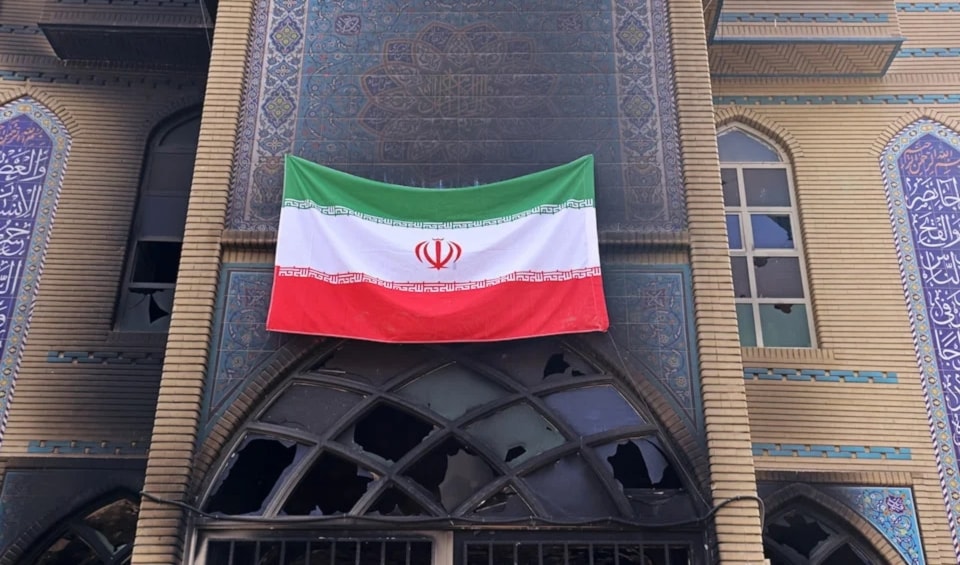
This photograph, taken during a tour for foreign media, shows the Iranian flag installed on Behesti Mosque, which was damaged during recent armed riots, in Tehran on January 21, 2026 (AFP)
The UK government is preparing legislation that would allow it to ban Iran’s Islamic Revolution Guard Corps (IRGC), according to The Times. The move would mark a significant escalation in Britain’s stance toward Tehran.
The Home Office confirmed it is drafting legislation to proscribe “hostile state agencies, including the IRGC,” though it said the bill would not be fast-tracked. Government sources told The Times the legislation is not yet finalized but is likely to be introduced later this year.
The reported UK move follows a decision by the European Union on Thursday to add the IRGC to its list of “terrorist groups, in light of the ongoing riots in the country."
Iran strongly rejected the EU decision, as Foreign Minister Abbas Araghchi condemned the designation as a “major strategic mistake,” warning it would further damage relations between Iran and Europe and escalate tensions at a time of heightened regional instability.
Iranian officials say the unrest initially began in late December 2025 as peaceful demonstrations driven by economic pressures, including rising inflation, currency depreciation, and sanctions-related hardship. Authorities maintain that these early protests were permitted under police protection and that President Masoud Pezeshkian personally engaged with representatives of demonstrators, instructing security forces to exercise restraint.
However, Iranian security institutions say the situation later shifted after organized networks intervened to exploit public grievances and redirect them toward violence and chaos. On Thursday, Russia’s state-owned TASS reported that forensic examinations identified Israeli military-grade ammunition in the bodies of children killed during the riots. The report cited the killing of an eight-year-old girl in Isfahan and a three-year-old child in Kermanshah, both fatally shot while accompanying family members during routine daily activities.
France and Italy backed the EU designation after making late decisions to support the move, paving the way for its approval.
New legal framework under consideration
The Home Office has been working on what officials describe as “terror-style proscription legislation” since May, when Yvette Cooper, then the home secretary, said she was accepting recommendations from Jonathan Hall, the government’s independent advisor on terrorism legislation.
Cooper said the proposed law would allow “much stronger action on state-backed organizations like the IRGC.”
While Labour had pledged to proscribe the group while in opposition, the government previously decided against using existing terror laws after being advised that they were poorly suited to organizations considered “arms of the state.” Critics also warned that current legislation risked criminalizing broader association with the Iranian state.
Expanded police powers
The proposed legislation would enable more targeted enforcement measures. Police would be given powers to seize passports from individuals suspected of working on behalf of the IRGC, as well as the authority to stop and search people without suspicion in “high-threat situations” or at locations linked to a known “state-threat target".
There are still tensions within the government over how to proceed against the IRGC, The Times revealed. MI6 and the Foreign Office are understood to be more resistant to proscribing the IRGC over concerns it would sever diplomatic channels that are relied upon by Britain and its allies and trigger the expulsion of British diplomats from Tehran.
Until now, the Foreign Office has favored sanctions over proscription, placing more than 500 IRGC-linked individuals under asset freezes and other restrictions.
Diplomatic considerations with the United States
The Times reported that the United States has historically preferred the British embassy in Tehran to remain open, viewing it as a “good conduit for back-channeling with the regime.”
Although Switzerland serves as Washington’s official “protecting power” in Iran, its role is largely limited to consular affairs, as per the report.
US officials reportedly rely on Britain to maintain dialogue with Tehran, with the UK embassy playing a key role in relaying messages between the two governments.
The United States has already designated the IRGC as a "terrorist organization", as have other allies, including Canada and Sweden.
Military signals amid rising tensions
This comes as US President Donald Trump warned Iran that a massive naval fleet, led by the USS Abraham Lincoln, is en route, demanding that Tehran negotiate its nuclear program.
Meanwhile, a US Air Force aircraft known as the “nuke sniffer” landed in Britain on Thursday.
The WC-135R Constant Phoenix jet, used to detect radioactive particles in the atmosphere, touched down at RAF Mildenhall, a US airbase in Suffolk. According to reports, the aircraft, operated by the 45th Reconnaissance Squadron, was deployed to the Middle East days before President Donald Trump bombed Iran’s nuclear facilities last year.
The same aircraft previously landed in Britain in January 2022, weeks before the war in Ukraine.
While the purpose of the latest deployment remains unclear, defense sources said its presence did not necessarily signal imminent military action.
Read more: Iran vows that any attack will be considered all-out war


