
More Democrats moving away from mail voting in 2026: NBC poll
 5 Min Read
Democrats are shifting toward early in-person voting ahead of the 2026 midterms, while fewer plan to cast ballots by mail, an NBC poll finds.
-
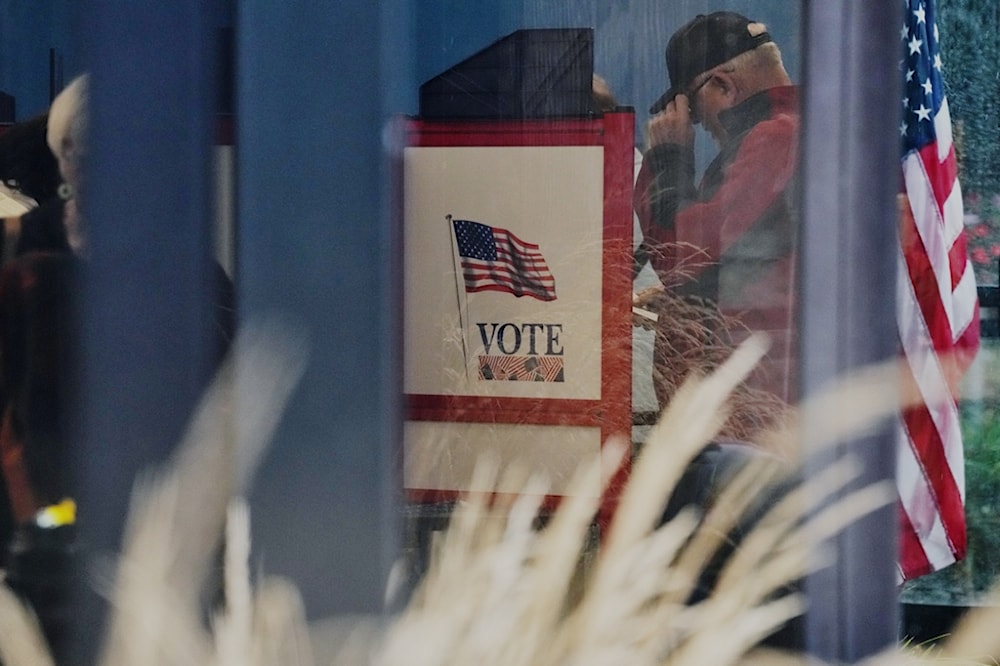
A voter casts a ballot on the first day of early voting in Minnesota at the Elections & Voter Services building, Friday, Sept. 18, 2026, in Minneapolis (AP Photo/Ellen Schmidt)
Democratic voters are increasingly planning to cast their ballots in person rather than by mail in the 2026 midterm elections, according to a new NBC News poll, as concerns over mail delivery and recent efforts by President Donald Trump to change mail-voting rules shape the voting landscape.
Only 23% of registered Democratic voters surveyed said they expect to vote by mail this year, compared with 34% who planned to do so at a comparable point ahead of the 2024 election, the NBC News poll found.
At the same time, 36% of Democrats said they intend to vote early and in person, a six-point increase from 2024. Another 36% plan to vote at their polling place on Election Day, compared with 35% two years ago. Five percent said they were either uncertain about their voting method or unlikely to vote.
Democrats have historically made greater use of mail voting since the 2020 election, when the COVID-19 pandemic prompted a major expansion of voting by mail. The latest figures indicate a shift toward physical voting locations ahead of the 2026 midterms.
Independent voters change voting plans
The shift is not limited to Democratic voters. NBC News found that independent voters are also less likely to rely on mail ballots than they were in 2024.
Twenty percent of independents said they intend to vote by mail, down from 28% in 2024. Meanwhile, 28% said they would vote early in person, compared with 22% two years earlier.
Election Day voting among independents stood at 37%, down from 41% in 2024, while 15% said they were unsure how they would vote or were unlikely to participate.
Republican voters' plans have changed comparatively little. Sixteen percent said they would vote by mail, 26% planned to vote early in person, and 53% intended to vote on Election Day, with the figures remaining broadly in line with the 2024 poll.
Mail voting debate intensifies
The change among Democrats comes as the Trump administration has sought to impose new restrictions on the distribution of mail ballots.
The US Supreme Court on September 14 blocked the enforcement of an executive order issued by Trump that sought to establish new requirements for states sending mail ballots to voters, according to NBC News.
Earlier this year, Trump directed the US Postal Service to limit the distribution of mail ballots to voters appearing on certain lists. Voting rights advocates and Democrats had warned that the system could produce errors and prevent eligible voters from receiving ballots.
Although the Supreme Court prevented the administration from implementing the order, Democratic and progressive groups have expressed concern that the dispute itself could leave voters uncertain about the rules governing mail voting.
Trump has repeatedly criticized voting by mail and made unsubstantiated claims about election fraud associated with the practice.
Concerns over the Postal Service have also contributed to the shift. Operational and budgetary issues have resulted in slower mail delivery, adding another consideration for voters deciding how to cast their ballots.
Dems emphasize early in-person voting
Democratic organizations are not advising voters to abandon mail voting altogether, but they are increasingly encouraging supporters to vote early and in person.
Jane Kleeb, chair of the Association of State Democratic Committees and a Democratic National Committee vice chair, told NBC News that Democrats are encouraging voters to go to county election offices and cast their ballots early in person.
The shift could also influence how election results emerge on election night. Early in-person ballots are generally reported before Election Day votes, while mail ballots can take longer to process and verify, with procedures varying between states.
Democratic pollster Jeff Horwitt, whose Hart Research Associates conducted the survey with Republican polling firm Public Opinion Strategies, said the different voting methods could produce differences in when support for the two parties becomes visible in the results.
“Among early voters, Democrats have a 23-point advantage on the congressional ballot, but among Election Day voters, Republicans have a 14-point advantage,” Horwitt told NBC News. “So, if a blue wave comes in, it will hit land at different times, and even on different days or weeks.”
Voters remain confident in election administration
Despite changes in how some voters intend to cast their ballots, overall confidence in election administration remains relatively stable.
Seventy-two percent of voters surveyed said they were either very or somewhat confident that their state would conduct the election fairly and accurately while ensuring eligible voters could participate. NBC News said the figure was essentially unchanged from 2021.
The survey included 1,000 registered voters and was conducted from September 11-15 through a combination of telephone interviews and an online survey sent via text message. The poll has a margin of error of plus or minus 3.1 percentage points.


