
Netanyahu bypassed security officials to secretly negotiate with Hamas
 4 Min Read
Benjamin Netanyahu reportedly authorized a secret backchannel to Hamas during the 2014 Gaza war, using businessman Shlomi Fogel to conduct direct talks.
-
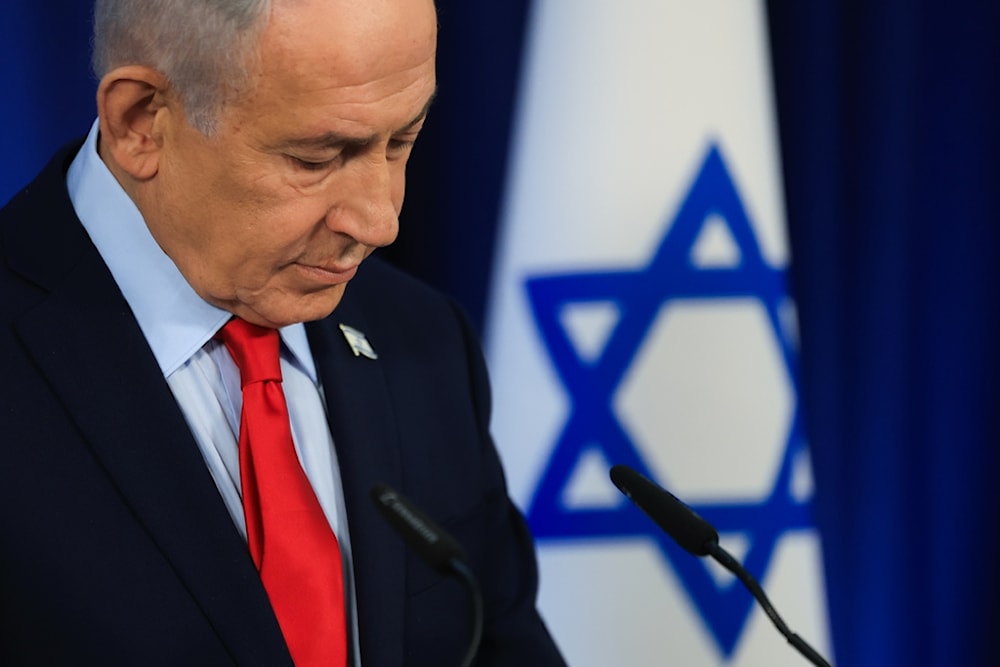
Israeli Prime Minister Benjamin Netanyahu holds a press conference in occupied al-Quds on March 19, 2026. (Ronen Zvulun, Pool Photo via AP)
Israeli Prime Minister Benjamin Netanyahu held direct talks with Hamas during Operation Protective Edge in 2014 without the knowledge of "Israel's" security establishment, using Israeli businessman Shlomi Fogel as an intermediary, reported Maariv.
The secret channel operated separately from the established diplomatic tracks used in negotiations between "Israel" and Hamas, which typically relied on Egypt, Qatar, or another intermediary. In this case, the contacts were conducted directly between Fogel and senior Hamas figure Razi Hamed.
The discussions also differed from Netanyahu's previous contacts with Hamas leader Yahya Sinwar. Although Sinwar had sent a message reading "take a calculated risk" to then-National Security Council chief Meir Ben Shabbat, those contacts were also conducted through Egypt.
During the 2014 Israeli war, Fogel reportedly acted on Netanyahu's instructions and under the guidance of then-National Security Council chief Yossi Cohen. Fogel communicated directly with Hamed in the Gaza Strip by telephone, with the discussions continuing for several weeks.
He reportedly established the parameters for the talks, Cohen formulated the messages, and Fogel delivered them to Hamed.
Netanyahu sought 2014 ceasefire
At the time, Netanyahu was seeking a ceasefire and sent a security delegation to Egypt to negotiate through Egyptian mediators with Hamas and other Resistance factions in Gaza. The delegation included generals Fuli Mordechai, Nimrod Sheffer and Amos Gilad, as well as then-Shin Bet chief Yoram Cohen.
The Egyptian-mediated negotiations failed to produce a breakthrough, while a separate channel was operating behind the scenes.
Security officials discovered that while the Israeli delegation was traveling between "Israel" and Cairo for the ceasefire negotiations, Netanyahu was simultaneously conducting direct contacts with Hamas without the security establishment's knowledge.
Officials subsequently learned that Fogel, who was close to Netanyahu, was conducting the talks with Hamed, who at the time served as deputy minister in the government in Gaza. The contacts reportedly continued for weeks by telephone, with Fogel acting on Netanyahu's behalf and Cohen preparing the messages he delivered.
Netanyahu denied involvement after scolding
Senior defense officials confronted Netanyahu after discovering the channel and demanded an explanation.
Netanyahu reportedly denied involvement and instructed officials to contact Fogel and tell him to end the communications. However, officials later concluded that Fogel had been acting with Netanyahu's authorization and approval.
Fogel was initially warned against continuing the contacts, but after he persisted, officials discovered he had been operating with the prime minister's approval.
Hamed, a Hamas figure currently serving as chairman of the Gaza Energy Authority, had previously served as deputy foreign minister and as an adviser to senior figures in the group's military wing. He conducted the ceasefire discussions with Fogel, who was managing the channel on Netanyahu's behalf.
The revelation reportedly stunned senior figures across "Israel's" security establishment. “People’s jaws dropped,” one anonymous security official told Maariv. “This was 2014; it was not the situation today, when Netanyahu had already declared war on the entire system long ago. He appointed all of us; he sent us to conduct negotiations in Cairo, and at the same time he was conducting direct negotiations with Hamas without us knowing about it."
“When this was confronted with him, he denied it. But when Shlomi Fogel was called in and questioned about it, he proved to us that everything was done with authorization and approval. This was a formative event, a kind of writing that was already on the wall, but we did not see it.”
Read more: Eisenkot says Netanyahu 'capitulated in his political weakness'


