
Netanyahu failed to derail US–Iran agreement: Israeli media
 3 Min Read
An Israeli official said the war may not have been worth fighting had its political outcome been known, as reports point to divisions over a Beirut attack and the US–Iran agreement.
-
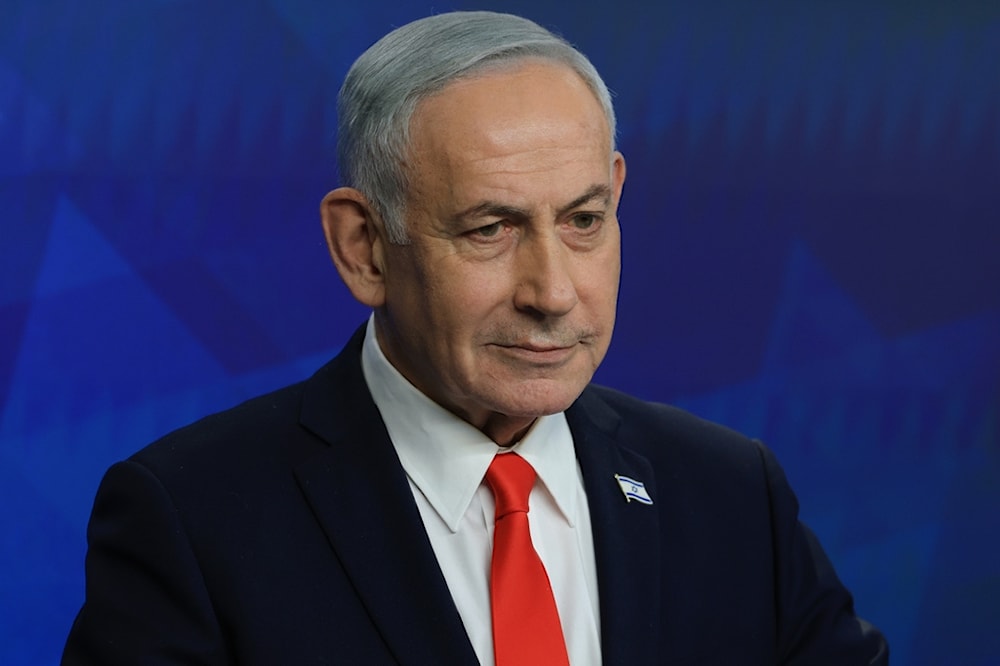
Israeli Prime Minister Benjamin Netanyahu holds a news conference, in occupied al-Quds, Monday, June 15, 2026. (Ronen Zvulun, Pool Photo via AP)
A senior Israeli official acknowledged on Monday that if the Israeli leadership had known how the war would end politically, it may not have chosen to launch it in the first place.
Speaking to Israeli broadcaster i24, the official said that had the Israeli leadership known that “the war would end this way, from a political standpoint, it is not certain that it would have been worth entering.”
The remarks came as Israeli newspaper Yedioth Ahronoth reported growing frustration within Israeli political and military circles over the outcome of the war and the emerging US–Iran memorandum.
Reports reveal opposition to Beirut attack
According to Yedioth Ahronoth, the recent Israeli attack on Beirut's southern suburbs was ordered by Prime Minister Benjamin Netanyahu and War Minister Israel Katz despite warnings from senior military officials about the possibility of an Iranian ballistic missile response.
Sources cited by the newspaper said several senior officials proposed delaying the attack by one or two days in anticipation of a possible US–Iran agreement that could have rendered the operation politically unfeasible.
The report indicated that objections from military leaders were not related to the target itself or immediate operational concerns, but rather to the timing of the attack, as negotiations toward a comprehensive US–Iran agreement were nearing a critical stage.
According to the newspaper, some assessments within the Israeli military warned that the attack could be viewed as an attempt to place a political and military obstacle in the path of the agreement, potentially triggering missile retaliation and broader regional escalation.
Netanyahu's influence wanes
Yedioth Ahronoth further reported that Netanyahu has lost much of his ability to influence US policy and is unable to derail an agreement that sections of the Israeli leadership reportedly view as dangerous.
A source familiar with the discussions told the newspaper that Netanyahu was concerned about criticism and directed public messaging to focus on separating the Lebanese and Iranian files while emphasizing military operations in Lebanon. Another source reportedly said the operation's objective was effectively “an attack on the agreement” itself by creating additional tension.
According to a security source cited by the newspaper, the outcome of the operation was the opposite of what Netanyahu had hoped to achieve. The source said Netanyahu believed the attack on Beirut's Southern Suburb could disrupt or escalate negotiations with Iran, but developments on the ground moved in the opposite direction.
The report added that US President Donald Trump strongly supports the agreement and is eager to finalize it, viewing de-escalation with Iran as a priority. As a result, Netanyahu has found himself increasingly isolated after weeks of attempting to reshape the rules of engagement with Hezbollah and demonstrate that he was not constrained by Washington's position.
The newspaper concluded that events ultimately unfolded in line with Trump's approach, leaving Netanyahu politically weakened and unable to prevent the agreement from moving forward.
Read more: Israeli media blasts Iran-US deal as major concession to Tehran


