
Netanyahu promised victory, delivered failure, Israeli officials say
 5 Min Read
Senior Israeli officials from across the political spectrum rounded on Prime Minister Benjamin Netanyahu following the US-Iran ceasefire agreement, warning of its security implications and calling for his replacement.
-
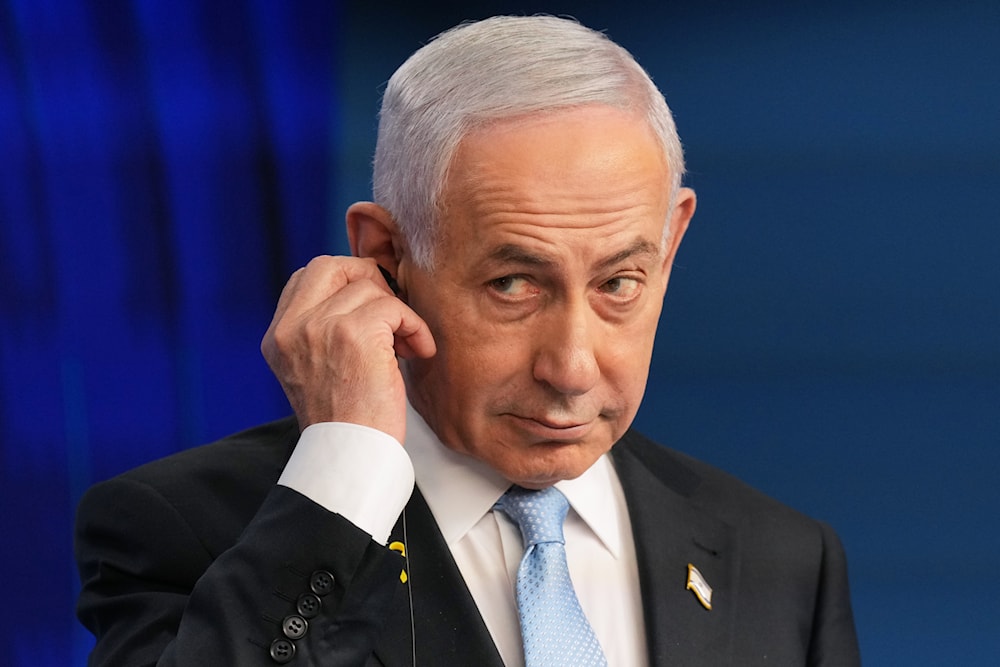
Israeli Prime Minister Benjamin Netanyahu adjusts the headphones during a joint press conference with German Chancellor Friedrich Merz in al-Quds, Occupied Palestine, Dec. 7, 2025 (AP)
Israeli officials across the political spectrum turned on Prime Minister Benjamin Netanyahu on Monday following the announcement of the US-Iran Memorandum of Understanding, with senior figures from both the opposition and the coalition describing him as "the father of the greatest strategic failure in Israel's history."
Officials warned of the agreement's security and military implications, with some rejecting any commitment to its terms or restrictions on Israeli operations in Lebanon.
Calls to replace Netanyahu
Yair Golan, leader of the Democrats party, was among the sharpest critics, describing the agreement as "a difficult morning for 'Israel'" that had been reached "over 'Israel's' head."
Golan said on X that the agreement was "the result of many years of Netanyahu's failure," accusing him of selling Israelis a "false image of security."
בוקר קשה לישראל.
— Yair Golan - יאיר גולן (@YairGolan1) June 15, 2026
הבוקר אזרחי ישראל מתעוררים להסכם בין ארצות הברית לאיראן שנעשה מעל ראשה של ישראל.
באיבחת חתימה אחת נמחקו הישגים צבאיים אדירים שהושגו באומץ לבם של טייסינו ובדם לוחמינו, בזמן שנתניהו עמד מן הצד - חלש, חולה, מבודד וחסר השפעה.
טראמפ חותם על הסכם שמזרים מיליארדים…
"Netanyahu has become the father of the greatest strategic failure in Israel's history," Golan said, adding that Netanyahu had promised "total victory" but was ending his rule with "Israel" weaker and its enemies stronger, while "the deterrence built with the blood of our fighters is eroding before our eyes."
Golan said that "the military achievements that had been secured were squandered, while the prime minister stood weak, sick, isolated, and with almost no influence," and stressed that replacing Netanyahu was "not merely a political necessity, but an existential security necessity."
Gantz: A strategic failure
Former minister and Blue and White party leader Benny Gantz also described the agreement as a "strategic failure," warning of its long-term consequences for the Israeli regime.
In a post on X, Gantz said the agreement "will force Israel to wage diplomatic, military, and legal battles in the coming years," adding that "Israel" must not agree to any restriction on its "freedom of action" in Lebanon, nor to any withdrawal.
בשום מצב - אסור להסכים להגבלת חופש הפעולה של ישראל בלבנון או לנסיגה שתסכן את תושבי הצפון.
— בני גנץ - Benny Gantz (@gantzbe) June 15, 2026
ההסכם המסתמן עם איראן נראה ככישלון אסטרטגי שיצריך את ישראל לצאת למאבק מדיני, צבאי ומשפטי בשנים הבאות אותו תוכל להוביל רק ממשלה ציונית רחבה.
Ben-Gvir rejects the agreement
Police Minister Itamar Ben-Gvir rejected the agreement outright, claiming that the Israeli regime "is not bound by it and is not subordinate to the United States."
In a post on X, Ben-Gvir called on Netanyahu to make "historic decisions," saying "Israel" was facing "decisive historic moments" and that Netanyahu must not settle for "anything less than the dismantling of Hezbollah."
ההסכם של טראמפ אינו מחייב אותנו. ישראל לא כפופה לארצות הברית ואנחנו מדינה עצמאית וריבונית!
— איתמר בן גביר (@itamarbengvir) June 15, 2026
חובתנו לאזרחי ישראל לחיילי צה״ל ולעם היהודי וחובתנו ההיסטורית לנרדפים ולנרצחים היהודים באלפי שנות גלות, להעניק ביטחון ליהודים בארץ ישראל.
בכל פעם שנכנענו ללחץ בינלאומי על חשבון ביטחון…
He further demanded that any launch of drones or missiles from Lebanon be met with an "immediate Israeli response in Beirut's southern suburbs."
Smotrich: A bad agreement
Finance Minister Bezalel Smotrich said the agreement was "bad for us," while claiming that "the achievements made in the joint war against Iran and in efforts to weaken it will not go to waste."
"We must continue our campaign to topple the Iranian regime ourselves and ensure that Tehran does not obtain a nuclear weapon," he added.
Bennett: The government is incapable
Former prime minister and Together party leader Naftali Bennett said the government had "failed to turn the results of the war against Iran into lasting security gains."
"This morning, we discovered once again that the government is incapable of turning all the results of the war against Iran into lasting security achievements," Bennett said, adding that he had "a clear strategic plan to bring down the Iranian regime."
Lapid: Netanyahu has failed
Opposition leader Yair Lapid said Netanyahu had "grown weak" and that "there has never been a more complete failure than this," adding that "even the president of the United States is telling him: I am your boss."
Lapid stressed the time had come for a different government.
Lieberman: Oppose linking Iran and Lebanon fronts
Former security minister and Yisrael Beiteinu leader Avigdor Lieberman described the situation as "a political disaster," arguing that "Israel" must oppose any linkage between the Iranian and Lebanese fronts.
Speaking to Yedioth Ahronoth, Lieberman added that "had this agreement been signed under the Change Government, Netanyahu would have accused all of us of treason."
Details of the agreement
Pakistani Prime Minister Shehbaz Sharif announced early Monday that a "peace agreement" had been reached between the United States and Iran following intensive negotiations, with both sides declaring an immediate and permanent halt to military operations on all fronts, including in Lebanon. The agreement is set to be signed next Friday in Switzerland.
Iranian Foreign Ministry spokesperson Esmail Baghaei confirmed that under the memorandum of understanding, Iran, in cooperation with Oman and in consultation with relevant stakeholders, would assume responsibility for ensuring the safety and secure passage of vessels through the Strait of Hormuz.
Baghaei said the memorandum also provides for the release of frozen Iranian funds and compensation for war-related losses, and requires Washington to lift all primary and secondary sanctions, as well as UN Security Council and International Atomic Energy Agency resolutions. He stressed that ending the war in Lebanon is an integral part of the understanding.


