
US-Israeli alliance faces breaking point: Analysis
 4 Min Read
An analysis published by Foreign Policy argues that political polarization, shifting public opinion, and regional conflicts are accelerating pressures on the long-standing US-Israeli alliance.
-
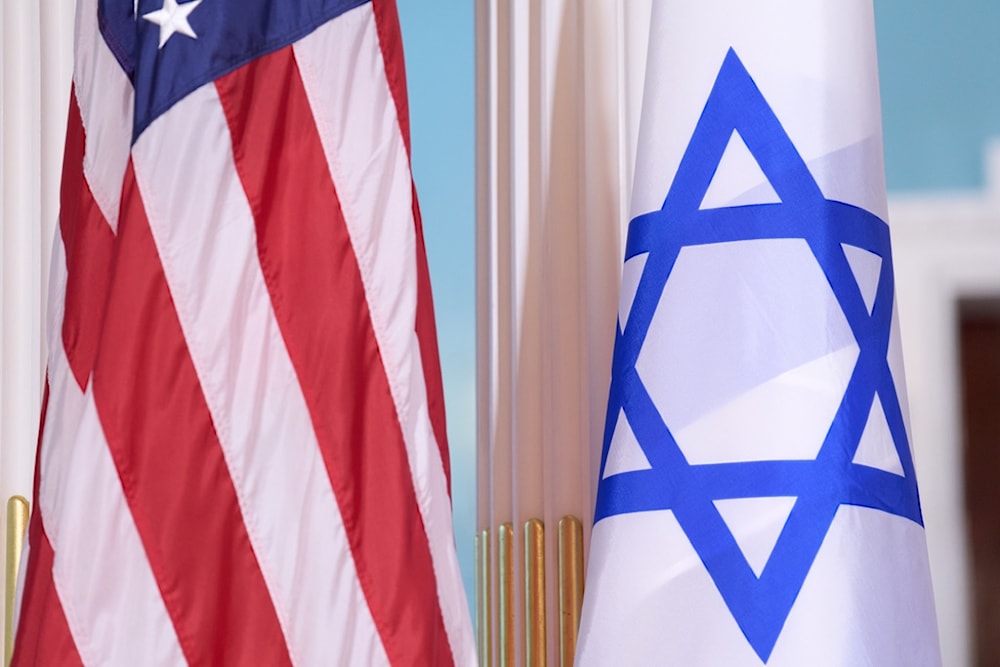
The US and Israeli flags are seen ahead of a meeting of US Secretary of State Marco Rubio and "Israel's" Foreign Minister Gideon Sa'ar, at the State Department, in Washington, Wednesday, Dec. 10, 2025. (AP Photo/Jacquelyn Martin)
Despite unprecedented military coordination between Washington and Tel Aviv, an analysis published by Foreign Policy argues that the political foundations underpinning the decades-long US-Israeli alliance are showing signs of erosion.
Writing in Foreign Policy, Joshua Leifer contends that what appears to be the height of military cooperation between the two allies may simultaneously represent the beginning of a broader political decline in the relationship. According to Leifer, while recent regional confrontations have demonstrated deep operational coordination, the domestic political consensus that sustained the alliance for decades is weakening across the United States.
Leifer argues that support networks traditionally associated with advocacy for "Israel" in Washington, including lobbying organizations, Jewish communal institutions, and Christian Zionist groups, no longer command the level of bipartisan influence they once enjoyed. He writes that these organizations increasingly face challenges from both progressive currents within the Democratic Party and non-interventionist factions emerging within the Republican Party.
Read more: Israeli officials: 'Security zones' to remain in Lebanon, Syria, Gaza
Shifting public opinion and political realignment
A central argument in Leifer's analysis is that American public opinion has undergone a significant transformation in recent years.
He points to polling data indicating declining support for unconditional US backing of "Israel" and growing sympathy among portions of the American public toward Palestinians. According to Leifer, demographic changes, generational shifts, and evolving political priorities have altered how many Americans view the conflict.
The Foreign Policy analysis further argues that younger generations, including many young American Jews, have become increasingly critical of Israeli policies toward Palestinians and less attached to traditional narratives that historically shaped US discourse on "Israel".
Leifer contends that "Israel's" war on Gaza, continued blockade of the Strip, and settler violence in the occupied West Bank accelerated these trends, generating a broader backlash that now extends across multiple sectors of US political life.
Iran dispute identified as turning point
According to Leifer, one of the most significant moments in the transformation of the relationship occurred during the debate surrounding the Iran nuclear agreement in 2015.
He argues that opposition by Israeli officials and pro-Israel lobbying groups to the administration of former US President Barack Obama undermined the bipartisan consensus that had long characterized Washington's support for "Israel".
Leifer writes that efforts to block the nuclear agreement increasingly aligned major pro-"Israel" organizations with Republican political priorities, contributing to growing polarization around "Israel" within US politics.
In his assessment, subsequent developments during Donald Trump's first presidency deepened this trend, as Washington adopted a series of policies strongly favored by the Israeli right, including recognizing al-Quds as "Israel's" capital and recognizing Israeli sovereignty over the occupied Syrian Golan.
Gaza war deepens divisions
Leifer further argues that "Israel's" political trajectory under Prime Minister Benjamin Netanyahu has complicated relations with liberal constituencies in the United States.
He contends that Netanyahu's alliances with far-right political forces and the continued expansion of settlements in the occupied West Bank alienated many traditional supporters of "Israel" within liberal circles.
According to the analysis, the war on Gaza and the humanitarian crisis that followed significantly intensified criticism of Israel among progressive activists, younger voters, and sections of the Democratic Party.
Leifer writes that opposition to US military support for "Israel" is increasingly becoming a defining issue among progressive political movements, with activists pressuring candidates to distance themselves from organizations associated with the traditional pro-"Israel" establishment.
Read more: US-Iran peace deal victory for Tehran: Atlantic
Criticism emerges from both political camps
The analysis also highlights growing criticism of the US-Israeli relationship from parts of the American right.
Leifer argues that some figures associated with the MAGA movement have begun questioning continued military aid and strategic commitments to "Israel", framing their objections through an anti-interventionist and "America First" lens.
While the motivations differ from those of progressive critics, Leifer suggests that both trends point toward a weakening of the bipartisan consensus that long protected the alliance from domestic political challenges.
He argues that future debates within both major parties could increasingly focus on the scale of US military assistance to "Israel" and the broader strategic value of the relationship.


