
AI, crypto, and pro-'Israel' lobbies reshape US congressional races
 4 Min Read
AI firms, cryptocurrency interests, and pro-"Israel" lobbying networks are pouring unprecedented sums into US congressional primaries, reshaping elections and sidelining dissenting candidates.
-
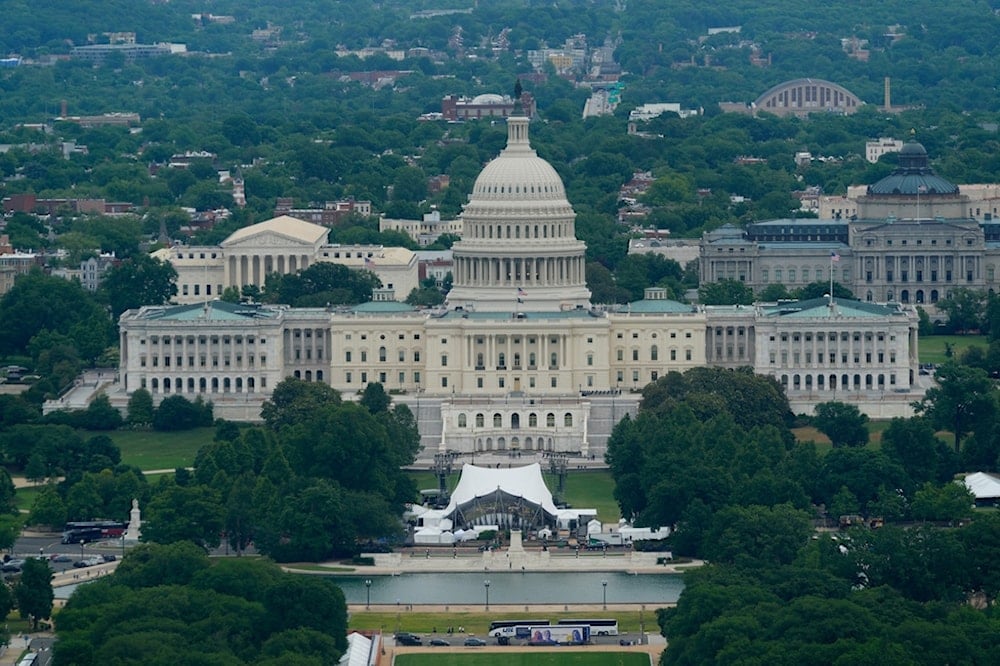
The US Capitol building is seen, Thursday, May 21, 2026, in Washington. (AP Photo/Pablo Martinez Monsivais)
Artificial intelligence companies, cryptocurrency-linked political action committees, and pro-"Israel" lobbying organizations are increasingly dominating US congressional primaries through unprecedented levels of campaign spending, according to an Axios analysis of Federal Election Commission data.
The report highlights how outside spending from technology-aligned and pro-"Israel" groups is reshaping electoral outcomes, influencing candidate selection, and narrowing political space for dissenting voices within both major US parties.
According to Axios, eight of the twelve largest outside spenders in House primaries this election cycle are affiliated with crypto, AI, or pro-"Israel" lobbying interests.
The spending surge reflects the growing convergence between corporate capital, strategic lobbying networks, and electoral politics in the United States, particularly around issues tied to technology regulation, foreign policy, and economic influence.
Pro-'Israel' lobbying groups intensify intervention
Among the largest political spenders identified by Axios was the United Democracy Project, a political organization affiliated with AIPAC, which reportedly spent $11.6 million across multiple congressional races.
The report noted that pro-"Israel" groups spent nearly $8 million targeting Republican Representative Thomas Massie in Kentucky’s 4th District, contributing to the most expensive House primary in US history.
AIPAC-aligned organization Elect Chicago Women also reportedly spent approximately $9.8 million backing two candidates in Illinois congressional races.
The escalating role of pro-"Israel" lobbying organizations in Democratic and Republican primaries comes amid increasing debate inside the United States regarding foreign influence, campaign financing, and the suppression of criticism directed at Israeli policies.
Axios reported that some progressive candidates attempted to make AIPAC’s involvement a central issue in their campaigns, though with mixed electoral results.
Crypto and AI sectors pour millions into primaries
The cryptocurrency sector has also rapidly expanded its political footprint through large-scale campaign financing.
Protect Progress, the Democratic arm of cryptocurrency PAC Fairshake, emerged as the largest outside spender in House primaries, reportedly investing $15.8 million across numerous Democratic races.
The group alone spent nearly $5 million in Texas’s 18th District in support of Representative Christian Menefee against longtime Congressman Al Green.
Meanwhile, AI-focused political organizations are increasingly intervening in races connected to technology regulation and oversight.
Think Big, the Democratic arm of the pro-artificial-intelligence PAC Leading the Future, reportedly spent $8.2 million this cycle, including efforts targeting New York congressional candidate Alex Bores for his support of AI regulatory guardrails.
According to Axios, donors connected to OpenAI were among those backing anti-regulation spending campaigns.
Read more: Exposing ELNET: US lobby funds pro-'Israel' influence in Europe
Corporate money reshapes US political competition
The report emphasized that only the Democratic and Republican parties’ main super PACs possess comparable financial influence.
However, those party-aligned organizations typically focus on general election battlegrounds rather than primary contests, leaving congressional primaries increasingly vulnerable to domination by outside financial networks.
This dynamic has enabled corporate-backed political organizations to flood races with targeted spending capable of elevating preferred candidates while marginalizing critics.
Representative Marc Veasey told Axios that while many politicians campaign against such spending, voters often remain unmoved by the issue.
“People want to campaign on” these PACs spending against them, Veasey said in comments to Axios, adding that “quite frankly, I don't think that many people are ... moved by it.”
He further acknowledged the entrenched nature of money-driven politics in the United States, stating that politicians “have to figure out how to work in that world.”
Debate grows over influence and democratic legitimacy
Some progressive organizations argue that the scale of spending reflects growing elite control over US political processes.
Usamah Andrabi, spokesperson for Justice Democrats, told Axios that massive spending campaigns become necessary only when political positions lack broad public support.
“You don't have to spend hundreds of millions of dollars if your candidates or policies are popular,” Andrabi said.
Representative Jared Huffman also argued that AIPAC’s increasingly aggressive intervention in Democratic primaries may ultimately damage its credibility over time.
Upcoming races in Maryland and New York are already drawing millions in outside spending from competing technology and lobbying-backed political organizations.


