
Trump’s war on Iran exposes deep rifts inside MAGA base
 3 Min Read
The US-Israeli war on Iran exposed deep divisions within the MAGA base, as key allies clash over foreign policy, raising political risks amid growing dissent and economic fallout.
-
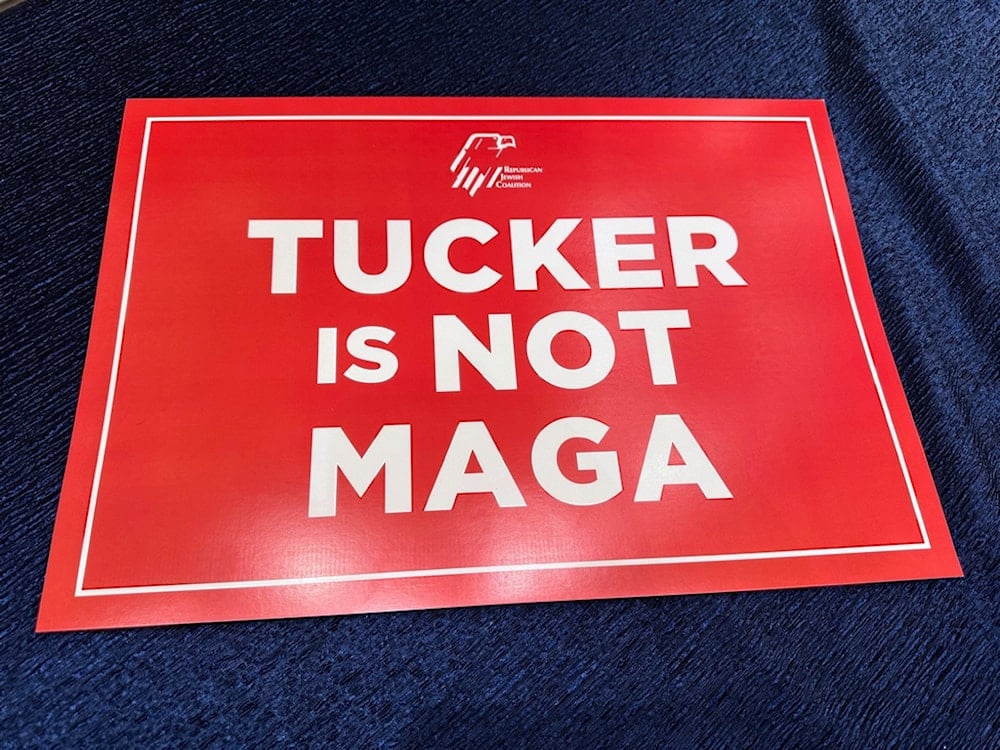
A red sign stating "Tucker is not MAGA," waved by college students attending the Republican Jewish Coalition conference in protest of the conservative talk show host's interview of Nick Fuentes, on November 1, 2025, in Las Vegas. (AP)
Almost three weeks into the war on Iran, divisions are widening within US President Donald Trump’s political base, as tensions flare between isolationists and foreign-policy hawks.
Since the first US airstrikes in February, Trump has faced growing resistance from influential voices on the right who oppose foreign interventions, clashing with those backing a harder line against Tehran.
The split became more visible after Joe Kent, director of the National Counterterrorism Center, resigned in protest. In his resignation letter, Kent said Iran “posed no imminent threat” and asserted the war was driven by pressure from "Israel".
Trump dismissed Kent’s criticism, saying it was “a good thing that he’s out", while the White House accused him of making "false claims".
Rising dissent among Trump allies
Prominent conservative figures, including Tucker Carlson, Megyn Kelly, and Joe Rogan, have expressed skepticism about the war, amplifying concerns within Trump’s coalition.
Trump ally Marjorie Taylor Greene publicly defended Kent, calling him a “great American hero,” further highlighting the growing divide.
Analysts say these tensions reflect the challenge of maintaining a broad political coalition. “If you throw the car keys over to one faction… other factions may be displeased,” said Justin Logan of the Cato Institute.
Signs of disagreement have also emerged within Trump’s team. Vice President JD Vance, long critical of foreign wars, has voiced support for the president while maintaining his own reservations. “I trust President Trump to get the job done,” Vance said, signaling cautious alignment despite ideological differences.
Kent’s resignation comes ahead of congressional hearings involving top intelligence officials, including Tulsi Gabbard, who has historically opposed military interventions.
Gabbard avoided directly endorsing the war but stated that Trump acted based on the belief that Iran posed an imminent threat.
Divided support, lingering risks
While many Trump supporters continue to back the war, concerns are growing about the long-term political consequences, especially if casualties rise or economic impacts deepen.
Polls show strong MAGA support for military action, but analysts warn that backing could erode if the conflict drags on.
Rising oil prices and instability in key shipping routes like the Strait of Hormuz have already begun to affect global markets and domestic fuel costs. “This is not a cruise that a lot of folks signed up for,” said political analyst Charlie Cook, noting that voters may reconsider if the war expands or strains the economy.


