
No one could have predicted scale of Iran's response: US official
 4 Min Read
Iran’s scale of retaliation against US-Israeli aggression is seen as unexpected, with strikes on US-linked targets in the UAE taking regional actors by surprise.
-
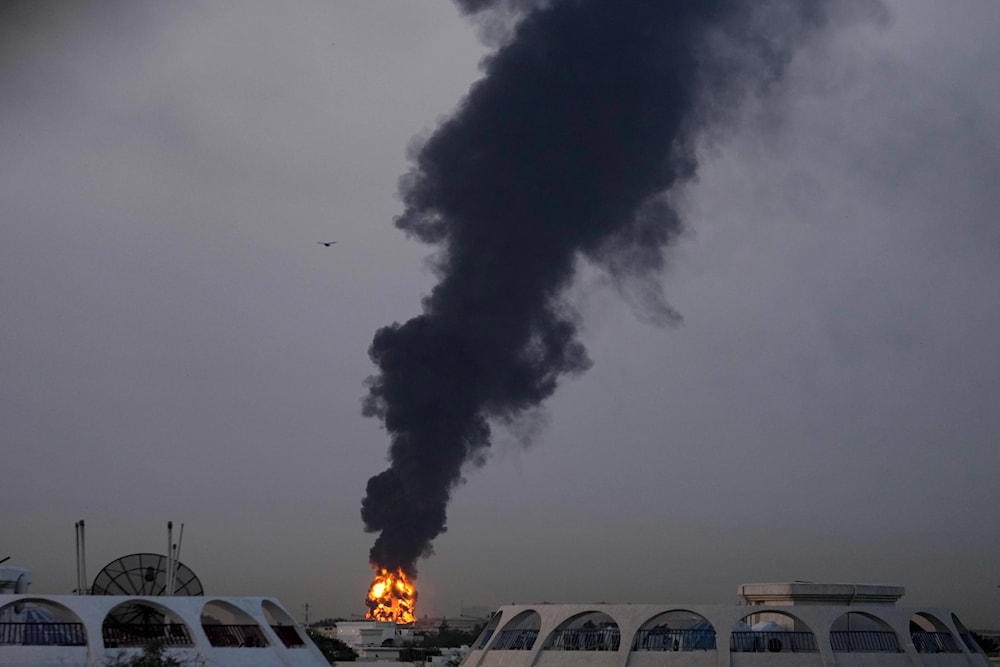
Fire and plumes of smoke rise after a drone struck a fuel tank, forcing the temporary suspension of flights near Dubai International Airport, in the United Arab Emirates, early Monday, March 16, 2026 (AP)
The scale and intensity of the Iranian retaliatory strikes on US-linked targets in the neighboring countries took regional actors by surprise, particularly given the diplomatic engagement prior to the outbreak of the war, ABC News reported.
The UAE, like other Gulf states hosting US bases and assets in the region, had its own share of strikes, especially since several deadly strikes were launched from US bases in the emirates.
“I don't think anyone, including the UAE, could have predicted the scale by which Iran would target the UAE,” a senior US official said, leaving out the detail that Iran is striking military US assets and installations in the region.
Among the incidents cited by ABC News, a suspected drone strike damaged the US consulate in Dubai in the early days of the war, though no casualties were reported.
"... the scale of it, the way Iran targeted the UAE, was something that was not necessarily expected to this level,” the official added.
It should be noted that the Iranian forces explicitly mentioned that their operations in the Gulf are aimed at disabling US radar networks and logistical systems, targeting US bases.
Security risks grow
Officials overseeing regional security operations said the scale of the escalation exceeds previous confrontations and has required heightened preparedness across diplomatic and military posts.
“I think the scale this time is certainly greater than what we've dealt with in the past,” a Washington-based senior official said.
“We have ensure that we have a plan no matter what happens, especially in a situation where a lot of things happen at the same time,” the official added.
Iranian Army targets US radar stations, positions in UAE
Yesterday, the Army of the Islamic Republic of Iran confirmed it struck US radar stations in the United Arab Emirates using attack drones from overnight Sunday into Monday morning.
In its 48th statement, the Army said the radar stations were responsible for detecting and tracking Iranian missiles and combat drones.
Iran's Army also targeted a US military position in the UAE with one-way drones, in a broader response to US-Israeli aggression on Iranian territory.
Iranian strikes strain Gulf defenses as interceptor stocks dwindle
Sustained Iranian missile attacks on US-linked targets in the Gulf are placing increasing pressure on Washington and its regional allies, as interception systems face mounting strain amid continued escalation, Bloomberg reported.
Since the start of the war on February 28, Iran has launched nearly 1,200 ballistic missiles and around 4,000 drones, according to official figures from countries in the region, in one of the most intense and sustained missile campaigns in recent history, according to Bloomberg.
The scale and frequency of Iranian strikes have forced Gulf states and US forces to expend large numbers of interceptor missiles.
Estimates, cited by Bloomberg, indicate that at least 2,400 interceptors have already been used, a figure approaching pre-war stockpiles of systems such as Patriot PAC-3 and GEM-T missiles, which were estimated at fewer than 2,800 across Gulf countries, based on US Foreign Military Sales authorizations and estimates by three experts and a person familiar with the matter.
Gulf allies push Trump to prolong war on Iran as Washington flounders
Meanwhile, the Associated Press (AP) reported, citing regional and Western sources, that Gulf states aligned with the United States, chiefly Saudi Arabia and the United Arab Emirates, are privately urging US President Donald Trump to sustain the US military aggression on Iran, claiming Tehran has not been "sufficiently weakened" by a month of US-Israeli bombings.
The push comes despite earlier frustration within the Gulf over Washington’s decision to ignite the war without adequate notice and despite warnings that US‑Israeli aggression would devastate the wider region. Now, Gulf rulers are attempting to push Trump to impose a "decisive strategic defeat" on Iran’s leadership and reshape the regional balance in their favour as US positions in the Gulf are being targeted.
According to AP, officials from Saudi Arabia, the UAE, Kuwait, and Bahrain told US interlocutors they oppose ending the aggression until Iran’s leadership is "significantly weakened" or its behavior "dramatically altered", a reflection of Gulf dependence on Washington’s security umbrella and their willingness to prolong a destructive war.
Read more: Trump wants Gulf states to pay for Iran war while Gulf economies bleed


