
Pakistan calls on Trump to extend Iran threat 'deadline' by two weeks
 3 Min Read
Pakistan's prime minister urged Donald Trump to extend the US deadline on Iran by two weeks and called for a temporary pause in the war on Iran.
-
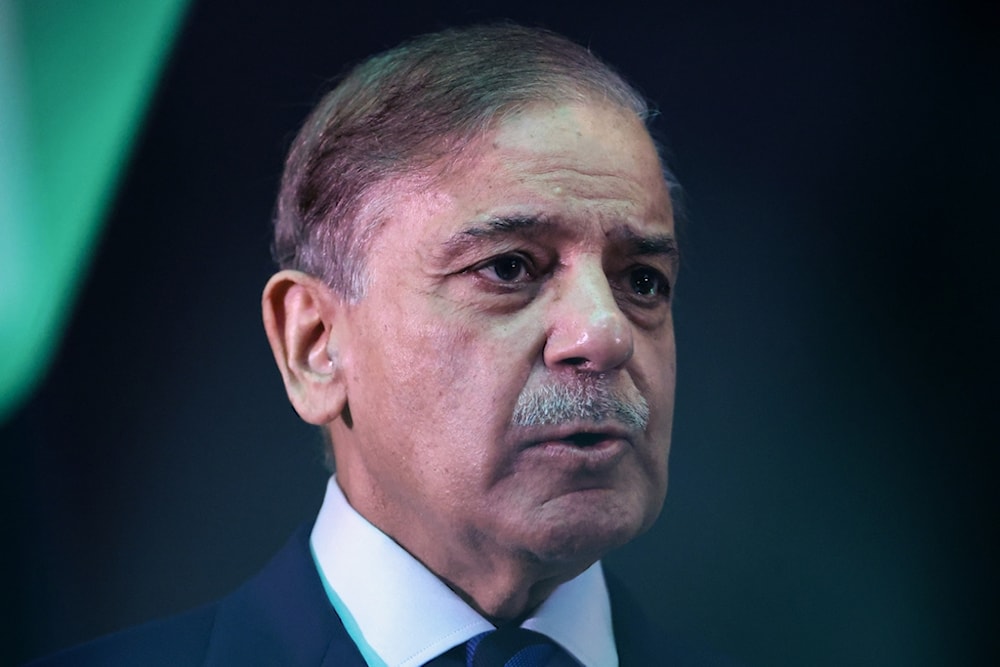
Pakistan's Prime Minister Shehbaz Sharif looks on during a business and investment conference he attended with Malaysia's Prime Minister Anwar Ibrahim during Sharif's official visit, in Kuala Lumpur, Malaysia, Monday, Oct. 6, 2025. (Hasnoor Hussain/Pool Photo via AP)
Pakistan’s Prime Minister Shehbaz Sharif has called on US President Donald Trump to extend a so-called "deadline" tied to the ongoing war on Iran, as diplomatic efforts continue around a proposal that Washington itself helped shape but has yet to formally endorse.
In a statement posted on X, Sharif urged a two-week extension to allow negotiations to proceed, pointing to what he described as tangible momentum toward a political resolution.
"Diplomatic efforts for peaceful settlement of the ongoing war in the Middle East are progressing steadily, strongly and powerfully with the potential to lead to substantive results in near future. To allow diplomacy to run its course, I earnestly request President Trump to extend the deadline for two weeks," Sharif said on X.
Sharif also said he had asked Iran to reopen the Strait of Hormuz for the same period as a goodwill measure, while calling for a temporary halt in military operations to create space for diplomacy.
US proposal paradox
His appeal comes amid mounting contradictions in Washington’s position. A ceasefire framework, reportedly drafted around a US-led set of demands and transmitted through Pakistani mediation, has been presented to both sides, outlining a phased arrangement that includes reopening the strategic waterway and negotiating a broader settlement.
Despite its central role in shaping the proposal, the US administration has publicly described the plan as one of several options still “under consideration,” with officials indicating that President Trump has not signed off on it.
The ambiguity reflects a broader pattern in Washington’s approach, where diplomatic overtures are advanced in parallel with escalating threats to conduct war crimes and mass terrorism. Trump has repeatedly warned that Iran could face large-scale attacks on civilian infrastructure, including power plants and bridges, if it does not comply with US demands tied to the Strait of Hormuz.
For its part, Tehran has rejected the US-backed framework, arguing that it does not address the root causes of the war on Iran and instead seeks to impose conditions under continued military pressure. Iranian officials have insisted that any agreement must include a comprehensive end to US-Israeli attacks, guarantees against future aggression, and compensation for damages.
Two-phase diplomacy plan
The proposal itself, often described as a two-phase plan, envisions an initial ceasefire, reported to last around 45 days, followed by negotiations toward a long-term settlement. The framework was drafted through mediation efforts led by Pakistan, incorporating US proposals and conveyed through indirect contacts involving US and Iranian officials, with Islamabad playing a central role in relaying messages between the sides.
Sharif’s call for a delay highlights growing concern among mediators that the US deadline could derail ongoing efforts, particularly as the war continues to intensify and threaten global energy supplies through disruptions in the Strait of Hormuz.
Read more: Uranium heist: Failed US operation aimed to seize Iran's stockpiles?


